 Written by Dr. Nan
Choosing between clear aligners and braces is one of the first decisions every patient faces, and the honest answer is that neither one wins for everyone. The right choice depends on how crooked your teeth are, how visible you want treatment to be, and how disciplined you can be about wearing your trays.
How each treatment works
Both treatments move your teeth gradually, but they apply force in very different ways:
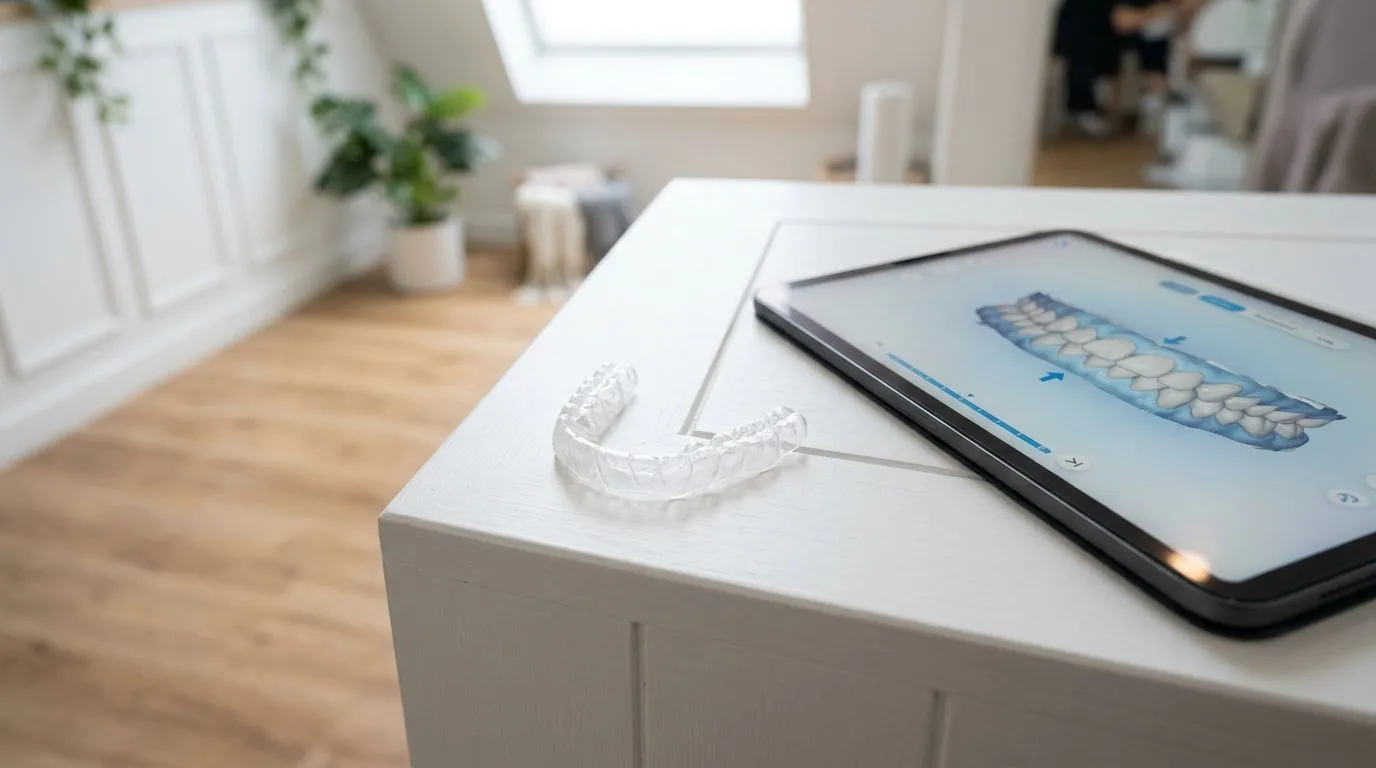
- Clear aligners are a series of clear, removable trays custom-made from a 3D scan of your mouth. Each tray is slightly different from the last, so wearing them in sequence nudges your teeth toward their final position. You switch trays every one to two weeks and wear each one 20-22 hours a day, removing them only to eat, drink anything other than water, and clean your teeth.
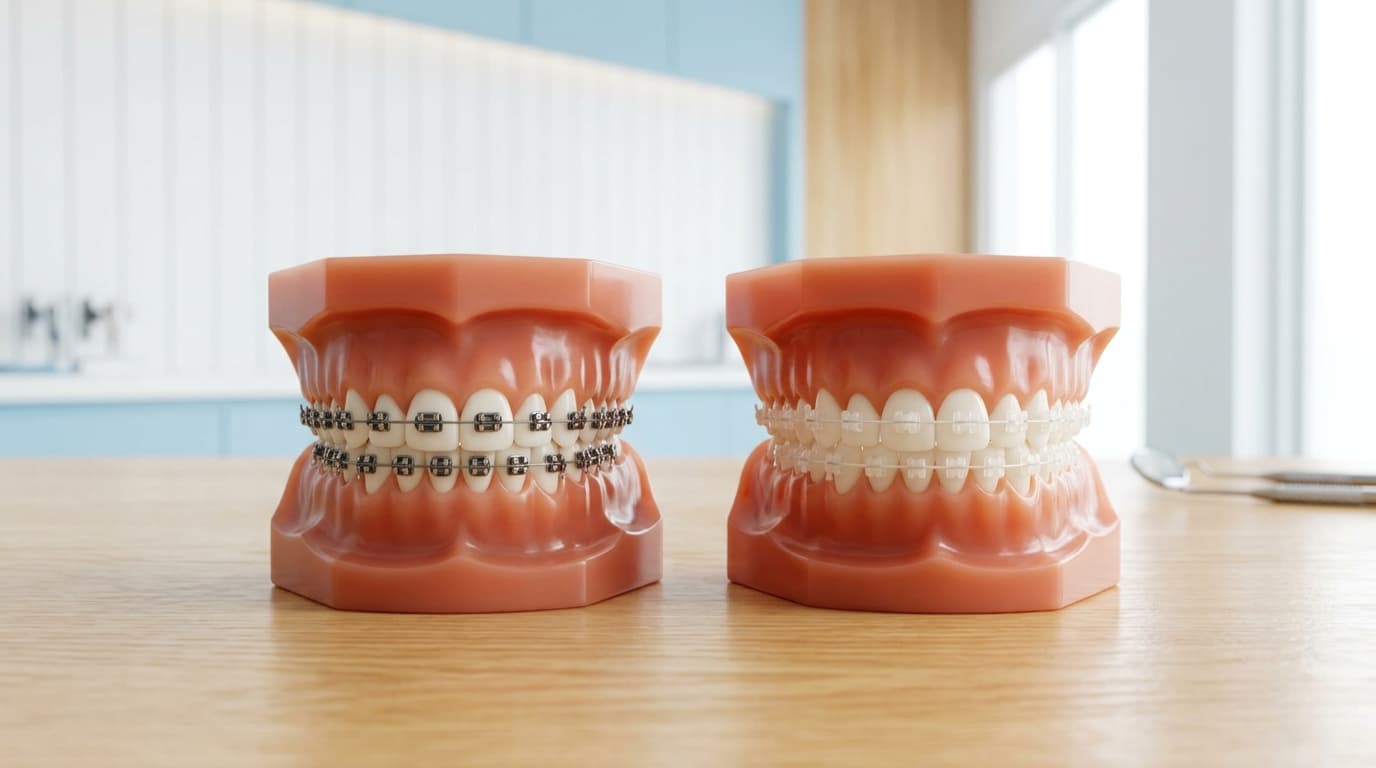
- Dental braces are fixed brackets bonded to each tooth and joined by an archwire. The wire applies steady pressure, and your orthodontist tightens it during monthly visits. Because braces are glued in place, they work around the clock without depending on you to put them back in.
That last difference, removable versus fixed, drives almost every other point below.
Which cases each one handles
This is the single most important factor, and it is where a lot of online comparisons stay vague.
Clear aligners handle:
- gaps and spacing
- mild to moderate crowding and crooked teeth
- minor bite issues
- relapse after previous orthodontic work, an excellent fit for adults whose teeth have drifted back since teenage braces
Braces handle everything aligners can, plus the cases aligners struggle with:
- severe crowding and large gaps
- significant overbite, underbite, crossbite and open bite
- teeth that need major rotation
- cases that involve extractions or jaw-width changes
For complex bite correction, fixed braces remain the most predictable tool an orthodontist has. A useful rule of thumb: aligners are very good at tipping and gentle movements, while braces have the upper hand when teeth need to be rotated, moved up or down in the bone, or shifted in large amounts.
That is why a clinic will sometimes recommend braces even when a patient arrives hoping for aligners. It is not an upsell, it is the difference between a result that holds and one that relapses.
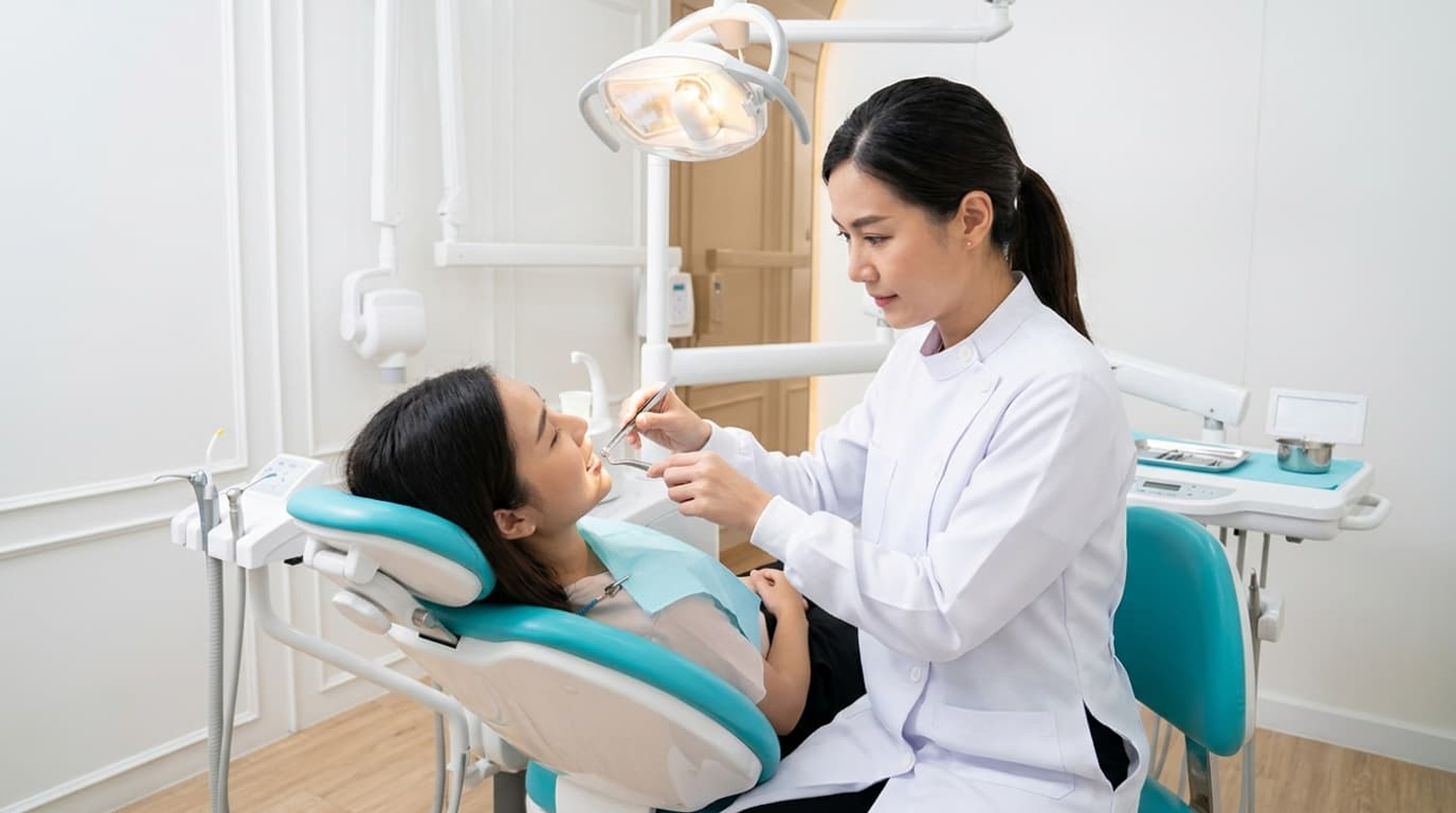
If you are not sure which category you fall into, that is exactly what the consultation is for. Our orthodontist takes X-rays and a 3D scan, then tells you honestly which option will give you a better, more stable result. In some cases the answer is a combination, starting with braces to handle the hard movements and finishing with aligners or a retainer.
Visibility, comfort and daily life
For many adult patients, this is the part of the decision that feels personal.
Visibility. Clear aligners are virtually invisible, which is why professionals and anyone self-conscious about their smile tend to prefer them, and if you are comparing aligner brands our guide to Invisalign versus other clear aligners sorts out what the labels actually mean. Braces are visible, though ceramic braces use tooth-coloured brackets to blend in far more than traditional metal.
Comfort. Aligners are smooth plastic with no brackets or wires to rub against your cheeks, so they rarely cause mouth sores. Braces can irritate the inside of your mouth, especially in the first weeks and after each adjustment.
Eating and cleaning. You remove aligners to eat, so there are no diet restrictions and you brush and floss normally. With braces you avoid hard and sticky foods, and cleaning around brackets takes more care to prevent plaque build-up.
The discipline factor: the trade-off nobody mentions enough
Here is the catch with clear aligners. They only work if you wear them:
- ❌ Aligners ask a lot of you. The trays need 20-22 hours a day, every day. Leave them in a napkin at lunch or forget them on a weekend trip, and your treatment stalls and can take longer than planned.
- ✅ Braces ask nothing between appointments. They are fixed, so they keep working whether you think about them or not. For teenagers, very busy adults, or anyone who knows they are forgetful, that fix-and-forget quality is a genuine advantage.
There is a practical side to this for international patients too. If you are travelling and your aligner habits slip, your teeth may not be where the plan predicted by your next visit, which can mean extra trays and an extra trip. Braces remove that risk, because the orthodontist controls the movement directly at each adjustment.
So the real question is not only "which is better," but "which suits how I actually live." Be honest with yourself about discipline before you choose aligners. The plastic only works as hard as you do.
Treatment time and clinic visits
Speed depends far more on your case than on the appliance itself, but there are general patterns:
- Clear aligners: typically 6-18 months for mild to moderate cases, with check-ups every 6-8 weeks.
- Braces: typically 12-24 months, because they are usually treating more complex movements, with adjustments every 4-6 weeks.
For international patients, the visit interval matters as much as the total time. Aligners need fewer, more widely spaced visits, which is easier to manage from abroad. Braces need monthly tightening, so they suit patients who live in or visit Bangkok more regularly, or who can arrange longer stays.
Side-by-side comparison
| Factor | Clear Aligners | Braces |
|---|---|---|
| Appearance | Virtually invisible | Visible (ceramic blends in) |
| Removable | Yes, for eating and cleaning | No, fixed in place |
| Best for | Mild to moderate cases, adults | All cases including severe, all ages |
| Comfort | Smooth plastic, little irritation | May cause mouth sores |
| Diet | No restrictions (remove to eat) | Avoid hard and sticky foods |
| Discipline needed | High: 20-22 hrs/day | Low: works on its own |
| Treatment time | 6-18 months | 12-24 months |
| Clinic visits | Every 6-8 weeks | Every 4-6 weeks |
| Cost in Bangkok | From ฿15,000 (about $440) | From ฿35,000 (about $1,030) |
Cost and logistics in Bangkok
Both treatments cost far less in Bangkok than back home, and the gap is wide enough to change what is realistic for many patients.
Clear aligners start from ฿15,000 (about $440) and run up to ฿175,000 for the most complex full-arch plans. Metal braces start from ฿35,000 (about $1,030), and ceramic braces from ฿50,000.
For the full picture on each, see our guides to clear aligners cost in Thailand and braces cost in Thailand. In the United States, Australia or the UK, the same treatments commonly cost several thousand dollars or pounds, so patients typically save 60-70%.
| Country | Clear Aligners | Metal Braces |
|---|---|---|
| Thailand | ฿15,000 – ฿175,000 (from ~$440) | ฿35,000 – ฿50,000 (from ~$1,030) |
| USA | $3,000 – $8,000 | $3,000 – $7,000 |
| Australia | $4,000 – $9,000 | $5,000 – $9,000 |
| United Kingdom | £2,500 – £6,000 | £2,000 – £5,000 |
Every plan includes consultation, scanning or impressions, the appliance itself, progress visits, and a retainer or aligner warranty. We provide a 1-year warranty for fractures and bracket breakage under normal use.
The travel side is where the two diverge:
- Aligners need visits only every 6-8 weeks, so you can collect several trays at once and combine treatment with trips to Bangkok, or arrange remote monitoring between visits.
- Braces need monthly adjustments, so they make most sense if you plan to be in Thailand regularly or can stay longer.
If you are weighing the practical side of an aligner course from overseas, our guide to clear aligners in Thailand covers the trip planning in detail, and the same for fixed treatment in our braces in Thailand overview.
If your real choice is between two near-invisible options rather than aligners versus metal, our breakdown of Damon braces compared with Invisalign goes deeper on that specific question.
Conclusion
- ✅ Choose clear aligners if your case is mild to moderate, you want treatment that almost no one will notice, you value eating and cleaning without restrictions, and you are confident you will wear your trays as instructed.
- ✅ Choose braces if your case is complex or severe, you would rather not depend on your own discipline, or your budget points you to the most cost-effective option for difficult corrections.
Neither one wins for everyone. The honest answer comes from your teeth, which is why a proper assessment beats any comparison table.
If you are still unsure, compare the full treatment details on our clear aligners in Bangkok page, then send us a few photos and our orthodontist will confirm which option suits your case and give you an exact quote with no guesswork.
Was this article helpful?