 Written by Dr. Nan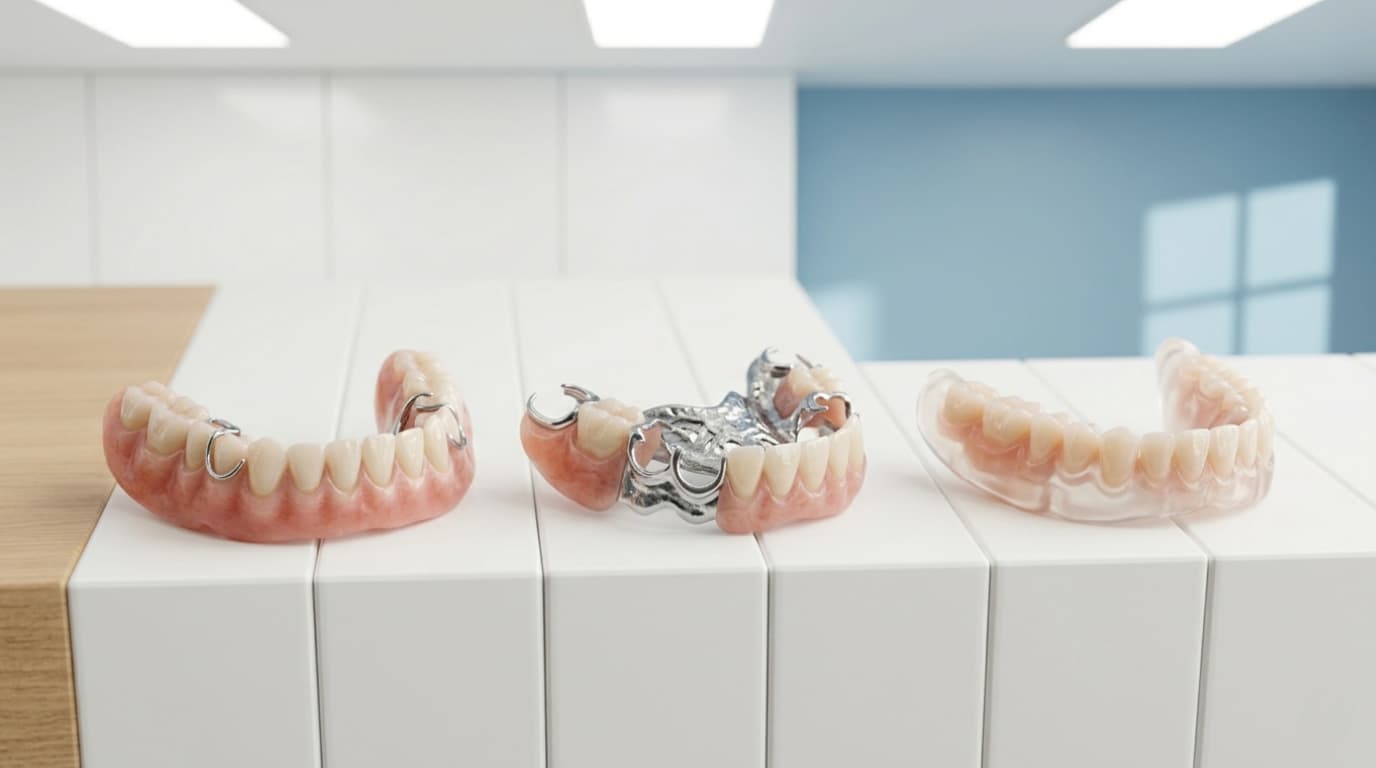
Choosing between full and partial dentures usually comes down to one question: how many teeth do you still have, and are they healthy enough to keep? If you are weighing your options before a trip to Bangkok, this guide breaks down the decision in plain terms, including real prices and what to expect from comfort and fit.
Both options replace missing teeth and restore your ability to eat, speak, and smile. The right one for you depends on what is still in your mouth, the health of those teeth, your budget, and how stable you want the final result to feel. Our dentures in Bangkok service page lays out every type we make and the full price list, and the sections below help you work out which direction fits your situation.
The one-question decision: how many teeth are missing?
The simplest way to start is to look at a single jaw at a time, because your upper and lower arches can need different solutions.
- You have no teeth left in that arch: a full (complete) denture is the standard choice. It replaces every tooth in the upper or lower jaw and rests directly on the gum and underlying bone.
- You still have some healthy teeth in that arch: a partial denture is usually best. It fills only the gaps and uses your remaining teeth as anchors, which keeps them from drifting into the empty spaces.
There is one important exception. Even if you have a few teeth left, a full denture can still be the better long-term option when those remaining teeth are loose, badly decayed, or affected by advanced gum disease. In that case a dentist may recommend removing the failing teeth and fitting a complete denture, rather than building a partial around teeth that are likely to be lost anyway. This is why an honest assessment matters more than a self-diagnosis. If you are travelling for treatment, many patients find it reassuring to read how the wider process works in our guide to dental tourism in Thailand before they commit.
Full vs partial dentures at a glance
The table below compares the two options on the points patients ask about most. Prices shown are the starting prices at our Bangkok clinic.
| Feature | Full (Complete) Dentures | Partial Dentures |
|---|---|---|
| Best for | An arch with no natural teeth remaining | An arch with some healthy natural teeth left |
| How it stays in | Suction and the muscles of cheeks and tongue, plus adhesive if needed | Clasps or precision attachments grip your remaining teeth |
| Covers | The whole gum ridge (upper denture also covers the palate) | Only the gaps, leaving natural teeth exposed |
| Protects remaining teeth | Not applicable | Yes, stops neighbouring teeth from shifting |
| Typical stability | Good; lower full dentures can feel less secure | Often more stable thanks to tooth anchors |
| Extractions needed? | Sometimes, if failing teeth remain | Usually none |
| Bangkok price (from) | ฿15,000 per arch (about $410) | ฿3,000 acrylic / ฿8,000 metal base (from about $90) |
| Lifespan with good care | 5 to 7 years | 5 to 10 years |
Prices may vary with the number of teeth and the materials chosen. Every patient receives a fixed written quote after an assessment, so there are no surprises once treatment starts. For a line-by-line look at relines, repairs and the total trip, see our full breakdown of dentures cost in Thailand.
What full dentures are and who they suit
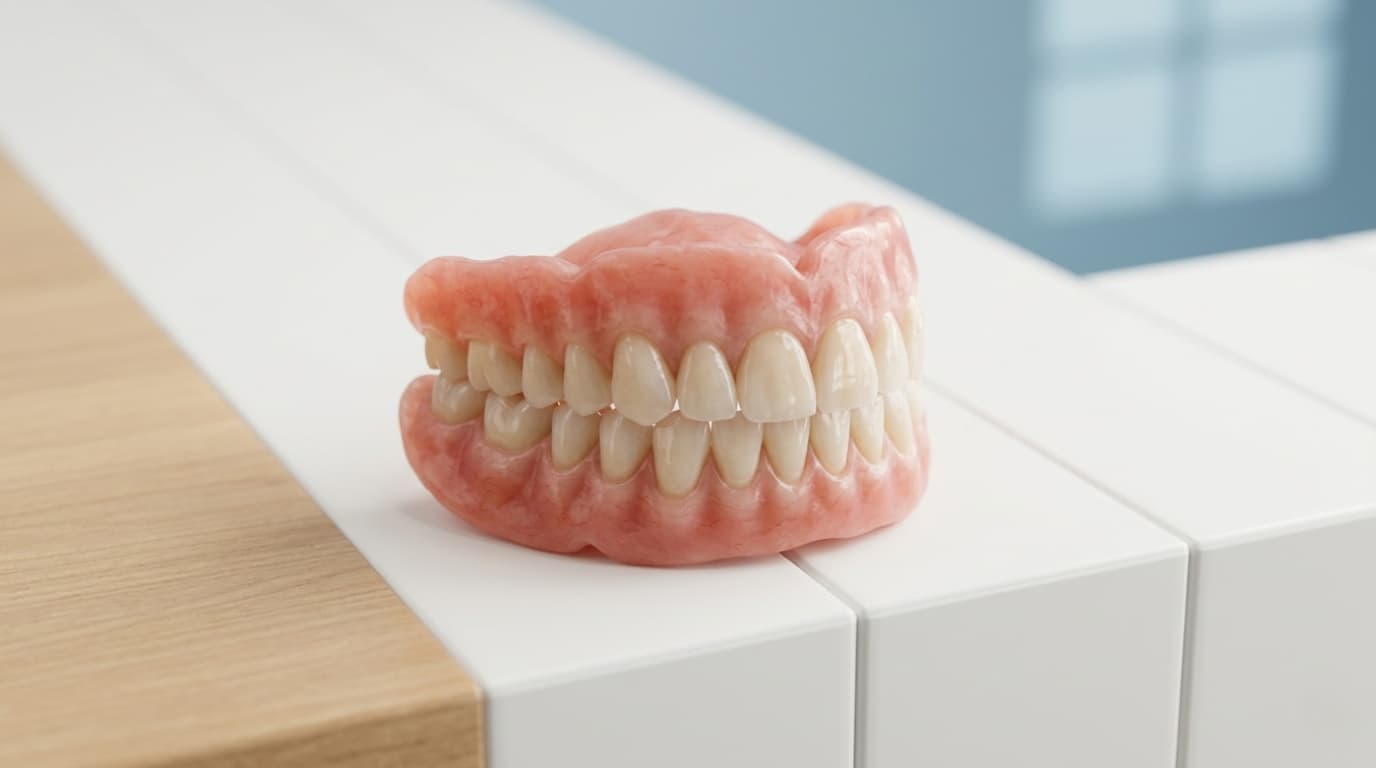
A full denture is a removable appliance that replaces all the teeth in one jaw. The artificial teeth are set into a gum-coloured acrylic base that is shaped to your mouth so it holds by suction. You can have an upper denture, a lower denture, or both.
Full dentures suit you if an entire arch is already toothless, or if your remaining teeth cannot realistically be saved. Two timing options exist. A conventional denture is made after your gums have healed from any extractions, which gives the most precise fit. An immediate denture is placed on the same day as the extractions so you are never seen without teeth, then relined later as the gums settle. Lower full dentures tend to feel less secure than uppers because there is less gum surface for suction, which is one reason some patients later consider implant support.
What partial dentures are and who they suit
A partial denture fills one or several gaps while your healthy natural teeth stay in place. Replacement teeth are attached to a gum-coloured base, often connected by a discreet metal framework, and small clasps or attachments grip the neighbouring teeth to keep everything stable.
Partials are a strong choice when you want to preserve the teeth you still have, when implants or a bridge are not suitable for you, or when you want an affordable, faster solution. A real bonus is that they stop your remaining teeth from tilting or drifting into the empty spaces, which protects your bite over time. Acrylic partials are the most budget-friendly, while a metal-base partial is thinner, stronger, and usually more comfortable for long-term wear.
Comfort, fit, and getting used to your dentures
Comfort is the question patients worry about most, and it differs between the two types. Because a partial denture borrows support from your own teeth, it often feels more stable from day one and spreads chewing pressure more evenly. A full denture relies entirely on the gums, so it can take a little longer to adjust to, especially a lower one.
With either type, a short settling-in period is normal. You may notice slight soreness, more saliva than usual, or a learning curve with certain sounds and harder foods in the first week or two. This eases quickly as the muscles adapt. A precise fit makes the biggest difference, which is why the process includes a try-in stage on a wax model so the look and bite can be checked and adjusted before the final denture is finished. Minor follow-up adjustments after a few days of wear are routine, not a sign that something is wrong.
Beyond standard dentures: flexible and implant-supported options
The full-versus-partial choice is not the only decision. Two upgrades are worth knowing about.
Flexible dentures (often Valplast) replace a rigid acrylic base with a soft, translucent thermoplastic. They are lightweight, have no visible metal clasps, and are a good fit for patients who find traditional partials bulky or who react to acrylic. They sit within the partial denture family but feel and look more discreet. Our guide to flexible dentures in Thailand weighs their comfort against the limits on relining and full-arch use.
Implant-supported dentures add stability that no removable denture can match. A small number of dental implants in Bangkok act as anchors, and the denture clicks securely onto them. There is no slipping and no need for adhesive, and the implants help slow the jawbone loss that happens once teeth are gone. This route costs more and is not right for everyone, but it is often the answer for patients who dislike how a lower full denture moves. Your dentist can tell you whether you are a candidate.
Why patients choose Bangkok for dentures
Dentures cost a fraction of Western prices here without cutting corners on quality. Savings of up to 70% compared with the USA, UK, or Australia are typical, which is what makes the trip worthwhile even after flights and a hotel. Our clinic in Bangkok has an on-site laboratory, so impressions, try-ins, and adjustments move faster than sending work to an outside lab, and most denture cases are completed within a 2 to 4 week stay.
For a closer look at how international patients plan their visit, costs, and timelines, our overview of getting dentures in Thailand covers the practical side of the trip in detail. Treatment is carried out by our specialist team, and every case comes with a clear written quote and warranty before you begin.
So, which one do you need?
Use this as a simple rule of thumb: no teeth left in the arch points to a full denture, some healthy teeth remaining points to a partial, and loose or failing teeth may tip the decision back towards a full denture after extractions. Comfort, budget, and whether you want implant support then fine-tune the choice. The only way to be certain is a proper examination, including X-rays, so a dentist can confirm what your remaining teeth can support.
Ready to find the right fit for your smile? Explore the full range and pricing on our Bangkok dentures page, then BOOK YOUR FREE CONSULTATION at /book-free-consultation/ to get a personalised recommendation and a fixed written quote.
Was this article helpful?