 Written by Dr. Nan
If you have searched for a "one tooth bridge" and every price you find looks either weirdly low or wildly high, this is why. Below is the honest version, with real baht figures and a straight answer on whether you should just get an implant instead.
The truth first: a single tooth bridge is three units, not one
Here is the thing most pages bury. When you lose a single tooth, a bridge does not just plug that one gap with one false tooth. It spans the gap by anchoring to the two teeth on either side. So the finished piece is three connected units:
- the false tooth in the middle
- a crown on each of the two neighbours
That matters because dental labs and clinics price bridges per unit. A "single tooth bridge" that sounds like it should cost one unit actually costs three.
Any clinic quoting you a genuinely one-tooth price for a bridged gap is either misleading you or quietly planning to bill the other two units later. We would rather you knew up front.
How a 3-unit bridge works: one pontic, two abutment crowns
Picture the gap with a healthy tooth on each side. Those two neighbours become the "abutment" teeth. They get shaped and crowned, and the false tooth (the pontic) is fused between those two crowns as one solid piece. It is cemented in permanently and does not come out.
| Unit | What it is | Its job |
|---|---|---|
| Abutment crown (tooth 1) | Crown on the neighbour to one side | Anchor |
| Pontic | The false tooth in the gap | Fills the space, no root |
| Abutment crown (tooth 2) | Crown on the neighbour to the other side | Anchor |
Three units, one connected restoration. That is the standard traditional fixed bridge, and it is what most people mean by a single tooth bridge. If you want the full menu, we lay out all the bridge types explained separately.
Why the neighbouring teeth get filed down (and when that is fine)
To seat a crown over each abutment tooth, the dentist has to remove some enamel and reshape it. There is no way around this with a traditional bridge. The crowns need room to fit over the natural teeth, so those teeth get reduced in size.
Whether that is a problem depends entirely on the state of those neighbours:
- If they are already crowned, heavily filled, or damaged, reducing them for a bridge is almost no loss. They were going to need work anyway, and the bridge sorts three teeth in one go.
- If they are pristine, untouched natural teeth, filing them down purely to hold a bridge is a real trade-off. You are permanently altering two healthy teeth to replace one missing one.
We say this plainly because it drives the whole decision. Healthy neighbours push you toward an implant or a Maryland bridge. Compromised neighbours make the traditional bridge a sensible, efficient choice.
What a single tooth bridge costs in Bangkok (real THB figures)
Because it is three units, you multiply the per-unit price by three. Here are our actual Bangkok prices.
| Material | Per unit | 3-unit total | Approx USD |
|---|---|---|---|
| E-max (lithium disilicate) | 16,000 THB | ~48,000 THB | ~$1,450 |
| Zirconia | 17,500 THB | ~52,500 THB | ~$1,590 |
So the honest single-gap figure is roughly 48,000 to 52,500 THB total, not a one-tooth price. Compare that to Australia, the UK, or the US, where a 3-unit bridge is typically advertised at several thousand dollars, and the saving is the reason most of our patients fly in. For the wider picture across bridge sizes and materials, see our full dental bridge cost breakdown for Thailand.
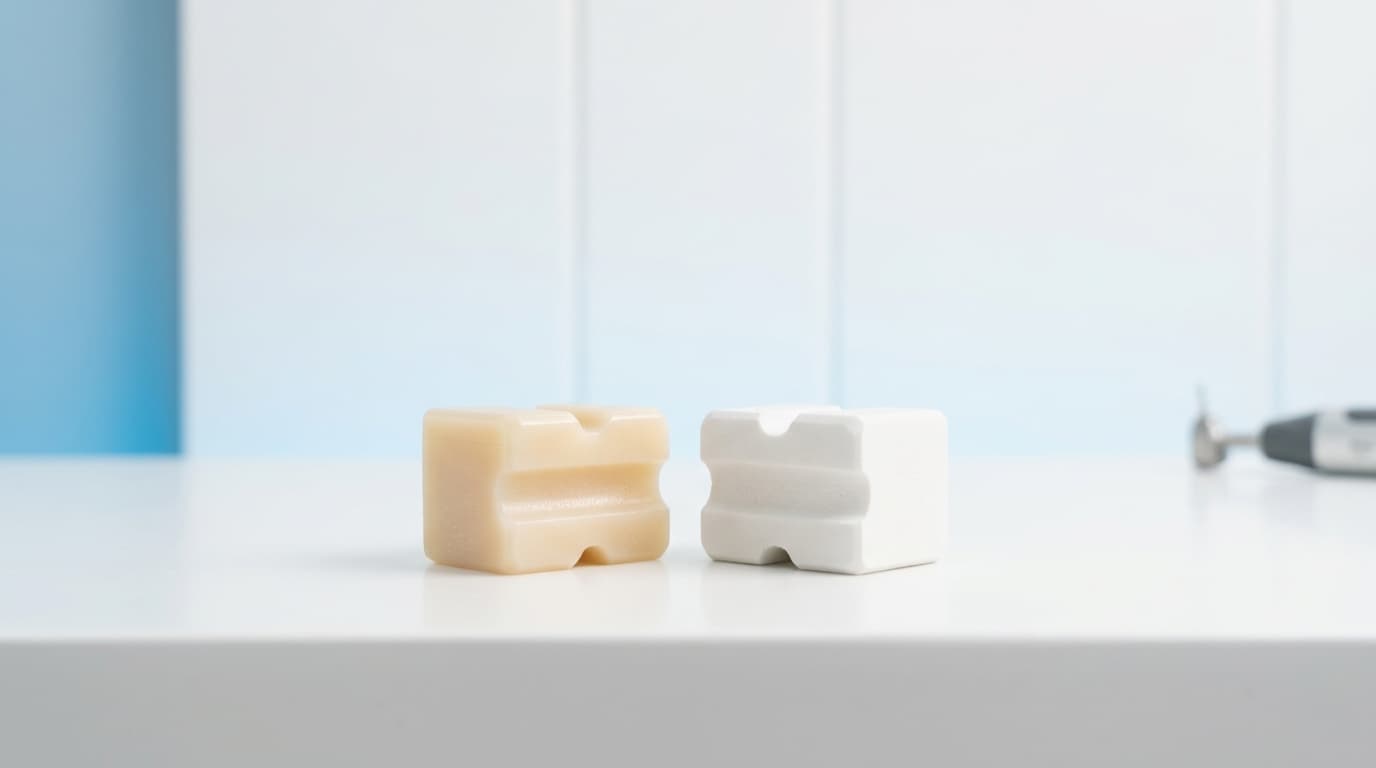
Front tooth vs molar: does the gap location change anything?
Yes, but mostly in emphasis, not in the basic three-unit structure:
- A front tooth: aesthetics are everything. The bridge has to match the colour, translucency, and shape of your natural teeth so no one can tell. This is where tooth-coloured E-max shines, because it mimics natural enamel beautifully.
- A molar or back tooth: chewing force is the priority. Zirconia is prized here for its strength under heavy bite loads. The colour still matters, but no one is inspecting your back molars in conversation, so function leads.
Either way it is a 3-unit job. The location just steers the material choice, which our on-site lab and prosthodontists (Dr. Nan and Dr. Ple) match to your case.
Bridge or implant for one missing tooth? An honest, compact verdict
We are not going to pretend the bridge always wins. For a single missing tooth, here is the fair summary.
| 3-unit bridge | Single implant | |
|---|---|---|
| Touches healthy neighbours | Yes, both are crowned | No, stands alone |
| Preserves jawbone under the gap | No, bone still resorbs | Yes, the post stimulates bone |
| Surgery needed | No | Yes, minor |
| Total time | 7 to 10 days, one trip | 3 to 6 months, usually 2 trips |
| Bangkok cost | ~48,000 to 52,500 THB | from 45,000 THB (single) |
Clinically, the implant wins for one tooth. It preserves the bone, spares the two neighbours entirely, and does not rely on other teeth for support. If you have the time for two trips and healthy adjacent teeth, it is usually the better long-term investment. Explore single tooth implants in Bangkok if that is your leaning.
The bridge wins on speed and simplicity. No surgery, no healing months, one trip, and it is done. If your neighbours already need crowns, or you simply cannot commit to two trips, the bridge is a perfectly good, proven solution. We go deeper in our full bridge-vs-implant comparison.
If your neighbours are healthy and untouched: consider the Maryland option
If the two teeth beside your gap are pristine and you hate the idea of filing them down, there is a middle path. A Maryland (resin-bonded) bridge holds the false tooth using thin wings that bond to the backs of the neighbours:
- ✅ It barely touches the neighbouring teeth, no crowns required.
- ❌ It is less robust than a traditional 3-unit bridge, and it suits some gaps far better than others (front teeth especially).
If untouched neighbours are your situation, read the Maryland (resin-bonded) bridge option before deciding. For most people with already-compromised neighbours, the traditional 3-unit bridge on this page remains the default.
How long a single tooth bridge lasts and how to look after it
A well-made 3-unit bridge typically lasts 10 to 15 years with good hygiene. The catch with any bridge is cleaning under the pontic, because you cannot floss between the false tooth and the gum the normal way:
- Use a floss threader or superfloss to pass floss underneath and sweep out debris daily.
- Neglect that, and the abutment teeth can decay at the margins, which is what usually ends a bridge early.
We cover the full longevity picture and care routine in our guide on how long dental bridges last.
Getting it done in one trip: the 7-10 day Bangkok timeline
For international patients, this is the real appeal. Because we have an on-site dental lab, we do not ship your bridge out and wait weeks. The whole thing fits inside one trip.
| Days | What happens |
|---|---|
| Day 1 | Exam, 3D scan, shade matching, abutment teeth prepared, temporary bridge fitted |
| Days 2 to 8 | On-site lab crafts your bridge; you enjoy Bangkok |
| Day 8 to 10 | Fit, adjust, and cement the final bridge; bite check |
Plan for 7 to 10 days on the ground. You leave with the finished bridge and a 1-year written warranty. This is the same process behind our wider dental bridge treatment in Bangkok, and you can read patient experiences in our overview of dental bridges in Thailand.

What happens if you leave a single gap untreated
It is tempting to ignore one missing tooth, especially a back one. Here is what tends to happen over months and years:
- the teeth beside the gap drift and tilt into the empty space
- the opposing tooth over-erupts toward the gap
- your bite slowly shifts out of line
- the bone under the empty socket resorbs, because nothing is stimulating it
None of that is an emergency, but all of it makes later treatment harder and more expensive. A gap that could have been a simple bridge or implant today can become a bite-correction and bone-grafting problem tomorrow.
Treating one gap while it is still just one gap is almost always the cheaper path.
Conclusion
One gap, three units: that is the honest arithmetic of a single tooth bridge, roughly 48,000 to 52,500 THB in Bangkok, finished in one 7 to 10 day trip. Clinically, an implant remains the better long-term answer for one tooth when the neighbours are healthy and you can make two trips.
The bridge earns its place when speed matters, surgery is off the table, or the neighbouring teeth already need crowns anyway. The state of those two neighbours is the whole decision.
You do not need to book a flight to find out where you stand. Send us a few photos of your gap, tell us what you are after, and we reply within 24 hours with whether a 3-unit bridge, a Maryland bridge, or an implant suits your case, a realistic cost range in baht, and whether your neighbouring teeth are a good anchor or better left untouched.
Frequently Asked Questions
What is a single tooth bridge called?
It is a 3-unit bridge: one false tooth (the pontic) held by two crowns on the teeth either side of the gap.
How much does a bridge for one tooth cost in Thailand?
Because it is three units, expect roughly 48,000 to 52,500 THB total in Bangkok (about $1,590), depending on E-max or zirconia. That is the real single-gap figure, not a one-tooth price.
Is a bridge or an implant better for one missing tooth?
An implant preserves the bone and spares the healthy neighbours, so it wins clinically. A bridge is faster, needs no surgery, and fits a single 7 to 10 day trip. We explain the trade-off honestly above.
How many teeth does a bridge for one missing tooth use?
Three units total: the pontic in the gap plus a crown on each of the two adjacent abutment teeth.
Do they have to file down the teeth next to the gap?
Yes. The two neighbours are reduced to take crowns. If those teeth are already crowned or damaged this is no great loss; if they are pristine, consider a Maryland bridge or an implant.
How long does a single tooth bridge last?
Typically 10 to 15 years with good hygiene. See our linked guide on bridge longevity for details.
How long does it take to get a single tooth bridge in Bangkok?
Usually 7 to 10 days on a single trip, thanks to our on-site lab, with a 1-year written warranty.
Can you get a single tooth bridge on a front tooth?
Yes. Front-tooth bridges are very common and use tooth-coloured E-max or zirconia for a natural match. Aesthetics are the main focus there.
What is the difference between a 3-unit bridge and a Maryland bridge?
A 3-unit bridge crowns both neighbours; a Maryland bridge bonds the false tooth with thin wings and barely touches them. See our Maryland guide for which suits you.
Does a single tooth bridge look natural?
Yes, especially in all-ceramic E-max or zirconia crafted in our on-site lab.
Can a single missing tooth be left untreated?
You can, but the neighbours tend to drift, the bite can collapse, and bone under the gap resorbs over time, which complicates later treatment.
Was this article helpful?