 Written by Dr. Nan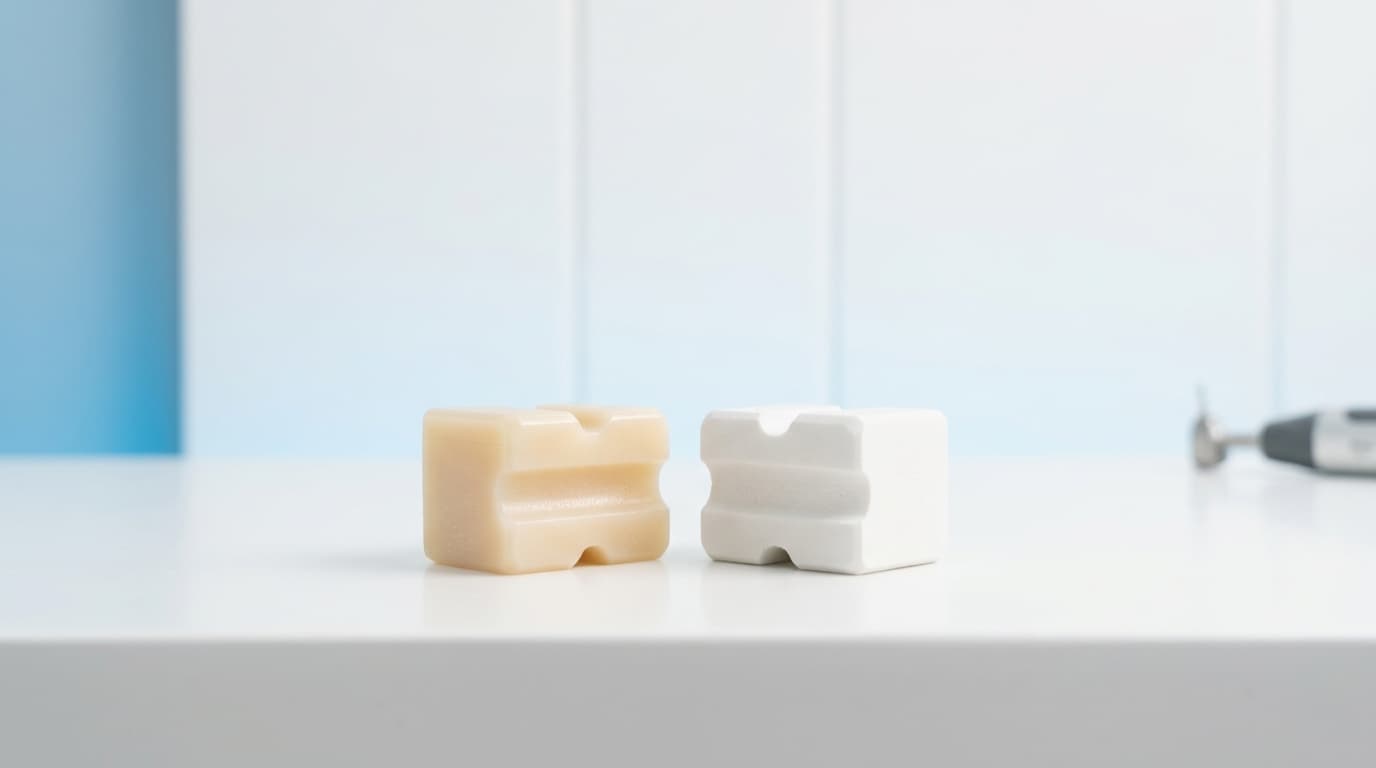
The one-line verdict: what a Maryland bridge is and is not
A Maryland bridge, also called a resin-bonded bridge or RBB, is a false tooth held in place by thin wings that bond to the inner surface of the teeth next door:
- ✅ What it is: the best tooth-preserving fix for one missing tooth near the front of the mouth, where bite forces are gentle and the neighbouring teeth are healthy and lightly filled.
- ❌ What it is not: a cheaper implant. An implant replaces the root; a Maryland bridge does not, so the jawbone under the gap keeps slowly shrinking over the years.
- ❌ What it is not either: a solution for a missing molar. The chewing forces at the back of your mouth will pop the wings loose.
If someone offers you a Maryland bridge on a back tooth, be sceptical.
What is a Maryland (resin-bonded) bridge? Pontic, wings, and how it bonds
Three parts, plain English:
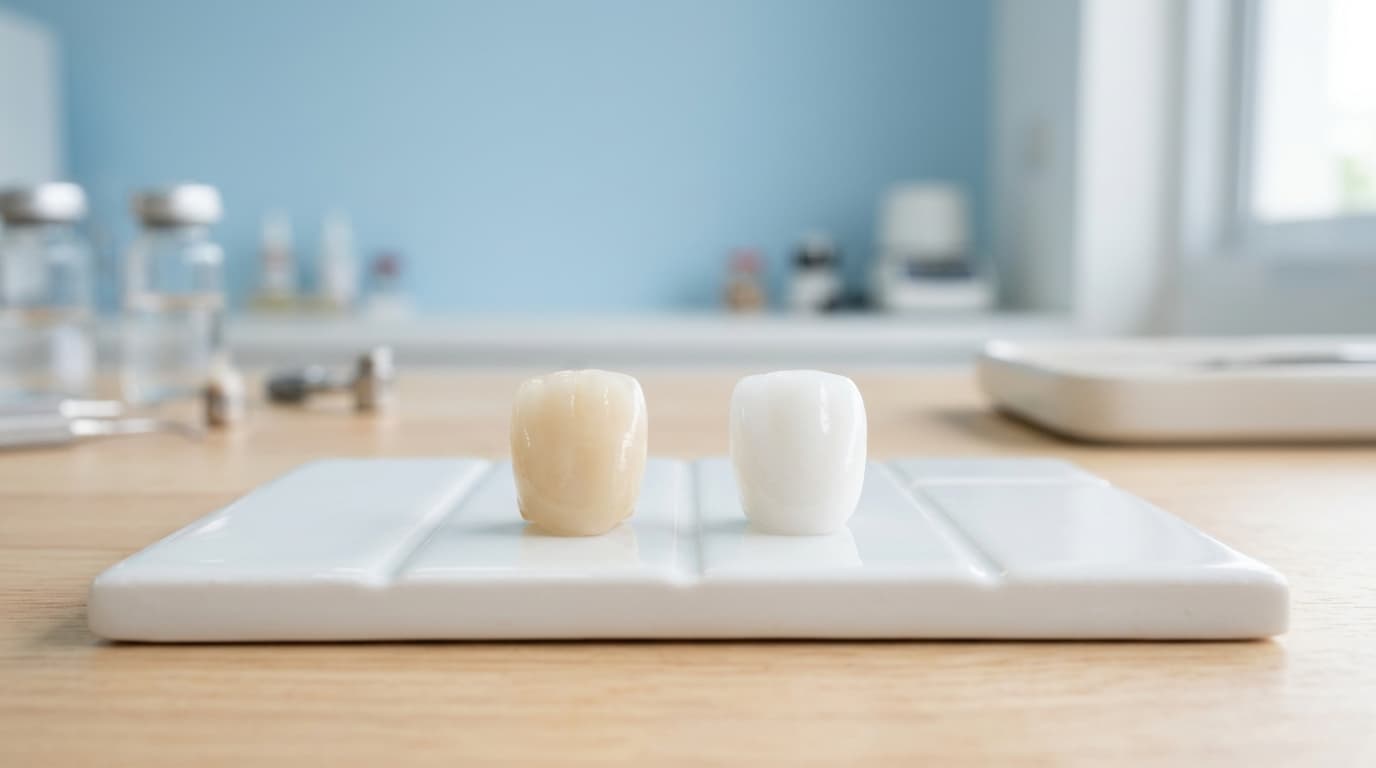
- The pontic is the false tooth that fills the gap. On a front-tooth case it is shaded to match your other teeth.
- The wings (also called retainer framework) are thin flanges that extend from the pontic and sit against the tongue-side surface of the teeth on either side.
- The bond is a strong composite resin cement that glues those wings to enamel.
Because the wings hide behind your teeth, nothing shows from the front. Preparation is minimal or none at all: at most we lightly roughen the enamel so the cement grips.
That is the whole appeal. You keep your natural tooth structure, which you can never get back once it is ground away for a conventional crown.
Some cases use a cantilever design, a single wing bonded to just one neighbour. Counterintuitively, research on anterior resin-bonded bridges has found single-wing designs can debond less often than two-wing ones, because two rigidly bonded teeth flex independently and stress the cement.
Which design suits you depends on your specific bite, and that is a conversation for your consultation, not a rule you can decide from a blog.
Are you a good candidate? An honest checklist (and when it's the wrong choice)
You are likely a good candidate if:
- You are missing a single front tooth (an incisor is the classic case).
- The teeth beside the gap are healthy, strong, and have little or no filling. Good enamel is what the cement holds onto.
- Your bite is normal, without heavy edge-to-edge contact on that tooth.
- You want to preserve your natural teeth and avoid surgery.
You are probably the wrong candidate if:
- The missing tooth is a molar or premolar. Back-tooth forces are too high.
- You grind or clench (bruxism). Grinders debond these bridges repeatedly.
- The neighbouring teeth are heavily filled, crowned, or weak, so there is not enough sound enamel to bond to.
- You have a deep bite that slams onto the pontic or wings.
If you fall in the second group, do not force a Maryland bridge to save money. Read the implant vs bridge decision and which bridge for a single missing tooth before you commit. A restoration that keeps debonding is not a bargain.
Metal wings vs zirconia wings: why the material matters on thin front teeth
The wing material is a bigger deal than most patients realise, precisely because front teeth are thin and slightly translucent:
- ❌ Cast metal framework (the traditional option). Strong and thin, but grey. Behind a thin lower-front tooth that grey can show through the enamel and make the tooth look faintly dark or "greyed out" near the gumline. On a bright anterior smile that is a real cosmetic downside.
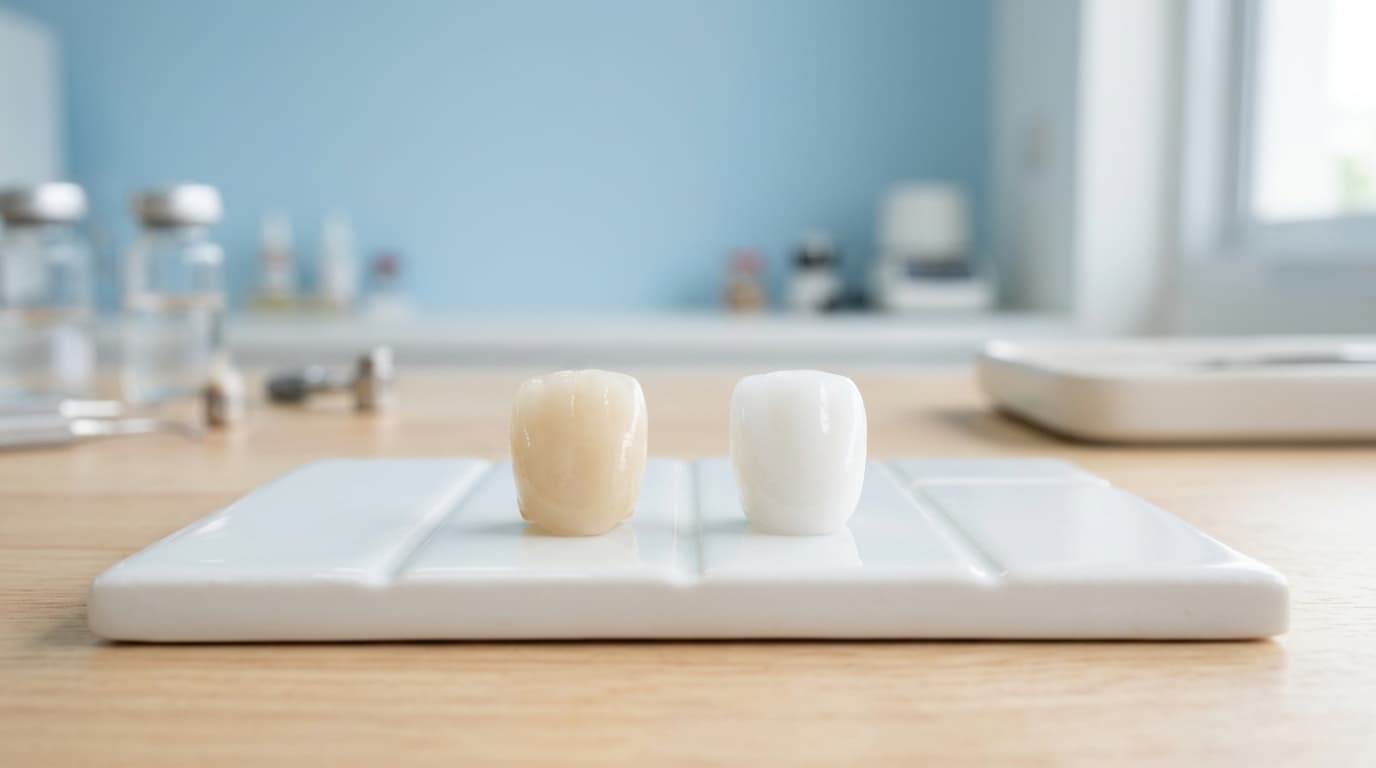
- ✅ Zirconia or all-ceramic wing. Tooth-coloured, so there is no show-through and no graying of the abutment tooth. More brittle than metal in very thin sections, so the design and fit have to be right, which is where fabrication quality matters.
This is one reason we value our on-site dental lab. The technician can work directly with the prosthodontist, check the fit against your actual teeth, and fine-tune the wing thickness and the bonding surface.
A well-fitting wing bonds better and lasts longer. A wing made off a rushed impression at a distant lab is more likely to sit poorly and let go.
Maryland bridge vs conventional bridge vs implant: a neutral three-way comparison
We place all three, so here is the honest triage rather than a sales pitch.
| Factor | Maryland (resin-bonded) bridge | Conventional fixed bridge | Implant + crown |
|---|---|---|---|
| Damage to neighbouring teeth | Minimal or none | High: both neighbours ground down for crowns | None: stands alone |
| Replaces the root / prevents bone loss | No | No | Yes |
| Best for | Single front tooth, healthy neighbours | Gap where neighbours already need crowns | Almost any single tooth, long term |
| Surgery | None | None | Yes |
| Trip length in Bangkok | Short, often 7 to 10 days | 7 to 10 days | 3 to 6 months, usually 2 trips |
| Longevity | Variable, see below | Often 10 to 15 years | Longest, potentially decades |
| Relative cost | Lowest | Middle | Highest |
If your neighbouring teeth are pristine, cutting them down for a conventional bridge is a shame, and a Maryland bridge or an implant makes more sense. If those neighbours already have big fillings or need crowns anyway, a conventional bridge stops wasting tooth structure.
For depth on the taxonomy see the full types of dental bridges and our Thailand dental bridge overview.
How much does a Maryland bridge cost in Bangkok? Real THB and USD figures
A resin-bonded bridge is essentially a pontic with bonded wings, priced in the range of our single-unit bridge work. For reference, here is where it sits against our conventional bridge and implant fees, so you can see the honest gap.
| Option | Bangkok price (THB) | Approx. USD |
|---|---|---|
| E-max bridge unit | 16,000 / unit | ~$490 / unit |
| Zirconia bridge unit | 17,500 / unit | ~$550 / unit |
| 3-unit zirconia conventional bridge | ~52,500 | ~$1,590 |
| Single implant (from) | 45,000 | ~$1,320 |
A Maryland bridge typically comes in below a full three-unit conventional bridge because it involves fewer prepared units. For a full breakdown of what a bridge costs in Thailand, see the dedicated guide, and the exact figure for your case comes from your consultation.
Because you are comparing against Australian, UK, or North American prices, even our implant, the pricier option, often lands below what a Maryland bridge alone costs back home.
The procedure and how many days it takes for fly-in patients
For most fly-in patients a resin-bonded bridge fits comfortably in a single trip, usually around 7 to 10 days, the same window as our other bridge work.
- Visit one: examination, shade matching, minimal enamel preparation if needed, and an impression or digital scan.
- Lab fabrication: our on-site lab builds the pontic and wings and matches the colour to your smile.
- Visit two: we try the bridge in, check the fit and bite, then bond the wings with resin cement.
You leave Bangkok with the finished bridge in place. Plan your travel around dental bridges in Bangkok with a little buffer at the end in case the bite needs a final adjustment.

How long does it last? Durability, debonding, and what happens if it comes loose after you fly home
Here is the part competitors gloss over. The main way a Maryland bridge fails is debonding: a wing lets go of the tooth. It does not usually break; it comes unstuck.
- Reported survival varies widely, from a handful of years to well over a decade, with some anterior resin-bonded bridges lasting up to around 21 years.
- The biggest factors are good case selection and a clean, dry bond at placement, which is exactly why we are picky about who gets one.
- If it debonds after you fly home, the tooth underneath is unharmed, because so little enamel was touched. Often the same bridge can simply be re-bonded by a local dentist, since nothing is broken.
- Within our 1-year written warranty, we cover the re-bond, and you can send us photos to sort out the plan.
For realistic expectations across all bridge types, see how long bridges last.
The provisional use case: teens and young patients missing a lateral incisor
There is one case where a Maryland bridge shines even though an implant might be the eventual goal: a teenager or young adult with a congenitally missing lateral incisor.
- Implants cannot be placed until the jaw has finished growing, often the late teens or early twenties. Placing one too early leaves the implant stranded as the surrounding teeth keep moving.
- A Maryland bridge fills the gap attractively and protects the smile through the socially sensitive years.
- It touches almost no tooth structure, so it keeps every option open for a permanent implant later.
For a young patient, that conservatism is a feature, not a compromise.
Conclusion
For the right case, a single missing front tooth with healthy neighbours and a normal bite, a Maryland bridge is the most respectful fix in dentistry: no surgery, almost no drilling, and every future option kept open. For the wrong case, a molar gap or a heavy grinder, it is a restoration that keeps letting go, and no price makes that a bargain.
The whole decision comes down to case selection, and that is exactly what a photo consultation can screen for before you spend anything.
You do not need to fly here to find out where you stand. Send us a few photos of your teeth, tell us what is missing, and we reply within 24 hours with whether a Maryland bridge suits your gap, a realistic cost for your case, and whether your neighbouring teeth are healthy enough to bond to.
Frequently Asked Questions
What is a Maryland bridge?
A false front tooth (a pontic) held in place by thin wings that bond to the back of the teeth beside the gap, with little or no drilling.
How much does a Maryland bridge cost?
In Bangkok it sits in the range of our single-unit bridge work, below a full 3-unit zirconia bridge (~52,500 THB / ~$1,590). Your exact figure comes from a consultation.
How long does a Maryland bridge last?
Anywhere from a few years to over a decade, with some anterior cases reaching around 21 years. The usual failure is a wing debonding rather than breaking.
Is a Maryland bridge better than an implant?
Not better, different. It is more conservative and cheaper up front but does not replace the root or prevent bone loss. An implant lasts longer and stands alone. See the implant vs bridge decision.
What is the difference between a Maryland bridge and a traditional bridge?
A traditional bridge crowns the two neighbouring teeth, which must be ground down. A Maryland bridge only bonds thin wings to them, preserving tooth structure.
Can a Maryland bridge be used on back teeth?
Generally no. Molar chewing forces are too high and cause debonding. It is a front-tooth solution.
Does a Maryland bridge damage the adjacent teeth?
Very little. Preparation is minimal or none, which is the whole point of the design.
Can a Maryland bridge come loose or fall out, and what happens if it does after I fly home?
Yes, debonding is the main failure mode. The tooth underneath is unharmed, and the same bridge can usually be re-bonded locally. Within our 1-year written warranty we cover the re-bond.
How many visits does a Maryland bridge take?
Usually two visits over about 7 to 10 days, done in a single trip for fly-in patients.
Does a Maryland bridge prevent bone loss?
No. Only an implant replaces the root and slows the bone loss under the gap.
Who is a good candidate for a Maryland bridge?
Someone missing a single front tooth with healthy, lightly filled neighbours and a normal bite. Grinders and molar gaps are poor candidates.
Are the wings made of metal or zirconia?
Both exist. Metal is strong but can grey a thin front tooth; zirconia is tooth-coloured and avoids that show-through. We will recommend the right one for your case.
Was this article helpful?