 Written by Dr. Nan
Wondering whether veneers are right for you, or whether you would be turning down a smile makeover that another treatment could do better? Most people who ask "am I a candidate for veneers?" are good candidates, but a fair number are not, and a few would get a far better result from a crown, an aligner or simple bonding.
This guide gives you an honest self-assessment so you arrive at your consultation already knowing roughly where you stand.
What makes you a good candidate for veneers
Veneers are thin shells bonded to the front of your teeth to change their colour and shape. Because they sit on the visible surface, they work best when the foundation underneath is sound. You are a strong candidate when the following are true.
- Your gums and teeth are healthy. No active gum disease, no untreated cavities, no abscess or infection on the teeth you want covered.
- You have enough enamel. A small amount of enamel is gently reduced so the veneer sits flush and bonds well. You need a healthy layer left to bond to.
- Your concern is cosmetic. Stubborn discolouration that does not respond to other care, small chips, short or worn edges, minor gaps, or front teeth that are slightly uneven in shape or position.
- Your bite is reasonably stable. Your top and bottom teeth meet without hammering the front teeth every time you close.
- You will look after them. Veneers last for years with normal brushing, flossing and regular check-ups. They are not maintenance free, but the routine is the same as caring for natural teeth.
If most of that sounds like you, veneers are very likely on the table. The next question is usually which material, and our guide to composite versus porcelain veneers walks through the cost, lifespan and repair differences so you can picture the result before you travel.
Honest disqualifiers, and what comes first
This is the part most clinic pages skip. Some mouths are not ready for veneers, and a good clinic will tell you so rather than bond shells over a problem. Here are the situations that pause or rule out veneers, and what we do instead.
| Situation | Why it matters | What happens first |
|---|---|---|
| Active gum disease | Gums shrink and bleed, so the veneer margin will not seal or look right | Treat and stabilise the gums, then re-assess |
| Untreated decay or an old infection | You cannot cover a problem tooth, and an infected tooth may need root canal treatment | The tooth is treated first; root canal work is referred to a specialist, then we restore |
| Heavy grinding or clenching | The repeated force chips and de-bonds thin veneers | A night guard, and often a crown rather than a veneer on the worst teeth |
| Very little enamel left | There is not enough surface for the veneer to bond to reliably | A crown wraps the whole tooth and grips far better than a veneer |
| Teeth still developing (teens) | The bite and gum line are not finished, so the result would not hold | Wait, and use bonding or whitening by others in the meantime |
None of these are permanent "no" answers in every case. Most are "not yet". Once the underlying issue is treated and stable, many patients become good candidates after all. That is exactly what the assessment is for.
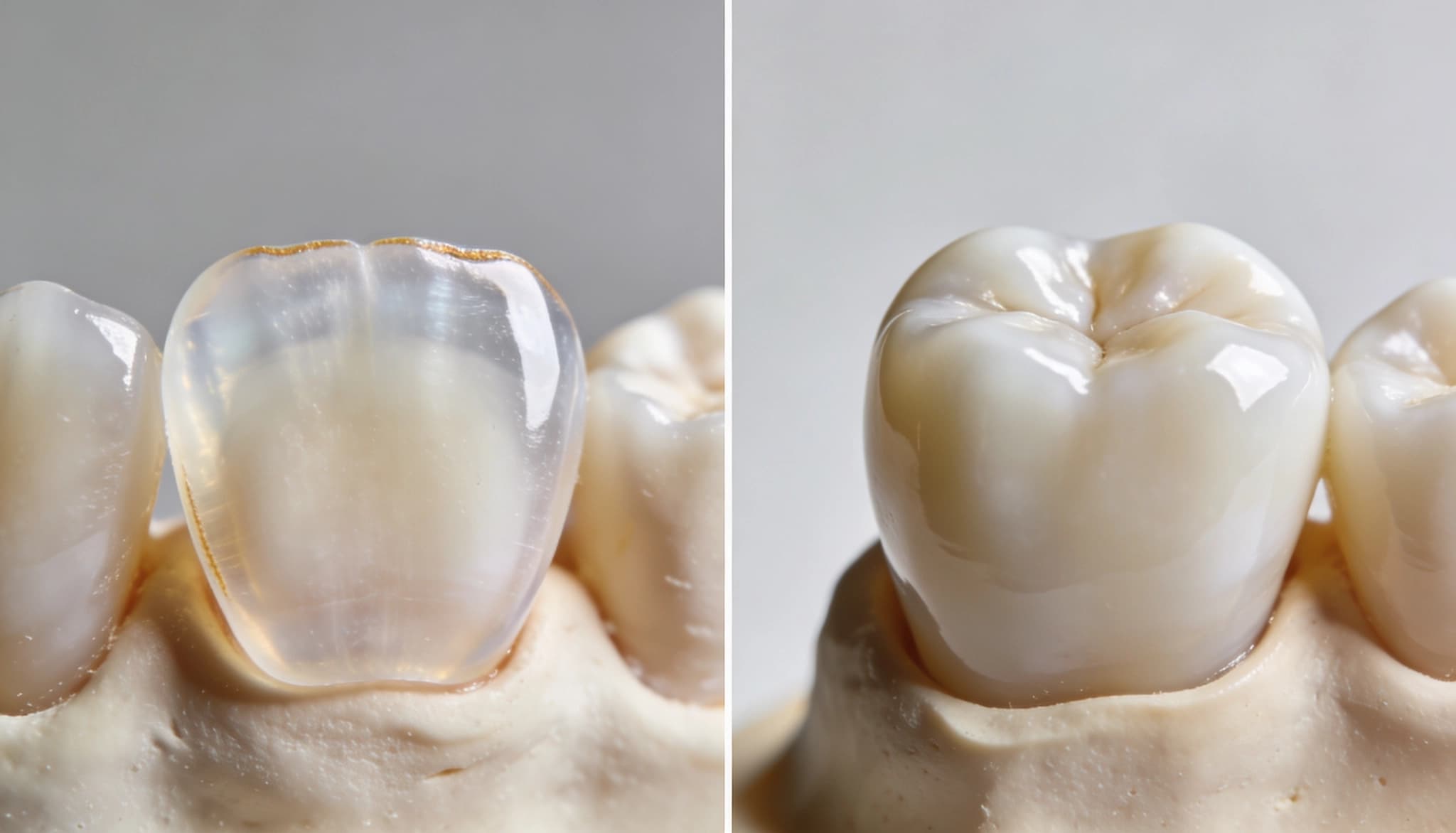
It is also worth knowing that being a candidate is not all or nothing across your whole smile. It is common for most of your front teeth to suit veneers while one weaker tooth is better served by a crown, and for a plan to mix the two so every tooth gets the right treatment.
That is a good outcome, not a complication, and it is the reason a proper assessment looks at each tooth on its own.
When a crown, aligner or bonding is the better fit
Veneers are the right tool for a specific job. Reach for a different one and you get a better, longer-lasting result for less stress. Here is how the main alternatives compare for a front-tooth concern.
| If your main issue is… | Better option than a veneer | Why |
|---|---|---|
| A heavily filled, cracked or root-treated tooth | A crown | It covers the whole tooth and protects what is left, where a veneer only faces the front |
| Genuinely crooked or crowded teeth | Clear aligners | Moving teeth into line keeps your natural enamel instead of reshaping several teeth |
| One small chip or a minor edge repair | Composite bonding | It is quicker and cheaper for a single small fix, with no need to commit to a full veneer set |
| Only colour, on otherwise healthy teeth | Whitening (done by a whitening provider) | It is the least invasive route, so there is no point reshaping teeth that just need to be brighter |
A common pattern is a combination. If your teeth are noticeably out of line, straightening them first with clear aligners in Bangkok often means you need fewer veneers afterwards, or none at all.
And when a tooth is structurally weak rather than just discoloured, a dental crown is the stronger choice. Our full comparison of a crown versus a veneer explains where the line sits, because it is the single most common mix-up patients arrive with.
Whitening is worth one honest note. We do not provide teeth whitening ourselves, so when colour is your only concern we will say so plainly and point you to a whitening provider rather than sell you veneers you do not need.
What happens at your assessment
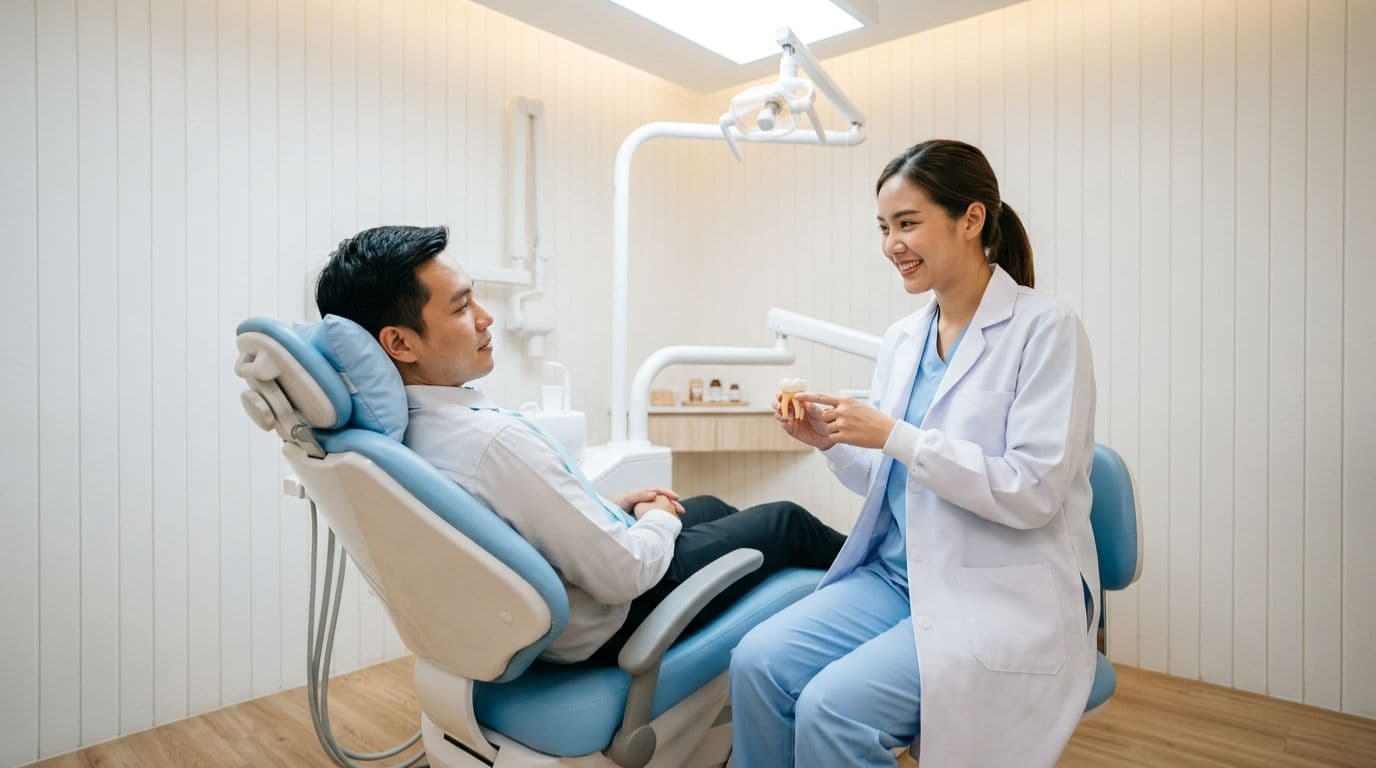
You do not need to diagnose yourself before you come in. The self-check above tells you roughly where you stand, and the assessment confirms it. Here is what a thorough veneer assessment covers.
- A look at the whole mouth, not just the front teeth. Gums, bite, existing fillings and any signs of grinding all affect whether veneers will hold.
- Photos and, where useful, X-rays. These show what is happening under the enamel and at the gum line.
- A frank conversation about your goal. Sometimes the honest answer is whitening by others or an aligner first, and you should expect to hear that.
- A treatment plan with the real numbers. Which teeth, which material, how many visits, and the price, in writing, before you commit.
- A try-in or mock-up where appropriate. Seeing the proposed shape before anything is bonded takes the guesswork out of the decision.
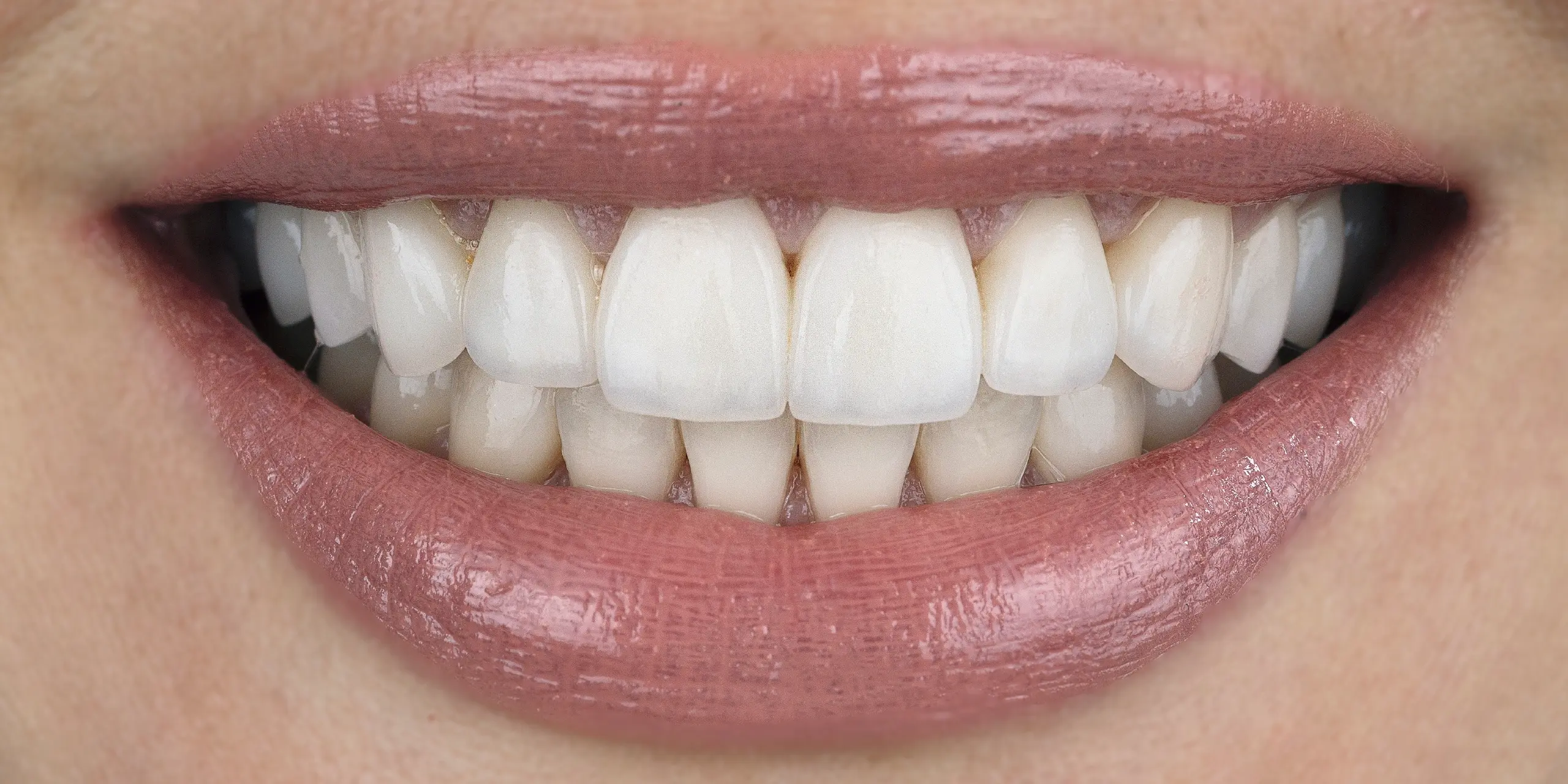
For international patients this matters even more, because you are planning a trip around the answer. We confirm your candidacy and the plan before you book flights, so you are not travelling on a maybe. You can see the kind of finish to expect in our veneer before and after gallery.
If you live overseas, send us recent photos of your teeth and a short note on what bothers you. We can usually give you a first read on whether you are a likely candidate, and a rough plan, before you ever step on a plane.
The in-person assessment on arrival then confirms it and finalises the shade and shape.
How many veneers, and what it costs
Candidacy and cost go together, because the number of teeth involved drives the price. Some people only need two front teeth treated, while others want six to eight across the smile zone for an even result.
There is no fixed number, and a good plan treats the fewest teeth that give you the look you want. To work out your likely count before the consultation, our guide to how many veneers you need walks through the smile-zone rule and the common 6, 8 and 10-tooth setups.
As a guide:
- Composite veneers start at $120 per tooth. Gentler on the budget and easier to repair.
- Porcelain veneers start at $355 per tooth. More up front, longer lasting.
- Both are placed by our cosmetic specialists, with our own on-site lab for the porcelain work and a written guarantee you can read in full in our veneer warranty in Thailand explainer.
The right material depends on your teeth, your timeline and your goal, which is the conversation we have at the assessment.
Conclusion
If your teeth and gums are healthy, you have enough enamel, and your concern is mainly how your smile looks, the odds are strongly in your favour. If you ticked one of the disqualifiers, you are most likely a "not yet", with a clear first step before veneers, or a better-suited treatment such as a crown or an aligner.
Either way, the only way to know for certain is an assessment by someone who will give you a straight answer. See our full range of veneer options and prices in Bangkok.
Send us a few photos of your teeth and a short note on what bothers you, and we will tell you honestly whether veneers, a crown, an aligner or something else is the right call for your smile.
Was this article helpful?