 Written by Dr. Nan
I am Dr. Nan, a Thai Board prosthodontist in Bangkok, and this is the question patients ask me most before they commit. So let me answer it the way I would in the chair, without the marketing gloss.
The short answer: the decision is permanent, the veneer is replaceable
When someone asks "are veneers permanent," they are usually asking two different questions at once and don't realize it:
- "Once I do this, can I undo it?" Usually no, for porcelain.
- "Will this veneer last forever?" No. Nothing in dentistry lasts forever.
Think of it this way. A porcelain veneer is a permanent commitment to a treatment, but the physical veneer is a replaceable part. It is closer to a well-fitted crown than a tattoo you can never touch again.
If a porcelain veneer chips or wears out in fifteen years, you replace that veneer. You do not go back to untouched natural enamel, because a small amount was reshaped to make room for it.
Permanent procedure vs replaceable restoration: two different things people confuse
Most pages online pick one framing and stop. Some say flatly "veneers are permanent" (true only for porcelain enamel prep). Others emphasize the 10 to 15 year lifespan and imply you can casually swap them out. Both are half the picture.
Here is the clean split I want you to remember:
| Concept | What it actually means |
|---|---|
| Permanent procedure | Enamel that is removed does not come back. This is the irreversible part, and it mainly applies to porcelain and some minimal-prep work. |
| Replaceable restoration | The veneer itself is a made object bonded to your tooth. It can chip, stain (composite), or wear, and then it gets replaced or repaired. |
Once you hold those two ideas apart, the whole topic gets a lot calmer. The permanence lives in the enamel, not in the veneer.
How much enamel actually comes off (0.3 to 0.7mm, contact-lens thin)
For a typical porcelain veneer, we remove roughly 0.3 to 0.7mm of enamel from the front of the tooth. To put that in perspective:
- 0.3 to 0.7mm is about the thickness of a contact lens or a fingernail shaving.
- Your enamel is around 1 to 2mm thick to begin with on the front surface, so this is a shallow reshaping, not a demolition.
- Done well, it stays entirely within enamel and never reaches the sensitive inner layers.
We are not grinding the tooth down. We are creating just enough room so the veneer sits flush and does not look bulky or feel thick against your lip.
That precision is exactly why material choice and a proper candidate assessment matter so much, which I will come back to.
Porcelain veneers: some enamel removed, and that part does not grow back
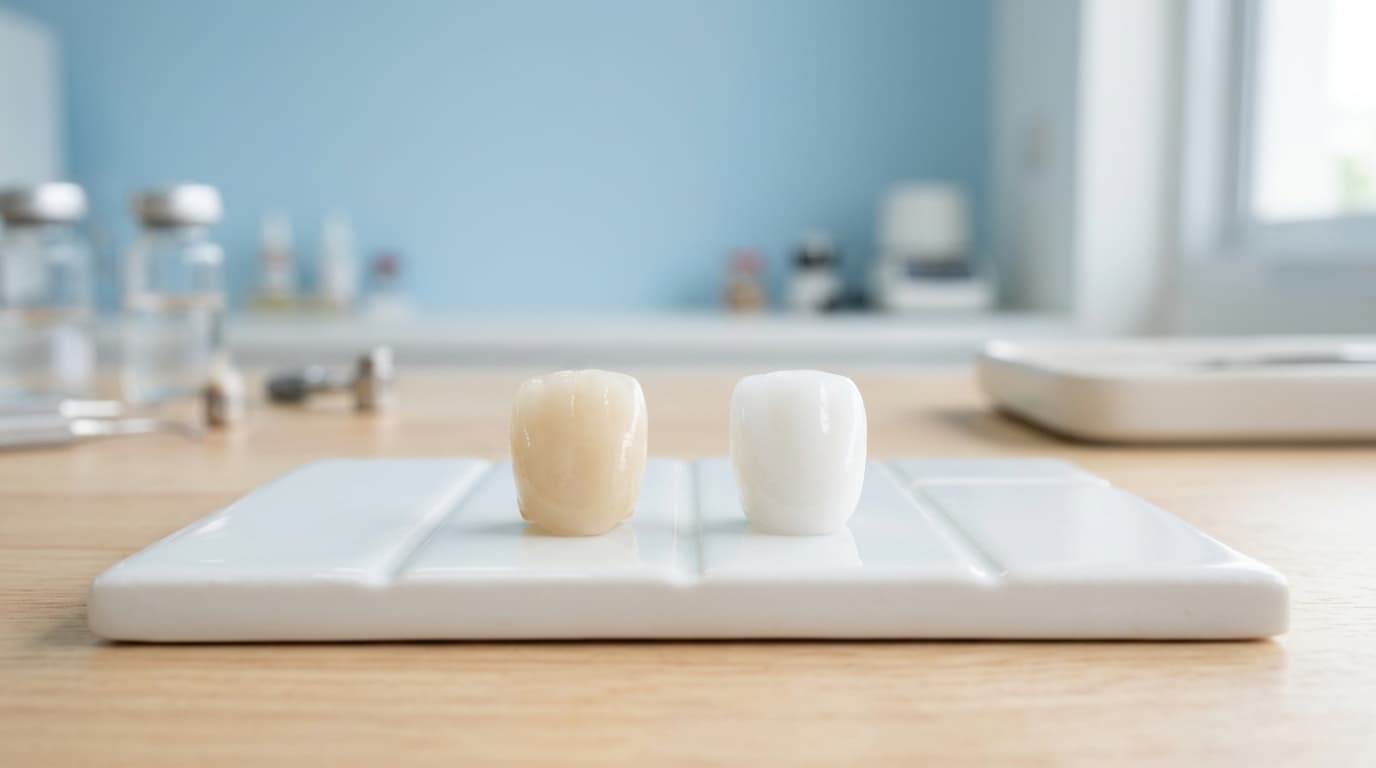
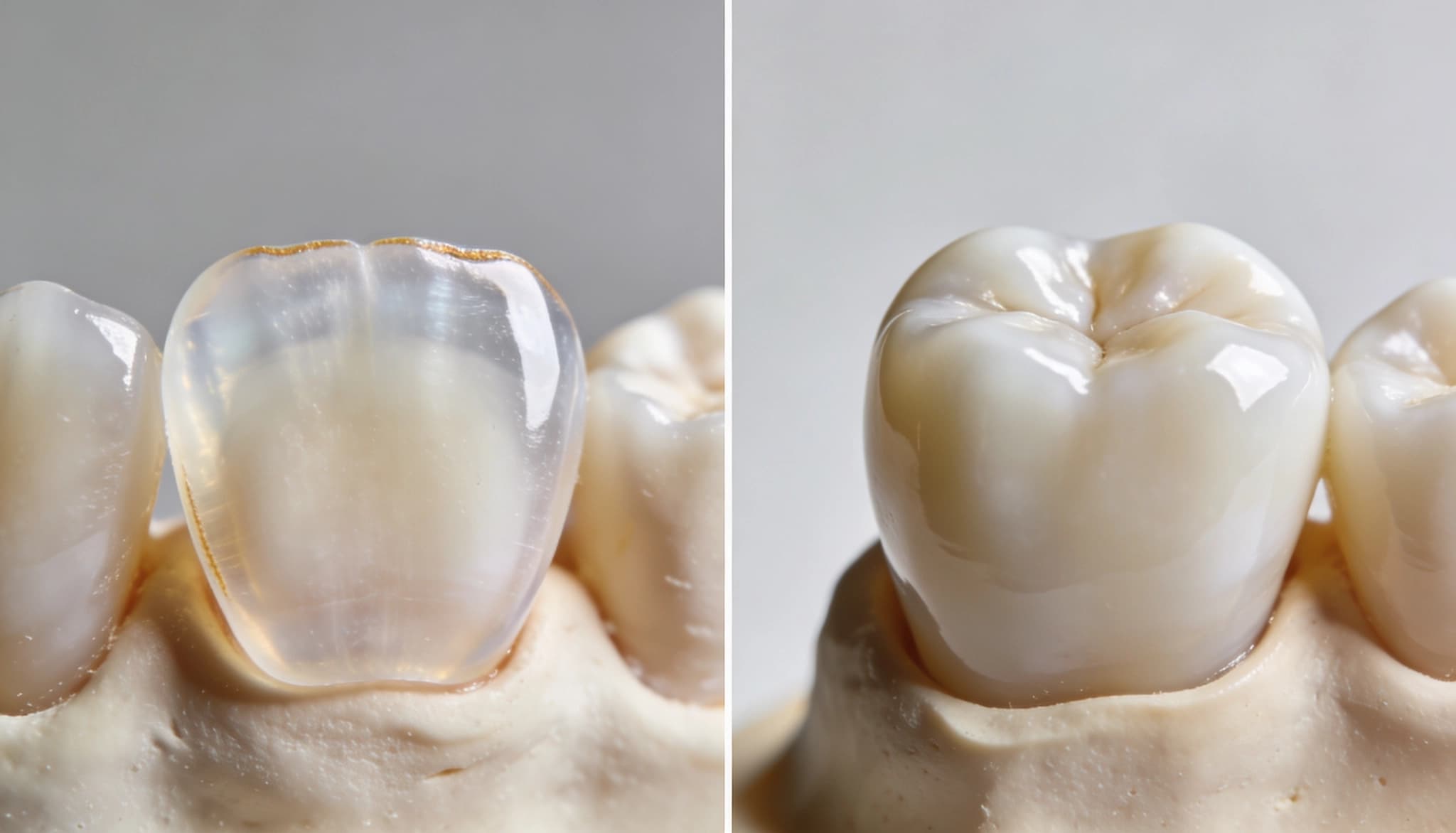
Porcelain is the reason people say veneers are permanent, and they are right about porcelain specifically. To bond a durable porcelain shell that looks natural and resists staining, we usually need that thin layer of enamel reduction.
Enamel has no living cells that regenerate, so what we remove is gone for good. That is the honest trade.
What you get in return is the longest-lasting, most lifelike result. Porcelain resists coffee, wine, and tea stains far better than natural teeth or composite, and it holds its polish for years.
In our clinic, porcelain veneers run 12,000 to 14,000 THB per tooth (around $370 to $430), and we expect 10 to 15 years of service from them when a patient is a good candidate and keeps up their hygiene.
If you want the full technical comparison, we lay it out in composite vs porcelain veneers compared in full and veneer materials compared side by side.
Composite veneers: the more conservative, often minimal or no-prep option
Composite is the honest answer to "is there a less permanent choice." We build composite veneers by bonding tooth-colored resin directly onto the tooth and shaping it by hand. Very often this needs little or no enamel removal at all.
That makes composite the more conservative and frequently reversible route.
The trade is lifespan and stain resistance. Composite veneers typically last 5 to 7 years, stain more easily over time, and can chip sooner than porcelain. They are also gentler on the wallet at 4,000 THB per tooth (around $120).
For a younger patient, someone testing the look, or a case where we want to preserve every bit of enamel, composite is often the smarter first step.
| Composite veneer | Porcelain veneer | |
|---|---|---|
| Enamel removal | Often little or none | Thin layer (0.3 to 0.7mm) |
| Reversibility | Leans reversible | Not reversible |
| Typical lifespan | 5 to 7 years | 10 to 15 years |
| Stain resistance | Lower | High |
| Price per tooth | 4,000 THB (~$120) | 12,000 to 14,000 THB (~$370 to $430) |
No-prep and minimal-prep veneers: which types are genuinely reversible
These are the veneers that come closest to truly reversible:
- No-prep means we bond an ultra-thin shell to the tooth with essentially no enamel removed.
- Minimal-prep means only a whisper of reshaping, sometimes just smoothing.
Because the underlying enamel is largely untouched, these can often be removed later and leave your natural tooth intact.
The catch is honesty about candidacy. No-prep works beautifully for some mouths and poorly for others. If your teeth are already prominent, crowded, or need shape changes, adding material without any reduction can look bulky or trap plaque at the edges.
No-prep is not a universal upgrade. It is the right tool for the right mouth, which is something we assess from your photos before promising anything.
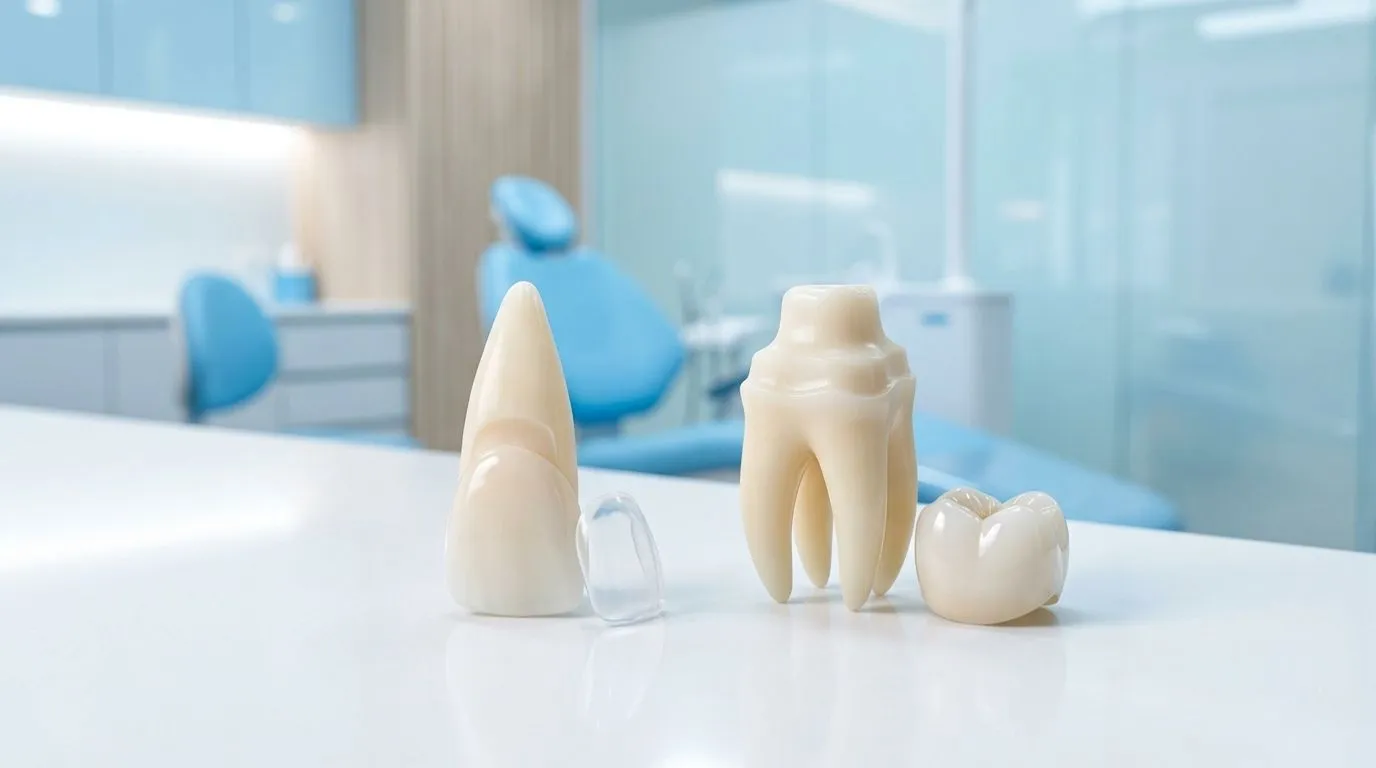
What your teeth look like underneath: still alive, not shaved to pegs
Here is the reassuring part, and it is true. Under a veneer, your tooth is still your tooth:
- The root, the pulp (the living nerve and blood supply inside) and the dentin are all intact.
- A veneer covers only the front surface.
- Your teeth stay alive. They keep their nerve, they keep sensing hot and cold, and they keep their internal structure.
We are not filing your teeth down to little pegs. That mental image comes from full crowns and from unfortunate before-and-after photos of aggressive work, not from a properly prepared veneer. A veneer is a facing, not a replacement for the tooth.
Do veneers ruin or damage your natural teeth? The calm, factual version
"Do veneers ruin your teeth" is an emotional question, so let me answer it with facts instead of spin:
- Veneers do not ruin healthy teeth when the case is done correctly on a good candidate. Removing a thin layer of enamel is a real, permanent change, but a controlled and shallow one, and the tooth underneath stays healthy.
- I will not tell you veneers "protect" your teeth either. That is an overclaim you will see elsewhere. A veneer covers the front surface, it does not armor the whole tooth.
- What actually keeps the tooth healthy is the same thing that keeps any tooth healthy: good hygiene, a precise margin where the veneer meets the tooth, and regular checkups.
Damage happens when those slip, not because a veneer is inherently harmful.
Some patients also worry about pain during prep. Sensitivity is usually mild and temporary, and we manage it with anesthetic and careful technique. I cover that fully in whether veneers hurt and how sensitivity is managed.
The real risks we will not hide: decay at the margins and being a true candidate
Every honest prosthodontist concedes these. The main risk with veneers is decay at the margins, the line where the veneer edge meets your natural tooth near the gum. If plaque builds up there and hygiene slips, a cavity can start under or beside the veneer.
This is manageable and preventable with brushing, flossing, and checkups, but it is real, and I would rather you hear it from me.
The second is candidacy. Veneers are a cosmetic solution for the surface, not a fix for:
- active gum disease
- heavy grinding without protection
- teeth that need structural repair
If you have significant decay or need a full crown, a veneer is the wrong tool. Being a genuine candidate matters, and we screen for it. You can read the honest version in whether you are a good candidate for veneers, and if you are wondering about numbers, how many veneers you might actually need walks through that.
How long veneers last before they need replacing (and why that is not the same as permanent)
This is where "permanent" trips people up. Hold these three numbers apart:
- Porcelain veneers last 10 to 15 years.
- Composite veneers last 5 to 7 years.
- The enamel change is permanent from day one.
The lifespan is not the permanence. The veneer is a wearing part with a service life.
So when your veneer eventually reaches the end of its life, you replace the veneer, not the decision. Because a little enamel was already reshaped for a porcelain veneer, the replacement bonds to the same prepared surface.
You stay in veneers, you just get a fresh set. That is normal maintenance, not a failure.
What happens if a veneer fails: our 1-year written warranty and replacement
For international patients deciding from Australia, the UK, New Zealand, or Canada, the fair worry is: what if something goes wrong after I fly home? Here is what covers you:
- A 1-year written warranty on every set of veneers we place. If a veneer fails due to a workmanship issue within that period, we replace it. In writing, not a verbal promise.
- Porcelain repairs. A chipped or debonded porcelain veneer is typically re-bonded or replaced.
- Composite repairs. Often repaired or reshaped chairside in a single visit.
- An on-site dental lab, so we control the fabrication and turnaround directly.
How the warranty works in detail is here: how our veneer warranty works.
Deciding remotely: how much enamel you have shapes your options
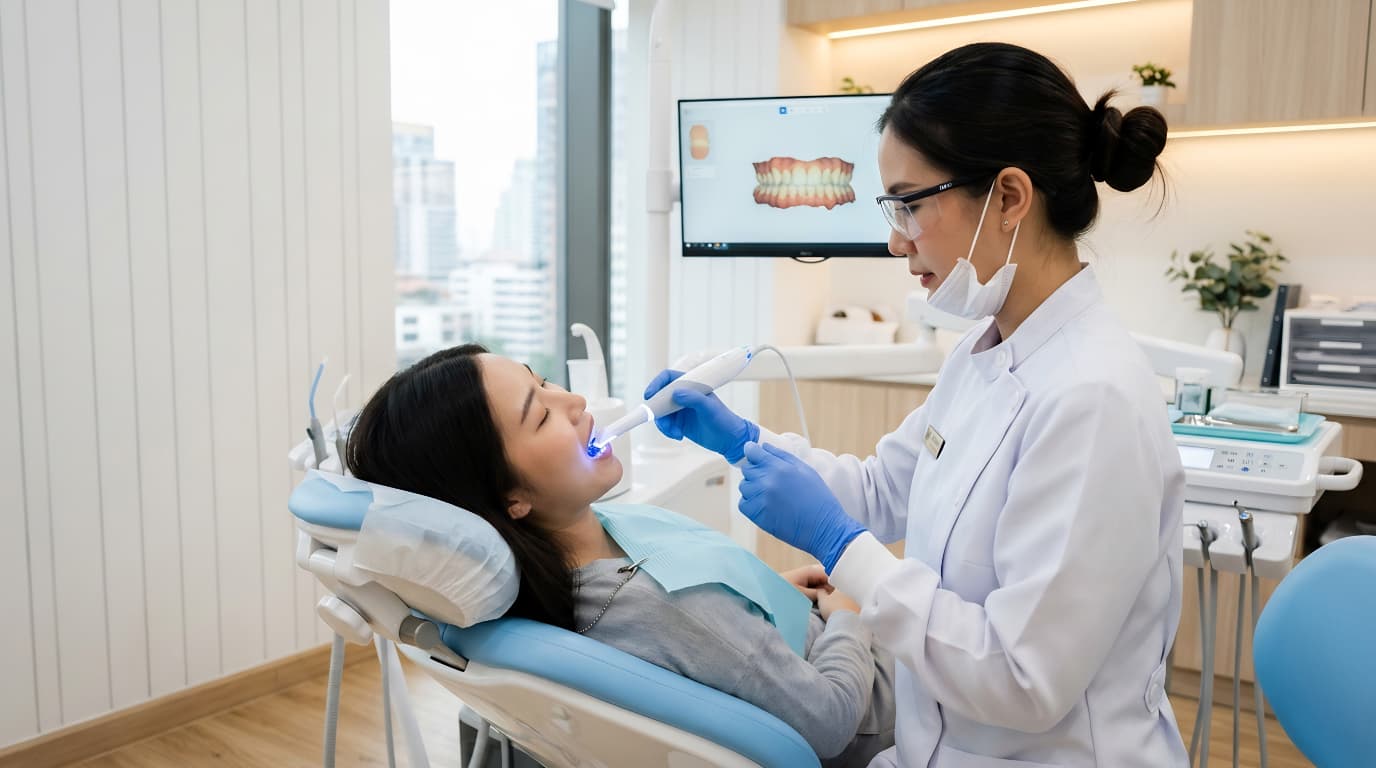
The single biggest factor in how "permanent" your veneers will be is how much natural enamel you have to work with, and the shape and position of your teeth. That is a clinical judgment, and it is exactly what we assess before you book a flight.
What shifts the recommendation between porcelain, composite, and minimal-prep:
- thin enamel
- existing restorations
- crowding
- bite issues
This is why we do not quote a one-size answer online. Send us clear photos and we will tell you, honestly, which route preserves the most of your natural tooth while getting you the result you want.
You can explore both material paths through porcelain and composite veneers in Bangkok.
Conclusion
The permanence lives in the enamel, not in the veneer. Porcelain asks for a thin, one-way trade of 0.3 to 0.7mm of enamel and repays it with 10 to 15 lifelike years. Composite and no-prep options lean reversible but wear sooner. Underneath any of them, your tooth stays alive and intact.
So the real question is not "are veneers permanent." It is "how much of my enamel does my case actually need to give up," and that is decided by your teeth, not by a price list.
You do not need to fly here to decide. Send me a few clear photos of your teeth, tell me the look you are after, and I will review them personally and reply within 24 hours with which material preserves the most of your natural enamel, a realistic cost, and whether anything should be handled first.
Frequently Asked Questions
Are veneers permanent or do they have to be replaced?
Both are true, for different reasons. The procedure is permanent for porcelain because a thin layer of enamel is removed and does not grow back. The veneer itself is a restoration with a service life, so it does get replaced, roughly every 10 to 15 years for porcelain and 5 to 7 years for composite.
Can you take veneers off and go back to your natural teeth?
It depends on the type. No-prep and minimal-prep veneers, and most composite veneers, can often be removed with your natural enamel left intact. Porcelain veneers that required enamel reduction cannot fully return you to untouched teeth, because that enamel is gone.
What happens to your teeth under veneers?
The tooth stays alive and intact. The root, the pulp (nerve), and the dentin are all still there. A veneer covers only the front surface. We are not shaving teeth down to pegs, that is a full crown, not a veneer.
Do veneers ruin or damage your natural teeth?
Not when done correctly on a good candidate. Removing a thin layer of enamel is a permanent but shallow and controlled change, and the tooth underneath stays healthy. Damage comes from poor hygiene or a poor candidacy fit, not from veneers themselves.
Are composite veneers reversible?
Often, yes. Composite frequently needs little or no enamel removal, which makes it the more conservative and typically reversible option. The trade is a shorter lifespan of about 5 to 7 years and less stain resistance than porcelain.
Do teeth rot or decay under veneers?
They can if hygiene slips, mainly at the margin where the veneer meets the tooth near the gum. This is preventable with brushing, flossing, and regular checkups. A well-fitted margin and good hygiene keep the tooth underneath healthy.
How much enamel is removed for veneers?
For porcelain, roughly 0.3 to 0.7mm, about the thickness of a contact lens. Composite and no-prep options often remove little or none.
How long do veneers last before they need replacing?
Porcelain veneers typically last 10 to 15 years. Composite veneers typically last 5 to 7 years. Lifespan depends on your bite, hygiene, and habits like grinding.
Are no-prep or minimal-prep veneers reversible?
They are the closest to reversible, because little or no enamel is removed. Whether they suit you depends on your tooth shape and position, which we assess from photos before recommending them.
Do your teeth stay alive and healthy under veneers?
Yes. Your teeth keep their nerve and blood supply, they still sense temperature, and their internal structure stays intact. A veneer is a facing on the front, not a replacement for the living tooth.
Was this article helpful?