 Written by Dr. Nan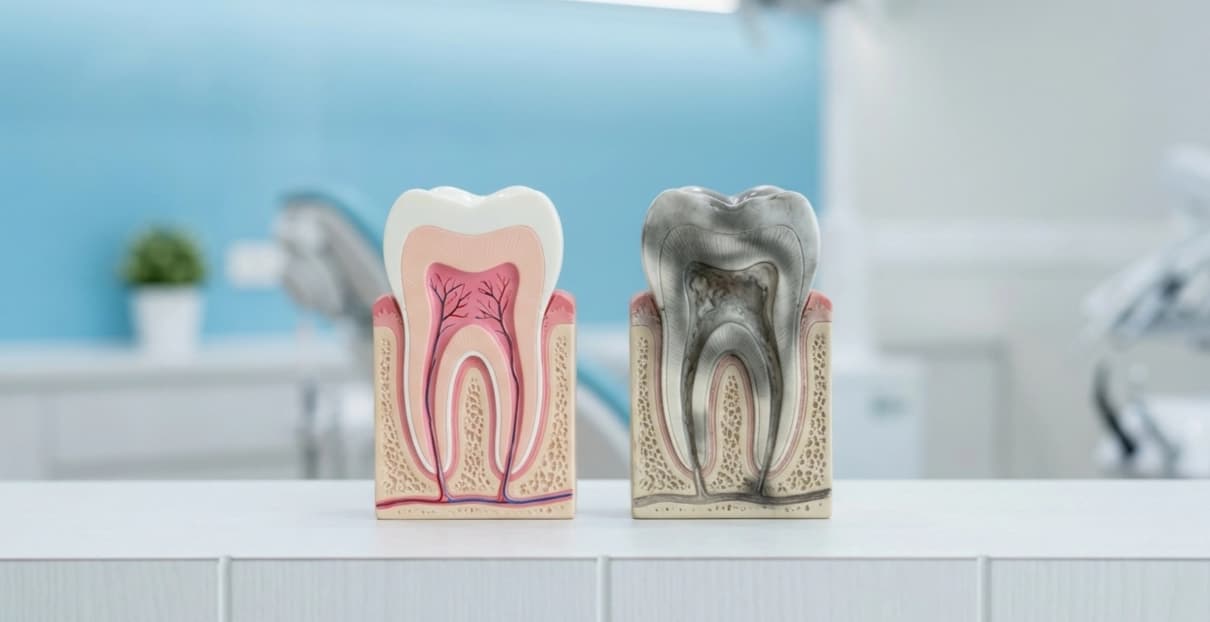
A “dead tooth” sounds dramatic, and it can be, but it’s also one of the most treatable dental conditions when caught early. Whether you’ve noticed your tooth turning grey after a fall, you’re feeling unexplained throbbing weeks after a dental procedure, or you’re wondering if that suddenly painless tooth is actually fine, this guide walks you through everything: what’s happening inside the tooth, what your treatment options are, what they cost in different countries, and how to decide between saving it or removing it.
What Is a Dead Tooth?
A dead tooth (clinically called a non-vital tooth , necrotic tooth , or a tooth with pulp necrosis) is a tooth whose internal soft tissue (the pulp) has died. The pulp sits inside the hollow chamber at the centre of every tooth and contains the nerves, blood vessels, and connective tissue that keep the tooth alive and responsive.
When that pulp dies, the outer hard structures of the tooth (enamel, dentin, cementum) stay in place, which is why a dead tooth doesn’t fall out, but the tooth loses its blood supply, its sensation, and its ability to repair itself. Bacteria can then colonise the empty pulp chamber, leading to infection that spreads into the bone around the tooth root.
A dead tooth is not the same as a “dying” tooth. A dying tooth still has some living pulp, often inflamed, and can sometimes be saved with conservative treatment. Once full pulp necrosis sets in, root canal therapy or extraction become the only realistic options.
How to Tell If Your Tooth Is Dead: 6 Symptoms
Dead teeth often present a confusing mix of symptoms, and sometimes none at all. Here are the six most common signs.
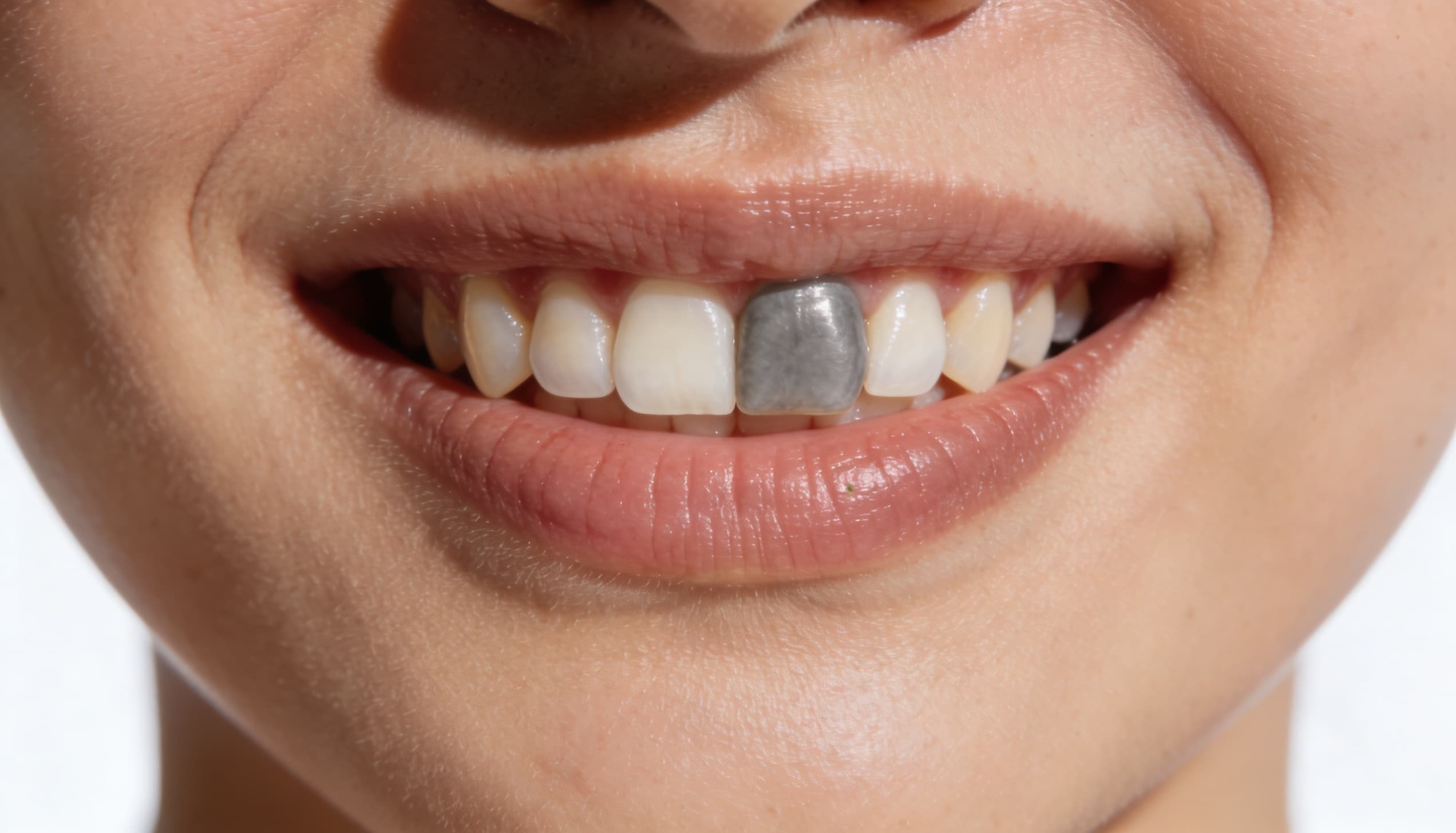
Discoloration: yellow, grey, brown, or black
The most visible symptom. As the pulp tissue breaks down, blood pigments (haemosiderin, biliverdin) leak into the dentin and stain the tooth from the inside out. The progression typically follows this sequence:
- Yellow to dark yellow: early-stage discoloration, often within days of pulp death
- Pink or reddish hue: internal bleeding from blunt trauma
- Grey or bluish-grey: most common appearance after weeks to months
- Brown to black: long-standing necrosis, often years untreated
A single tooth that’s noticeably darker than its neighbours is the single most reliable visual sign of pulp death.
Pain, including the confusing kind
Dead teeth can hurt for two opposite reasons. Early on, dying pulp tissue triggers throbbing pain, especially when lying down (blood pressure to the head increases). Later, after the nerve is fully dead, the tooth itself feels nothing, but infection spreading into the bone or surrounding ligament creates pressure pain when biting, tapping, or chewing on that side.
If you’ve had a tooth that was painful for weeks and then suddenly went quiet, don’t assume it’s healed. The opposite is often true.
Hot/cold sensitivity (early stage only)
Sharp sensitivity to hot or cold drinks is typical of a tooth that’s dying but not yet dead. Once full necrosis sets in, sensitivity disappears entirely because there are no live nerves left to respond.
Bad breath or a bad taste
Necrotic tissue and bacterial infection produce foul-smelling sulphur compounds. If you notice persistent bad breath localised to one area of your mouth, or a metallic, salty, or rotten taste, it can indicate pulp death and developing infection.
Swelling, gum abscess, or a “pimple” on the gum
A small, pus-filled bump on the gum near a darkened tooth is a fistula : the body’s drainage channel for an abscess at the root tip. It may come and go. This is a sign of established infection and warrants urgent dental attention.
No symptoms at all
Roughly 20-30% of dead teeth are completely silent. They’re often discovered during routine X-rays as a dark area at the root tip (a periapical lesion). This is why six-monthly dental check-ups matter, even when nothing hurts.
Why Teeth Die: 6 Common Causes
Deep decay (the most common cause)
When a cavity is left untreated, bacteria progress through the enamel and dentin and eventually reach the pulp. Once inside, bacterial infection inflames and then destroys the pulp tissue. This is the leading cause of pulp necrosis worldwide.
Trauma and the delayed-death timeline
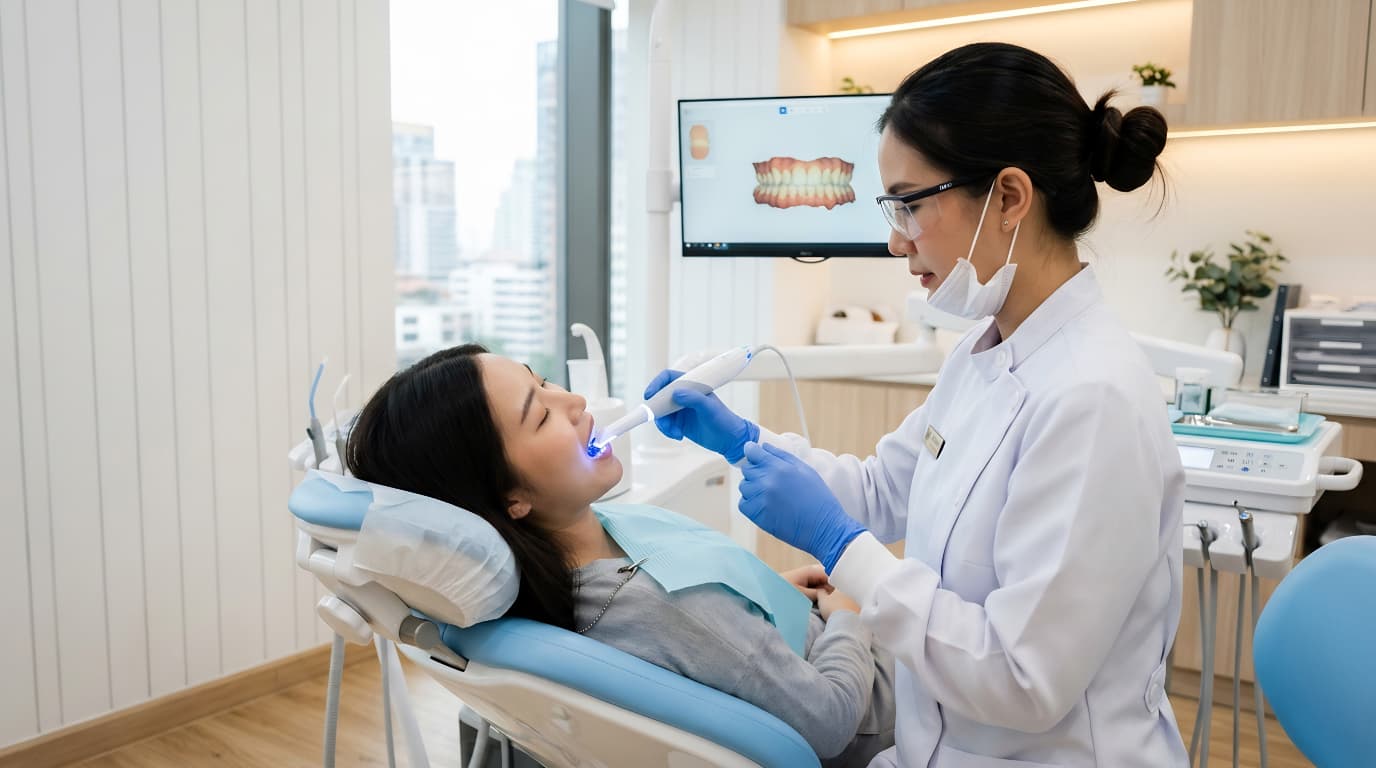
A blow to the mouth (sports injury, fall, car accident) can sever the tiny blood vessels entering the tooth root, even if the tooth itself doesn’t crack. Pulp death from trauma can happen in three patterns:
- Hours to days: severe trauma, immediate severance of blood supply
- Weeks to months: moderate trauma where the pulp slowly fails
- Months to years: mild trauma; the tooth slowly darkens long after the original injury is forgotten
If you’ve had any dental trauma, even years ago, and a tooth in that area is darkening, get it checked.
Cracks and fractures
A crack that extends into the pulp chamber lets bacteria in. Vertical fractures along the root are particularly destructive and often unrepairable.
Advanced gum disease
Severe periodontitis can expose the root surface and allow bacteria to enter the pulp through tiny accessory canals at the side of the root.
Bruxism (teeth grinding)
Chronic clenching and grinding stress the pulp with repeated micro-trauma. Over years, this can lead to pulp degeneration, especially in already-restored teeth.
Repeated dental procedures on the same tooth
Each time a tooth is drilled and refilled, the pulp is disturbed. A tooth that has had multiple deep fillings or a previous large restoration is at higher risk of eventual pulp death, sometimes years after the last procedure.
Is a Dead Tooth Dangerous? Risks of Ignoring It

Short answer: yes, but it’s fully treatable when caught early. Here’s what happens if you don’t act.
Localised consequences:
- Periapical abscess: pus collects at the root tip, causing severe pain and facial swelling
- Bone loss: chronic infection eats away at the jawbone around the root
- Fistula formation: the body creates a drainage channel through your gum
- Adjacent tooth infection: neighbouring teeth can become infected through shared bone
- Eventual tooth loss: untreated abscesses destroy the supporting structures
Systemic consequences (rare but documented):
- Bacteraemia: bacteria from the dead tooth enter the bloodstream
- Endocarditis: bacterial infection of heart valves, particularly risky for people with pre-existing heart conditions
- Sepsis: life-threatening systemic infection (extremely rare, but possible)
The timeline matters. A dead tooth left for weeks may need only a routine root canal. Left for months, it often requires more complex treatment. Left for years, extraction may become unavoidable. Catching it early almost always means saving the tooth.
Can a Dead Tooth Heal Itself?
No. This is one of the most common, and most dangerous, misconceptions in dentistry.
The pulp inside a tooth has no regenerative capacity once it’s necrotic. Unlike skin, bone, or even other dental tissues, dental pulp cannot regrow blood supply or nerve fibres. There is currently no antibiotic, supplement, oil pull, or natural remedy that reverses pulp necrosis.
Two things often confuse patients into believing a tooth has healed:
- Pain disappearing: when the last living nerve fibres die, sharp pain stops. The tooth feels “fine” but the necrosis is now complete and infection is silently progressing.
- A draining fistula relieving pressure: the gum pimple lets pus escape, removing pressure pain. The infection isn’t gone; it’s just venting.
If you’ve been told you have a dead tooth, or you suspect it, the only path to resolution is professional treatment.
Save vs Extract: How to Decide
Most dead teeth can be saved with root canal therapy. Some can’t. Here’s the framework dentists use.
Decision matrix
| Factor | Lean toward SAVING | Lean toward EXTRACTING |
|---|---|---|
| Tooth location | Front tooth (visible, easier RCT) | Wisdom tooth, very back molar |
| Tooth structure | Mostly intact, no major fracture | Cracked through the root, severely broken down |
| Bone support | Healthy surrounding bone | Significant bone loss from chronic infection |
| Infection severity | Localised, controllable | Spread, recurrent, or unresponsive to RCT |
| Patient age & health | Younger, healthy, low-risk for surgery | Older, immunocompromised, on bisphosphonates |
| Cost considerations | Save costs less long-term (RCT + crown vs implant) | Extraction + implant if RCT unlikely to succeed |
| Previous RCT failure | First-time RCT, likely to succeed | Previously failed retreatment |
When extraction is the better choice

Sometimes saving a tooth is more expensive, more painful, and less predictable than removing it. Extraction is usually preferred when:
- The tooth is fractured below the gum line
- Root canal has already been attempted twice without success
- The tooth has lost more than 50% of its bone support
- Restoration would cost significantly more than implant replacement
- The patient has severe medical contraindications to long endodontic procedures
In those cases, extraction followed by a dental implant or bridge is the more durable solution.
Root Canal on a Dead Tooth: Step by Step
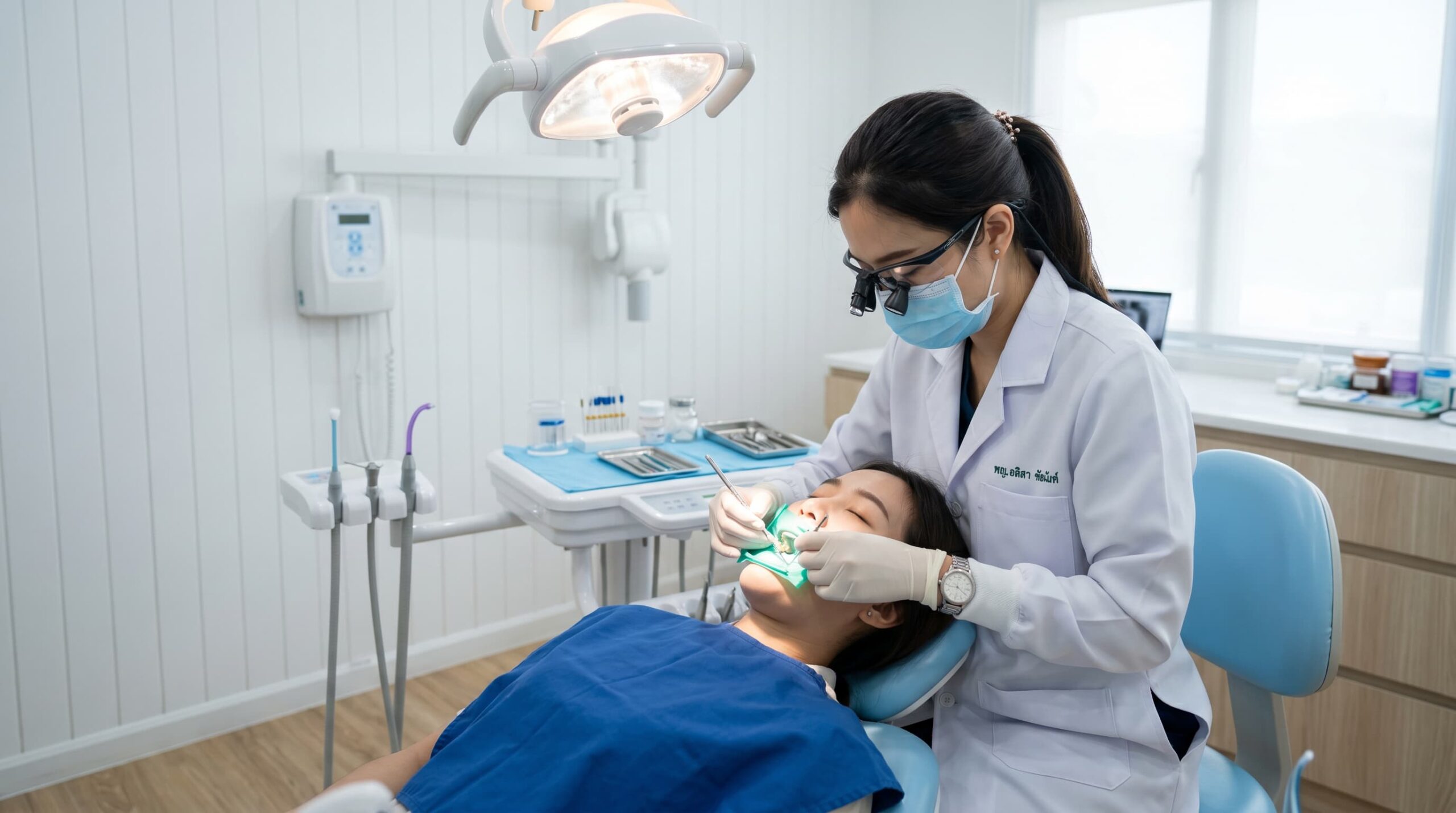
Root canal therapy (RCT, also called endodontic treatment) is the gold-standard treatment for a dead but salvageable tooth. Modern RCT has a success rate above 90% when performed by an experienced dentist.
The 4-step procedure
- Anaesthesia. Local anaesthetic numbs the tooth and surrounding tissue. Despite the dead nerve, anaesthesia is still used to numb the gum and bone.
- Access opening. A small opening is drilled through the top of the tooth to reach the pulp chamber.
- Cleaning and shaping. The dentist uses fine instruments and antibacterial irrigants to remove the necrotic pulp, shape the canals, and disinfect the entire root system.
- Filling and sealing. The cleaned canals are filled with a biocompatible material (gutta-percha) and sealed to prevent re-infection. A temporary or permanent restoration is placed on top.
Duration and recovery
A single-canal front tooth takes about 60 minutes. A multi-canal molar can take 90-120 minutes, sometimes split across two appointments. Most patients report mild soreness for 2-3 days afterwards, easily managed with ibuprofen.
Why a crown almost always follows
A tooth that has had RCT loses its internal blood supply and becomes more brittle over time. A back tooth subjected to chewing forces will crack within months to years if not protected with a crown. For front teeth, sometimes a veneer or bonding is enough. More on that below.
At Dental Veneer Bangkok , root canal therapy is followed by a CAD/CAM zirconia or E-max crown placed within 7 days of completing the RCT, restoring full function and aesthetics. Our step-by-step crown procedure guide walks through exactly what each visit involves. Learn more about our zirconia and E-max dental crowns in Bangkok.
Does a Dead Tooth Need a Crown?
For most dead teeth, yes, and here’s why.
Back teeth: a crown is essentially mandatory
Molars and premolars take the brunt of chewing forces (up to 200 PSI during clenching). A root-canal-treated molar without a crown has a significantly higher risk of vertical root fracture within 5 years. Once a tooth fractures vertically, it usually cannot be saved. A well-made crown, by contrast, protects that tooth for the long term, and our guide to how long dental crowns last explains what to expect by material.
Front teeth: it depends
A front tooth that’s been root-canal-treated and still has most of its natural structure can sometimes be restored with:
- Internal bleaching: if the only issue is darkening, the tooth can be lightened from inside
- Composite bonding: for small chips or minor reshaping
- Porcelain veneer: covers the front surface, restores colour and shape
- Full crown: if structural damage is significant
Crown materials for dead teeth
| Material | Best for | Lifespan | Bangkok price |
|---|---|---|---|
| All-ceramic (E-max) | Front teeth, maximum aesthetics | 10-15+ years | 16,000 THB (~$470) |
| Zirconia | Back teeth, strength priority | 15-20+ years | 18,000 THB (~$530) |
| PFM (porcelain-fused-to-metal) | Budget option | 10-15 years | Not offered at our clinic |
See full details and before/after photos on our dental crowns Bangkok page.
Dead Front Tooth: Cosmetic Solutions
A dead front tooth is one of the most distressing dental problems patients face. It’s visible every time you smile, talk, or photograph. Three options exist depending on how much structural damage the tooth has sustained.
Option 1: Internal bleaching (least invasive)
If the tooth is structurally sound and the only issue is dark discoloration, internal bleaching can restore its natural colour. The dentist removes the existing filling, places a bleaching agent inside the pulp chamber, and seals the tooth. Repeated over 1-3 visits, this often returns the tooth to within a shade of its neighbours, without any drilling of the outer surface.
- Pros: Cheap, conservative, preserves tooth structure
- Cons: Doesn’t always work fully, results can fade over years
- Best for: Recent darkening, minor to moderate colour change
Option 2: Porcelain veneer
If bleaching fails or the discoloration is severe, a porcelain veneer covers the front surface of the tooth and restores both colour and minor shape issues. This requires removing about 0.5 mm of enamel from the front of the tooth.
- Pros: Excellent aesthetics, lasts 10-15+ years, doesn’t fade
- Cons: Irreversible (enamel removed), more expensive than bleaching
- Best for: Front teeth with structural integrity but persistent discoloration
- Bangkok price: 12,000-14,000 THB (~$370-430) per tooth
Compare composite vs porcelain in our veneers Bangkok guide.
Option 3: Full crown
When the dead front tooth has significant structural damage (large old fillings, fractures, or after RCT with major tissue loss), a full crown wraps the entire visible portion of the tooth.
- Pros: Maximum strength, full aesthetic control, protects what remains of the tooth
- Cons: Most invasive option, requires more tooth reduction
- Best for: Structurally compromised front teeth
- Bangkok price: 16,000 THB (E-max) (~$470) per tooth
How Much Does Dead Tooth Treatment Cost?
Costs vary dramatically by country and treatment plan. The full restoration of a single dead tooth typically requires both root canal therapy and a crown.
International cost comparison (single molar: RCT + crown)
| Country | Root canal (molar) | Ceramic crown | Total package | Savings vs USA |
|---|---|---|---|---|
| Bangkok, Thailand | ~$370-470 | ~$490-550 | ~$860-1,020 | |
| USA | ~$1,500-2,000 | ~$1,200-2,500 | $2,700-4,500 | baseline |
| UK | ~$880-1,260 | ~$760-1,510 | $1,640-2,770 | ~30% |
| Australia | ~$1,300-1,640 | ~$1,180-1,640 | $2,480-3,280 | ~25% |
| Singapore | ~$800-1,200 | ~$900-1,400 | $1,700-2,600 | ~40% |
Prices indicative, sourced from public clinic publications. Always confirm with a free consultation. Bangkok prices reflect typical mid-range cosmetic dental clinic rates including consultation, X-rays, RCT, and final crown.
For a dead front tooth treated with internal bleaching + a porcelain veneer (no crown), the Bangkok total is approximately $470-620 versus $1,500-3,500 in Western countries: savings of 60-80%.
Treating a Dead Tooth in Bangkok: What International Patients Should Know

Bangkok has become one of the world’s leading dental tourism destinations for a reason: the quality of care matches Western standards, prices are 60-80% lower, and modern clinics specialise in international patients.
Single-trip feasibility
A dead tooth requiring RCT + crown can typically be completed in 5-7 days in Bangkok using CAD/CAM same-week crown technology, comfortably within a typical holiday or short business trip. The schedule looks like this:
- Day 1: Consultation, X-rays, treatment plan, root canal session 1
- Day 2-3: Root canal session 2 (if multi-canal), tooth preparation, digital scan
- Day 4-6: Crown fabrication in our in-house lab (no shipping delays)
- Day 7: Permanent crown bonding, bite adjustment, polish
For a dead front tooth treated with porcelain veneer, the timeline is similar: 7-10 days for the full process from impression to bonding.
Flying after treatment
It’s safe to fly the same day or next day after a routine RCT and crown placement. No sedation is used (only local anaesthesia), and modern endodontic procedures cause minimal swelling. Patients with extensive treatment or surgical extractions should wait 24-48 hours.
At Dental Veneer Bangkok in central Siam (next to BTS Siam):
70% of our patients come from abroad: France, UK, USA, Australia. Treatment is delivered by Thai Board-certified prosthodontists (Dr. Nan, Dr. Ple), with an in-house dental lab so there’s no waiting weeks for crowns to ship. We use a CAD/CAM digital workflow for precision and speed, and every treatment includes a 1-year warranty on all crowns and veneers.
Free initial consultation (in person or virtual via WhatsApp), English-speaking team, and virtual follow-ups after you fly home.
Learn more about our dental crown services in Bangkok.
How to Prevent Tooth Death
Many cases of pulp necrosis are preventable. The five most effective preventive habits:
- Treat decay early. A small cavity is a 30-minute filling. Left for two years, the same cavity may need a root canal.
- Wear a mouthguard for contact sports. A custom-fitted guard costs less than a single root canal and prevents most sports-related dental trauma.
- Address bruxism. If you wake with jaw soreness or your dentist notes wear patterns, get a night guard. Chronic grinding silently damages pulp tissue over years.
- Don’t skip 6-month check-ups. X-rays catch silent pulp necrosis before symptoms appear, when treatment is simpler and cheaper.
- Pay attention to colour changes. A single tooth darkening, even subtly, is rarely innocent. Get it assessed within weeks, not years.
Conclusion: A Dead Tooth Is Treatable, Don’t Wait
A dead tooth is not a dental death sentence. With timely treatment (usually root canal therapy followed by a crown), most dead teeth can be saved, preserved for decades, and made indistinguishable from your other teeth. The longer treatment is delayed, the more options narrow and costs rise.
If you’re noticing colour changes, unexplained pain, or any of the symptoms covered above, the next step is straightforward: a professional assessment. The earlier you act, the more we can save.
Already had your root canal and looking for the cosmetic restoration? See our zirconia and E-max dental crown options in Bangkok, from $470, completed in 7 days.
Noticed a darkening tooth, throbbing pain, or a gum abscess? Don’t wait. Send us photos and X-rays (if available) and receive a personalized treatment plan and quote within 24 hours. Free consultation, in person at our Siam clinic or virtually via WhatsApp.
Frequently Asked Questions
How long can a dead tooth stay in my mouth before it’s an emergency?
A dead tooth is rarely an immediate emergency unless there’s facial swelling, fever, or severe pain. Those signs warrant same-day care. Otherwise, you have weeks to seek treatment, but every month of delay increases the risk of bone loss and treatment complexity. Don’t wait beyond 4-6 weeks of confirmed pulp death.
Will a dead tooth fall out on its own?
Sometimes, but usually not for years. The dead pulp doesn’t affect the tooth’s anchoring in the bone. What causes loss is the chronic infection eating away at supporting bone over months and years. Waiting for it to fall out leads to widespread bone destruction that complicates future implant placement.
Is the tooth still “dead” after a root canal?
Yes, technically. RCT removes the dead pulp and seals the tooth, but it doesn’t restore living tissue. The tooth becomes a non-vital structure: preserved, functional, and protected from infection, but with no internal blood supply. This is why RCT-treated teeth become brittle and usually need a crown.
How long does it take for a tooth to die after trauma?
Anywhere from a few hours to several years. Severe trauma (car accident, hard sports impact) can sever blood supply immediately. Moderate impacts often kill the pulp over weeks to months. Mild trauma may take years to manifest as visible darkening. Get any traumatised tooth assessed within 1-2 weeks even if it feels normal.
Can you whiten a dead tooth at home?
Standard whitening strips and trays only affect the outer enamel and won’t lighten internal discoloration. A dead tooth’s dark colour comes from inside the dentin and requires internal bleaching: placing a bleaching agent inside the pulp chamber, performed in a dental clinic. At-home whitening is ineffective for this.
Can a dead tooth give you sepsis?
Rarely, but yes. Untreated infection from a dead tooth can spread bacteria into the bloodstream and trigger systemic illness, including, in severe cases, sepsis or endocarditis. Risk is higher for people with weakened immune systems, heart valve conditions, or uncontrolled diabetes. This is one of the strongest reasons to treat dead teeth promptly.
Should I see a general dentist or an endodontist?
A general dentist with experience in endodontics can handle most root canal cases, especially on front teeth and single-canal premolars. Complex cases (multi-canal molars, retreatments, or teeth with unusual anatomy) are best referred to an endodontist (a root canal specialist). A good general dentist will refer when appropriate.
Was this article helpful?