 Written by Dr. Nan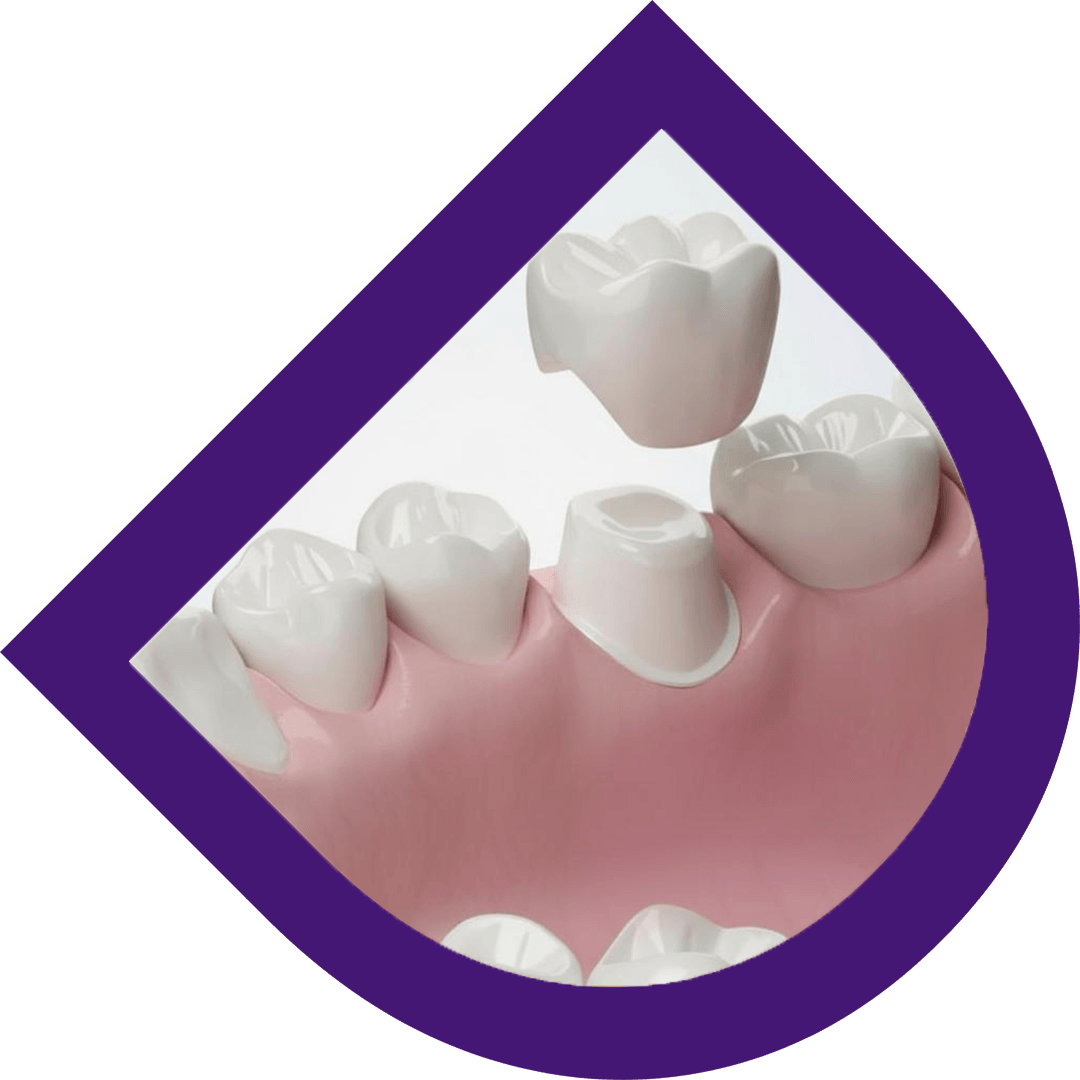
If you have been told you need a crown, you probably want to know exactly what happens in the chair before you commit. The good news is that the dental crown procedure is one of the most routine restorations in modern dentistry, and most of it is painless.
A crown is a tooth-shaped cap that covers a damaged tooth to restore its shape, strength, and appearance. To see materials, longevity, and the full price list, our dental crowns in Bangkok page covers it in detail. This guide focuses on the procedure itself.
Step 1: Consultation and assessment
Everything starts with an examination. The dentist looks at the tooth, takes a digital X-ray, and checks how much healthy structure is left. This is the moment they confirm a crown is the right fix rather than a filling, an onlay, or, for a missing tooth, a bridge or implant.
This step is also where any prior treatment is flagged. If the tooth is badly decayed or the nerve is infected, it may need root canal treatment first. We do not perform root canal treatment in-house, so if your tooth needs it we will arrange that step with a trusted endodontist before the crown is built.
A crown placed over a stable, treated tooth lasts far longer than one rushed onto a compromised root.
It also helps to know why a crown gets recommended in the first place. The usual reasons:
- a tooth that is cracked or broken
- a large old filling that no longer holds
- a tooth that has worn down
- a weakened tooth that needs full coverage to stop it splitting
A crown wraps the whole tooth, which is why it protects far better than another filling on a tooth that has already lost a lot of structure.
What it feels like: nothing more than a normal check-up. No drilling, no needles, just a conversation and a few images. You will leave this step knowing the material, the price, the number of visits, and whether your tooth needs anything done before the crown.
Step 2: Numbing and tooth preparation
Once the plan is agreed, the dentist numbs the tooth and surrounding gum with a local anaesthetic. You stay fully awake, but you will not feel pain during the work that follows.
Preparation means two things:
- removing any decay
- gently shaping the tooth so the crown has room to sit
A thin layer of enamel is reshaped, and the dentist preserves as much natural structure as possible. This part takes roughly 30 to 45 minutes per tooth.
What it feels like: you will sense pressure and vibration from the instruments, and you will hear the handpiece, but the anaesthetic blocks the pain. Most patients are surprised by how undramatic it is.
Step 3: Impression or digital scan
With the tooth shaped, the dentist captures its exact dimensions so the lab can build a crown that fits perfectly and meets the neighbouring teeth cleanly. This is done one of two ways: a traditional putty impression, or a digital intraoral scan.
We use digital scanning wherever possible. A small wand photographs the tooth in seconds and builds a 3D model on screen. It is more comfortable than a mouthful of putty, more accurate, and faster to send to the lab.
| Method | What happens | Comfort |
|---|---|---|
| Digital scan | Handheld wand captures a 3D model in minutes | No gag reflex, dry and quick |
| Putty impression | A tray of moulding material sets over the tooth | A few minutes of pressure, then removed |
What it feels like: a scan is effortless. An impression is mildly odd for a couple of minutes while the material sets, then it is over.
Step 4: Temporary crown
Because the permanent crown is made by hand in the lab, you leave the first visit with a temporary crown cemented over the prepared tooth. It protects the tooth, keeps your smile intact, and lets you eat and speak normally.
The temporary is held with a softer cement so it can be removed easily later. Two habits keep it in place without trouble:
- stick to softer foods
- avoid pulling sticky things straight up off that tooth
What it feels like: the tooth may be a little sensitive to hot and cold for a day or two while it settles. That is normal and fades quickly.
Step 5: Lab fabrication and the Bangkok timeline
This is where travellers and local patients diverge, and it is the part most online guides get wrong for an international audience.
- ❌ Outsourced lab (the usual setup): two to three weeks between the two visits, which does not work if you have flown in.
- ✅ Our on-site dental laboratory: technicians craft your zirconia or E-max crown in a matter of days rather than weeks.
That is what makes the standard plan two visits across roughly seven days, comfortably inside a single trip. If you are mapping out exactly how many appointments and days to budget, our guide on how many visits a dental crown takes breaks the trip down day by day.
If you want to understand how this fits around flights, hotels, and recovery, our guide to planning a dental trip to Thailand lays out a realistic schedule. Patients often ask how the two-visit rhythm differs from veneers; the short version is in our crown vs veneer comparison.
Step 6: Fitting and bonding the permanent crown
At the second visit, the temporary crown comes off and the dentist tries in the permanent one. Before anything is made permanent, they check three things:
- The colour against your natural teeth.
- The fit against the gum line.
- The bite when you close down.
Small adjustments are made until it feels right. When everything checks out, the crown is bonded with permanent dental cement and polished. You walk out with a finished tooth.

What it feels like: removing the temporary is painless, and the fitting is pressure rather than pain. Many patients do not need any anaesthetic at all for this visit. There may be mild bite awareness for a few days as you get used to it.
What it costs and what materials you get
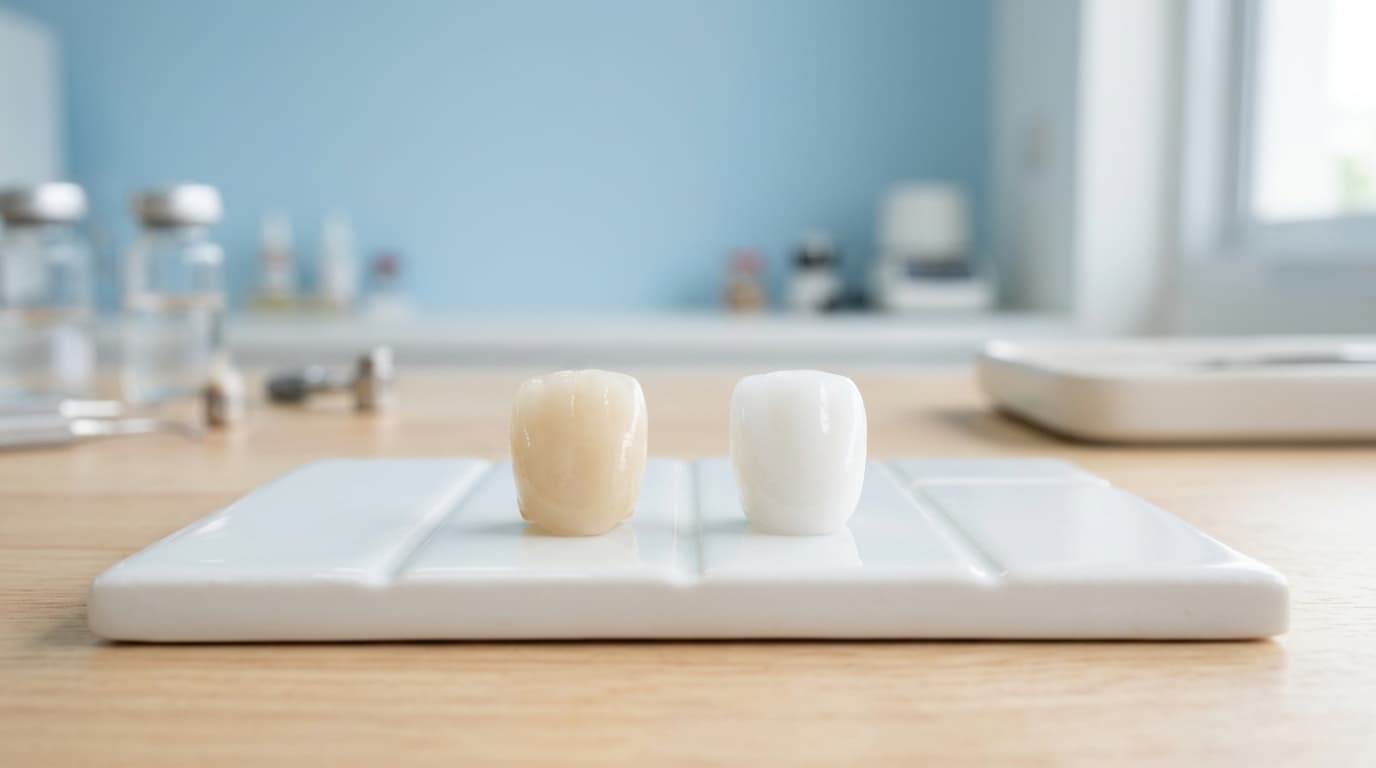
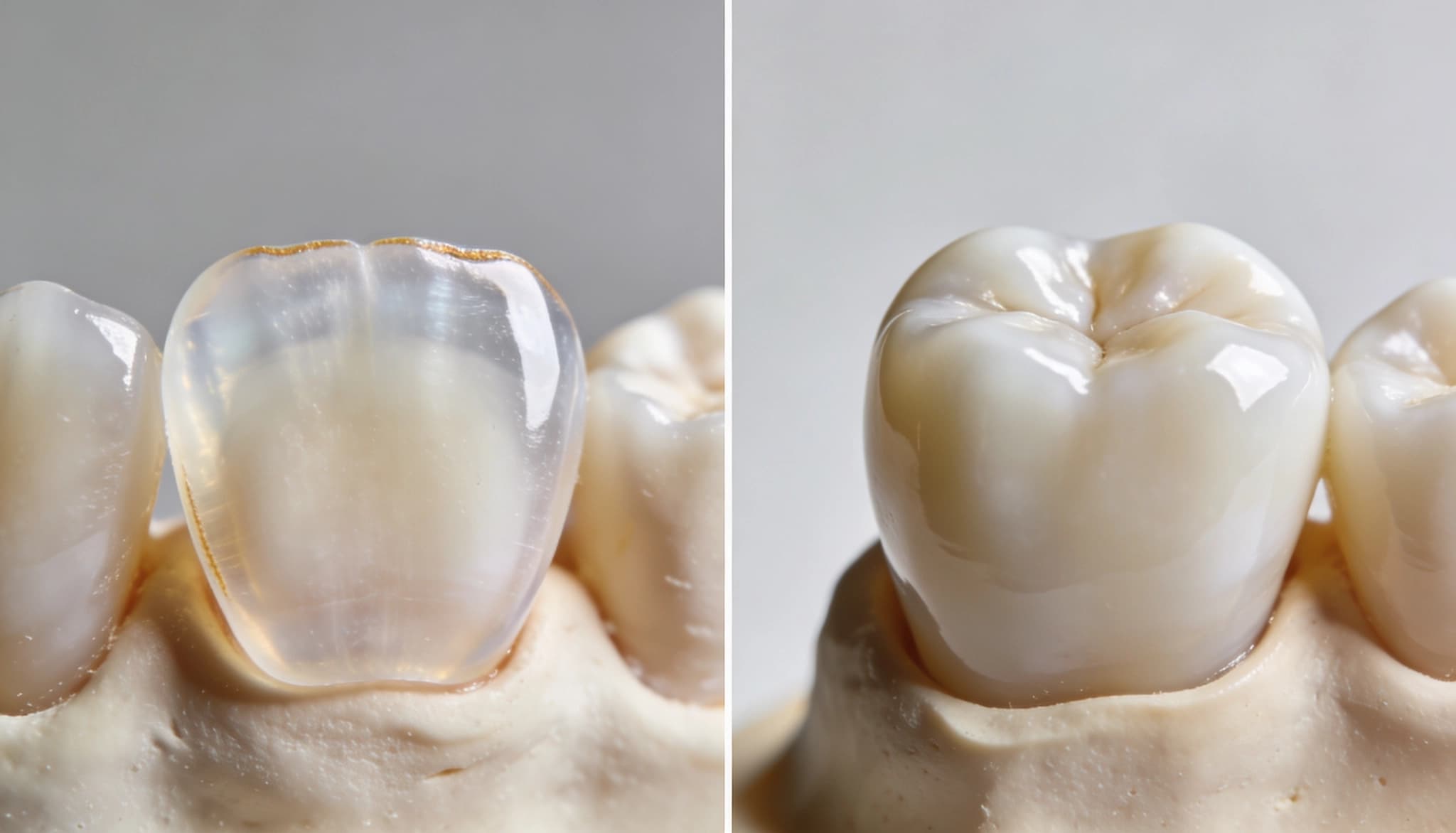
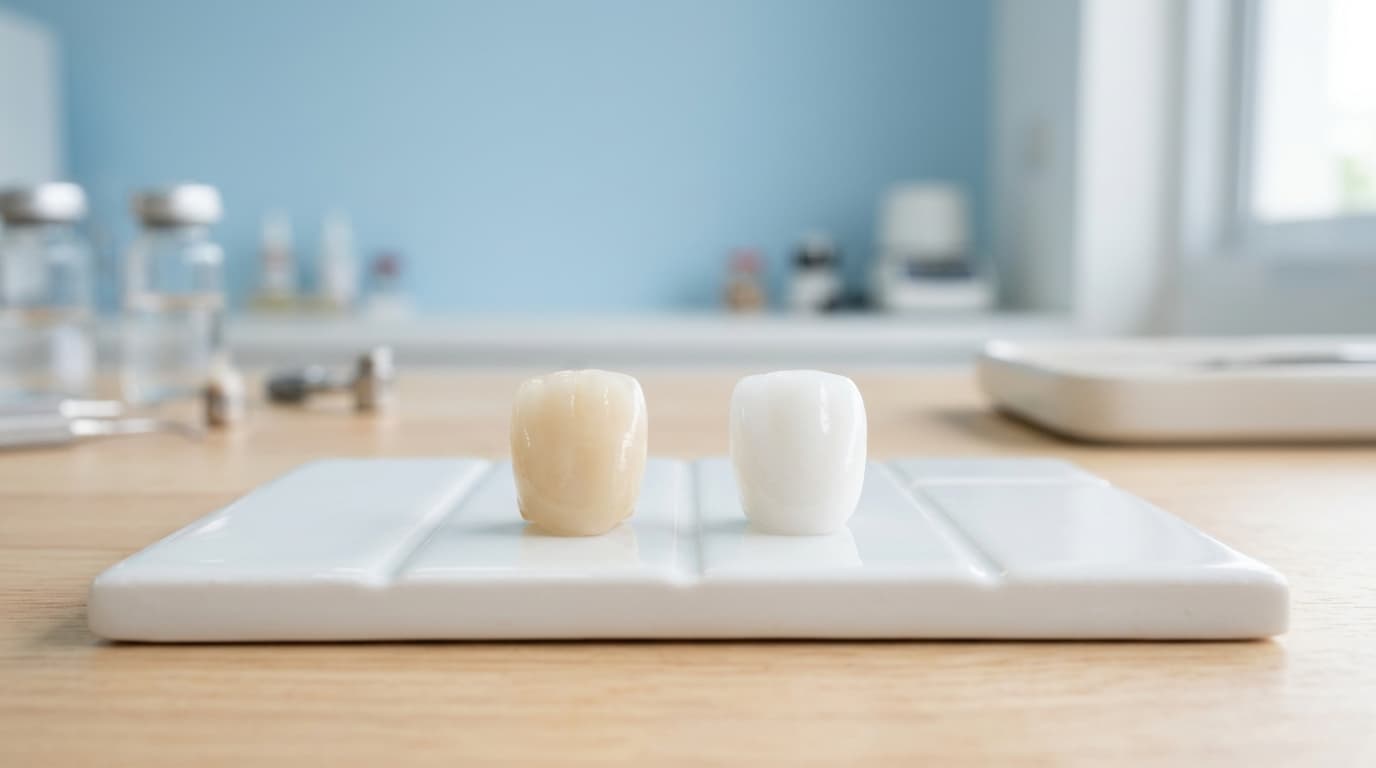
Material choice affects both appearance and price. Zirconia is the strongest option and ideal for back teeth or anyone wanting a metal-free, hard-wearing restoration. E-max (lithium disilicate) gives the best translucency for front teeth and smile work, which is why it is usually the pick for an all-ceramic crown on a front tooth.
| Crown type | Best for | Price per tooth |
|---|---|---|
| All-ceramic (E-max) | Front teeth, aesthetics | $470 (16,000 THB) |
| Zirconia | Strength, back teeth, metal-free | $530 (18,000 THB) |
Every treatment includes the consultation and digital imaging, and crowns carry a one-year written warranty against fractures with free replacement, except in cases of improper use.
For a full country-by-country breakdown of what you save, see our crown cost in Thailand guide, and if you are weighing materials, zirconia vs E-max crowns explains which suits which tooth.
Does it hurt, and is it safe?
The honest answer on pain: the preparation is done under local anaesthetic, so the visit itself is comfortable. Afterwards you may notice mild sensitivity for a few days, easily managed with normal pain relief if needed. By the time the permanent crown is bonded, the tooth feels like your own again.
On safety, the work at our clinic is carried out by experienced restorative specialists, the crowns are made in our own on-site lab so quality is controlled end to end, and the written warranty backs the result. A well-made crown looks after itself for 10 to 15 years or more with normal brushing, flossing, and check-ups.
A few practical pointers help you get the most from a new crown:
- The first day after the permanent fitting: let the cement fully set before chewing anything hard on that side.
- After that, treat it exactly like a natural tooth: brush twice a day, floss around it to keep the gum margin clean, and avoid using it to crack ice or open packaging.
- If your bite feels even slightly high after a day or two, a quick adjustment sorts it out, so mention it before you fly home rather than living with it.
Sources: Cleveland Clinic, healthdirect Australia, Colgate.
Conclusion
A crown is one of the most routine, predictable treatments in dentistry: two comfortable visits, a lab-made tooth, and in Bangkok the whole journey compressed into about seven days thanks to the on-site lab. From $490 per tooth with a one-year written warranty, it is also one of the clearest savings against what the same work is typically advertised at back home.
Learn more about materials, longevity, and pricing on our dental crown treatment in Bangkok page. When you are ready, send us a few photos and our team will assess your tooth, confirm whether any prior step is needed, and map out your two-visit plan.
Was this article helpful?