 Written by Dr. Nan
Getting a dental implant is the easy part. What most people really want to know is how the days after surgery feel, when they can eat normally again, and, if they have travelled to Bangkok for treatment, when it is actually safe to get on a plane home.
This guide walks you through the full recovery timeline, the aftercare do's and don'ts that protect your healing, and the travel question that matters most if you have flown in for your implants.
For the surgery itself, see our step-by-step guide to the dental implant procedure, and for the bigger picture of treatment in Thailand, read our overview of dental implants in Bangkok. If you are still deciding on treatment, our comparison of an implant versus a bridge weighs longevity and recovery side by side.
The dental implant recovery timeline at a glance
Recovery happens in two distinct phases:
- Soft tissue healing of the gum around the implant, which is what you actually feel in the days after surgery.
- Osseointegration, the slow, invisible process where the titanium post bonds with your bone. You feel almost nothing during this phase, but it is the part that makes the implant permanent.
Here is what to expect at each stage after a single implant placement.
| Stage | Timeframe | What to expect |
|---|---|---|
| First 24 to 48 hours | Day 1 to 2 | Mild swelling and soreness peak. Minor bleeding or oozing is normal. Rest, ice packs, soft cool foods, painkillers as directed. |
| First week | Day 3 to 7 | Swelling and discomfort fade fast. Most patients feel normal by day 3 to 5. Back to light daily activity. Stitches dissolve or are removed. |
| Weeks 2 to 4 | Soft tissue healing | Gum has closed and healed. You can usually return to most foods, avoiding the implant side for harder textures. |
| Osseointegration | 3 to 6 months | Implant fuses with the jawbone. No symptoms. You may wear a temporary while you wait. |
| Final crown | After osseointegration | Abutment and custom crown fitted. Full chewing function restored. Results last 20+ years with care. |
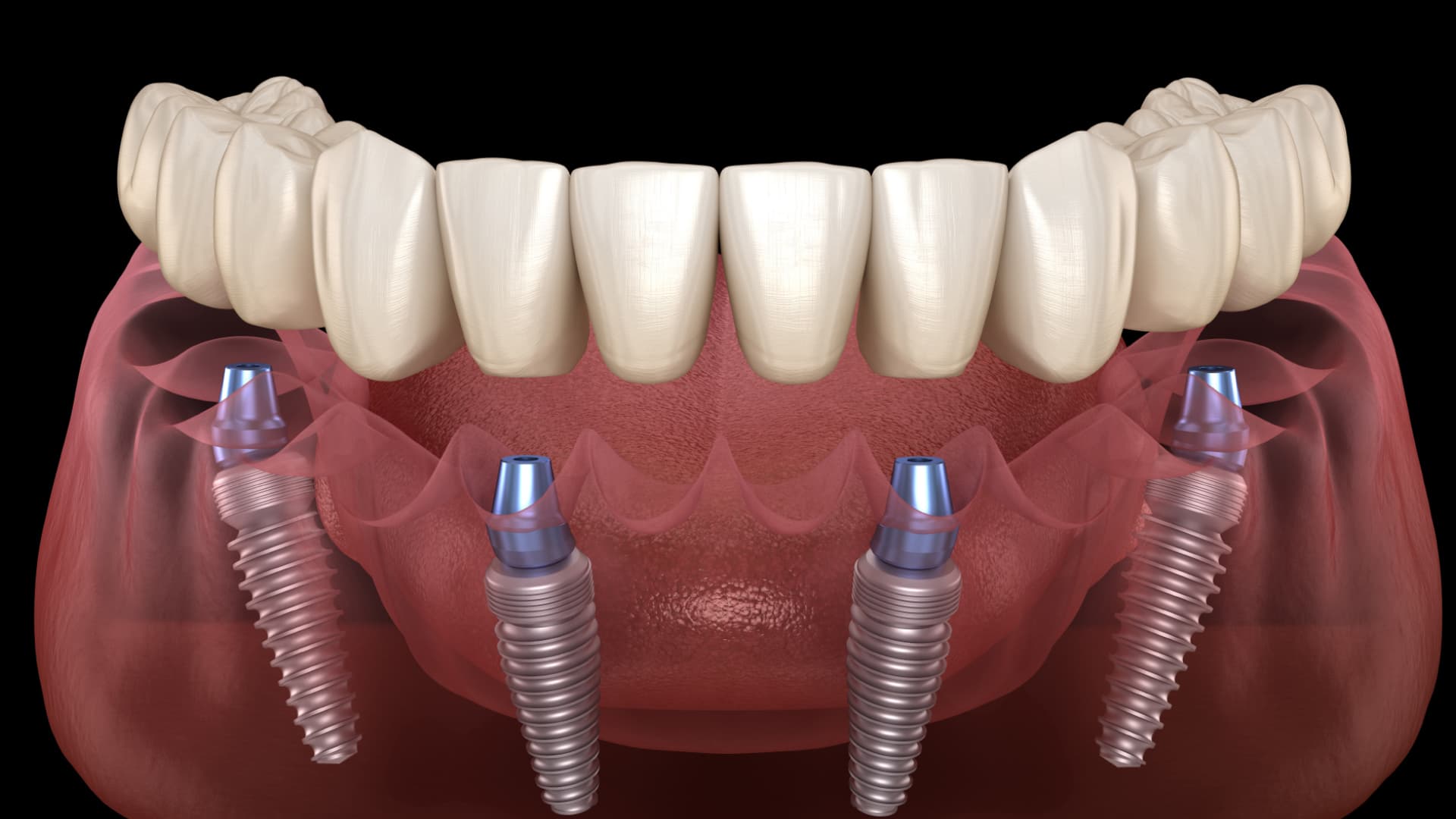
All-on-4 and full-mouth cases follow the same curve but a little longer at each step, because more bone is involved. Swelling can last a few extra days and the healing period before the final fixed bridge runs closer to 4 to 6 months.
The first 24 to 48 hours: what is normal
The first two days are when you will feel the most. Some swelling of the cheek and gum, mild soreness, and a little bleeding or oozing from the implant site are all completely normal. This is your body starting to heal, not a sign that something has gone wrong.
The single most useful thing you can do is apply a cold compress to your cheek over the area, in cycles of around 20 minutes on and 20 minutes off, during the first 24 hours. This keeps swelling down and numbs any throbbing.
Take any prescribed painkillers or antibiotics exactly as directed, and rest with your head slightly elevated rather than lying completely flat.
Eat only soft, cool foods for the first day or two: yoghurt, smoothies (with a spoon, not a straw), mashed potato, soup that has cooled, scrambled eggs. Avoid anything hot, hard, crunchy, or spicy while the area settles.
There are a few things to avoid completely in the first 24 hours, because they can dislodge the protective blood clot at the surgical site:
- No rinsing, spitting, or swishing
- No drinking through a straw (the suction is the problem)
- No smoking
- No strenuous exercise or heavy lifting
- No probing the area with your tongue or fingers
First week and beyond: aftercare do's and don'ts
By day three to five, most patients with a single implant feel close to normal and can return to light daily activities. The healing is well underway, but the area is still recovering, so a few habits protect your investment.
Do:
- Rinse gently with warm salt water several times a day, starting 24 hours after surgery, especially after meals
- Resume brushing the rest of your mouth normally, keeping the brush gentle and away from the surgical site for the first few days
- Keep eating soft foods and reintroduce firmer textures gradually over the first two weeks
- Stay hydrated and eat well, because good nutrition speeds healing
- Take all prescribed antibiotics to the end of the course
Don't:
- Don't smoke or vape, which is the single biggest cause of implant healing problems and can compromise osseointegration
- Don't chew directly on the implant site until your dentist confirms it is safe
- Don't do intense exercise, contact sport, or heavy lifting for around 7 to 10 days
- Don't skip your review appointment
One important point before treatment rather than after: a dental implant needs a healthy mouth to heal into. If you have an infected or decayed tooth that needs root canal treatment, that should be sorted out before implant surgery. Our clinic does not perform root canal treatment, so we will guide you to have any such work completed first so your implant heals into a clean, healthy site.
If you experience increasing pain after day three rather than less, swelling that worsens after 48 hours, fever, or a bad taste that will not clear, contact your clinic. These are uncommon but worth flagging early.
Osseointegration: the months that make it permanent
Once the gum has healed, the visible part of recovery is over, but the most important biological work is just beginning. Over the next 3 to 6 months, the titanium post slowly fuses with your jawbone in a process called osseointegration.
This is what gives a dental implant its 95%+ long-term success rate and is the reason an implant can last 20 years or more. You will not feel it happening, and many patients wear a temporary crown or prosthesis so there is no visible gap.
What actually matters during these months:
- Not smoking.
- Controlling blood sugar if you are diabetic.
- Keeping the area clean.
Flying and normal activity are not the risk factors; those slow habits are. The predictability of this process is also one reason implants done well abroad are reliable, as our honest look at whether dental implants in Thailand are safe explains.
When your dentist confirms the implant is fully integrated, the abutment and your final custom crown are fitted, and full chewing function is restored.
This is also why implant treatment suits dental tourism so well. The surgery and healing happen in two separated stages, which fits naturally around travel. Our guide to dental implants in Thailand explains how clinics structure treatment around a return visit, and you can compare the full cost of dental implants in Thailand against prices back home.
When is it safe to fly home after implant surgery?
This is the question that matters most if you have travelled for treatment, and the honest answer is reassuring. Flying itself does not damage a dental implant. The cabin pressure changes that worry people do not pull on a titanium post sitting in your jaw.
The reason to wait at all is comfort, not safety: long airport walks, dehydration in the cabin, and managing any swelling are simply easier once the first day or two has passed.
- ✅ A straightforward single implant: generally fine to fly home 1 to 3 days after surgery.
- ✅ All-on-4, multiple implants, a sinus lift or a bone graft: wait 5 to 7 days before a long-haul flight, so the area is settled and any review can happen first.
A few practical tips for the flight home:
- Stay well hydrated, as cabin air is very dry and a dry mouth is uncomfortable after surgery
- Pack any prescribed painkillers and a little extra gauze in your hand luggage
- Choose an aisle seat so you can move and rinse easily on a long flight
- Avoid alcohol on board, since it slows healing and worsens dehydration

The good news for travellers is that the implant post is placed, the gum heals, and you fly home, all within a short trip. The osseointegration months happen quietly while you live your normal life, and the final crown is fitted on a planned return visit.
If you are weighing up the wider logistics of treatment abroad, our guide to dental tourism in Thailand covers planning, timing, and what to expect on the ground.
Conclusion
Recovery from a dental implant is predictable and manageable: a few days of swelling, two weeks of soft-food caution, then quiet months of osseointegration you will not even feel. Plan the flight home around comfort, 1 to 3 days for a single implant and 5 to 7 for full-arch work, and the trip structure takes care of itself.
Our specialists place every implant, our crowns are made in our on-site lab, and your treatment is backed by a written warranty. To see your options and pricing, visit our dental implants in Bangkok page.
Send us a few photos and we will give you a personalised treatment and recovery plan for your case.
Frequently Asked Questions
How long does a dental implant take to heal?
Soft tissue heals within about 2 weeks, and most people feel normal within 3 to 5 days. Full osseointegration with the jawbone takes 3 to 6 months before the final crown is placed.
Is dental implant recovery painful?
Most patients describe it as mild and easily managed with standard painkillers. Discomfort is worst in the first 48 hours and usually fades within a few days.
How soon can I eat normally after a dental implant?
Soft foods for the first few days, then gradually firmer textures over two weeks. Avoid chewing on the implant side until your dentist confirms it is safe.
Can I fly home the day after my implant?
After a simple single implant, often yes, with 1 to 3 days being ideal. For All-on-4 or complex cases, wait 5 to 7 days. Flying does not harm the implant; the wait is purely for your comfort.
Was this article helpful?