 Written by Dr. Nan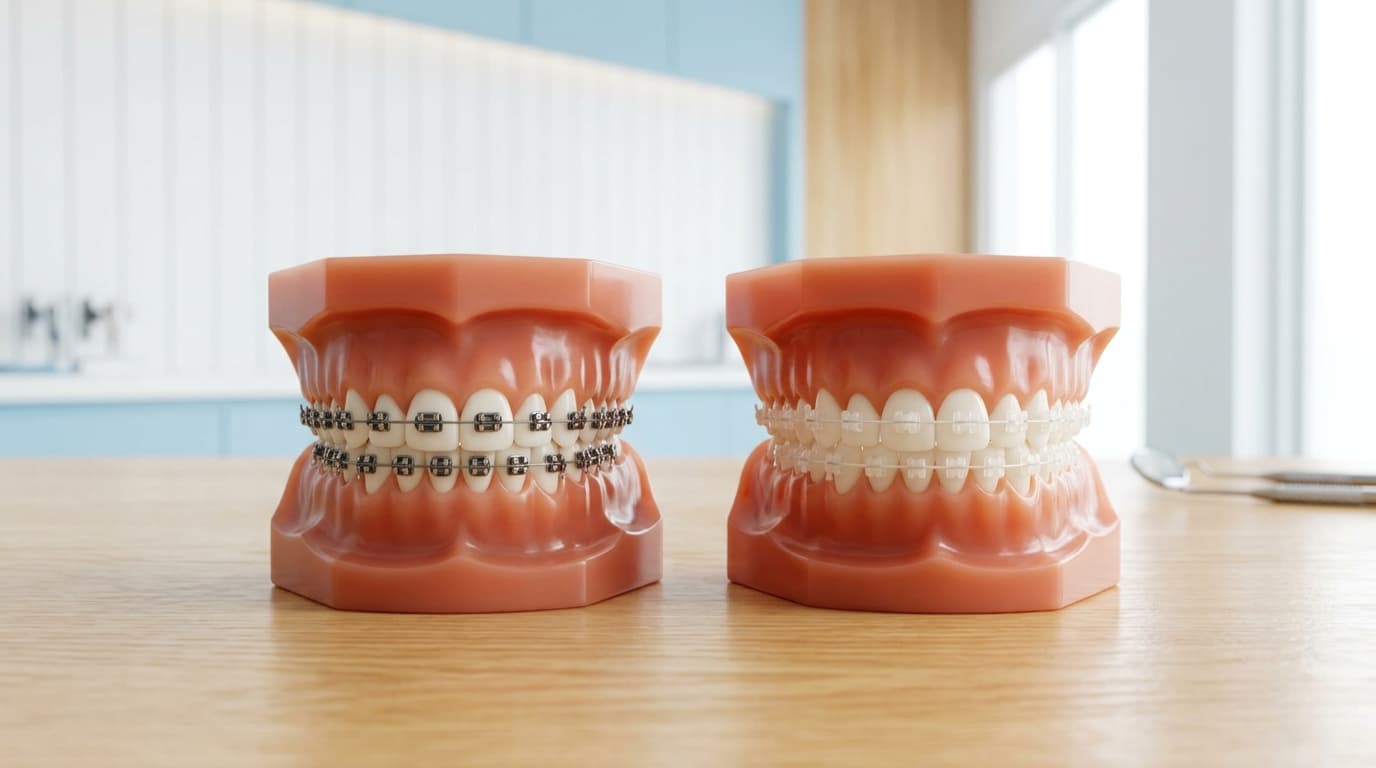
Choosing braces is mostly a trade-off between how visible they are, how much they cost, and how complex your case is. This guide walks through every main option so you can see which one fits your teeth, your budget, and your timeline before you book a consultation.
If you want the full picture of treatment, costs, and what to expect step by step, our Bangkok braces treatment guide covers the whole journey from first visit to retainer.
How Braces Actually Work
Every type of brace, fixed or removable, does the same job: it applies light, continuous pressure to your teeth so they slowly drift into a better position. Fixed braces use small brackets bonded to each tooth, connected by a thin archwire. As the wire is adjusted, it guides your teeth along a planned path. Clear aligners do the same thing with a series of custom trays, each one shaped slightly differently from the last.
Because the mechanism is shared, the question is rarely "which type works best." All of them work. The real questions are how noticeable the braces are during treatment, how much you want to spend, how many clinic visits you can fit in, and how complex your bite correction is. The sections below break each option down by those points.
Metal Braces
Metal braces are the original and still the most common choice worldwide. Small stainless-steel brackets are bonded to each tooth and held together by an archwire, with elastic bands keeping the wire in place. At each appointment you can pick a new band colour, which is part of why kids and teens often enjoy them.
Their biggest strengths are reliability and value. Metal brackets are strong, rarely break, and handle every kind of case from mild crowding to severe bite problems. They are also the most budget-friendly option, which matters when treatment runs 12 to 24 months, and you can see what shapes that timeline in our guide to how long braces take. The trade-off is appearance: metal braces are clearly visible when you smile.
In Bangkok, metal braces start from ฿35,000 ($1,030), which is up to 70 percent less than the $3,000 to $7,000 typically quoted in the US or the £2,000 to £5,000 in the UK. They suit budget-conscious patients, complex cases, children and teens, and anyone who simply wants the most proven option. For a full price breakdown of what that figure covers, see our guide to braces cost in Thailand.
Ceramic Braces
Ceramic braces, sometimes called clear braces, work exactly like metal braces but use tooth-coloured or clear brackets instead of metal ones. Paired with tooth-coloured wires and clear elastics, they blend in with your natural teeth, so they are far less obvious in photos and across a meeting table. This makes them a popular choice for adults and working professionals who want straighter teeth without an obvious metal look.
The trade-offs are durability and care. Ceramic brackets are more fragile than stainless steel and more likely to chip or break, so you need to be careful with hard and crunchy foods. The clear elastics can also pick up staining from coffee, tea, red wine, and strongly coloured foods, though they are changed at each visit. Ceramic braces also cost a little more than metal.
In Bangkok, ceramic braces start from ฿50,000. They are best for mild to moderate cases where appearance is a priority and the slightly higher cost and care routine are worth it to you.
Self-Ligating Braces
Self-ligating braces look much like traditional braces but skip the elastic bands. Instead, each bracket has a small built-in clip or door that holds the archwire in place. They come in both metal and tooth-coloured versions, so you still choose between a visible or more discreet finish.
The main appeal is convenience. Because there are no elastics to replace, adjustment appointments can be quicker, and the lower friction in the bracket can make some stages of treatment more efficient. Without elastics trapping food and plaque, they can also be a little easier to keep clean around the brackets. They are a strong middle-ground option if you like the predictability of fixed braces but want to keep chair time and visits down, which is genuinely useful when you are travelling for treatment.
Lingual Braces
Lingual braces are fixed braces fitted to the back surfaces of your teeth, facing your tongue, rather than the front. The result is braces that are essentially invisible from the outside while still giving you the full power of a fixed appliance. For patients who want complete discretion but have a case that aligners cannot fully handle, this is the option that delivers both.
They do come with trade-offs. Lingual braces sit against the tongue, so there can be an adjustment period for speech and comfort in the first weeks, and they are more technically demanding to fit and adjust. They tend to be the most specialised of the fixed options. If full invisibility matters more to you than anything else and your case needs fixed braces, lingual is worth discussing at your consultation.
Clear Aligners: the Removable Alternative
Clear aligners are not braces in the bracket-and-wire sense, but they are the most common alternative, so they belong in any honest comparison. Instead of fixed hardware, you wear a series of custom-made transparent trays, swapping to the next one every week or two as your teeth move. They are nearly invisible and fully removable, so you take them out to eat and to brush normally.
The catch is that aligners suit mild to moderate cases best and depend heavily on you wearing them 20 to 22 hours a day. Severe crowding or complex bite problems are usually better handled by fixed braces, a trade-off we lay out fully in our guide on clear aligners versus braces. Aligner treatment also tends to be faster for the right cases, often 6 to 18 months. If you are weighing a specific aligner system against fixed braces, our guide to Damon braces versus Invisalign and our overview of clear aligners in Bangkok go deeper on that decision.
Comparing the Types Side by Side
The table below summarises the main types on the points that usually decide the choice: how visible they are, what they cost in Bangkok, and how the treatment runs.
| Type | Visibility | Starting price (Bangkok) | Typical duration | Best for |
|---|---|---|---|---|
| Metal braces | Visible | From ฿35,000 ($1,030) | 12-24 months | All cases, best value, kids and teens |
| Ceramic braces | Low, blends with teeth | From ฿50,000 | 12-24 months | Adults, mild to moderate cases, appearance |
| Self-ligating braces | Visible or tooth-coloured | From ฿50,000 | 12-24 months | Fewer or quicker visits, travelling patients |
| Lingual braces | Hidden behind teeth | On consultation | 18-24 months | Full discretion, cases needing fixed braces |
| Clear aligners | Nearly invisible | From ฿15,000 | 6-18 months | Adults, mild to moderate cases, removable |
Prices in Bangkok include the consultation, fitting, monthly adjustments, and a retainer, and we offer flexible monthly payment plans. For a fuller breakdown of orthodontic options and savings for international patients, our overview of braces in Thailand puts the costs in context against treatment back home.
Comfort and Daily Care: How the Types Differ
The type you pick changes your day-to-day routine more than most people expect, so it is worth knowing what living with each one actually feels like.
Metal and ceramic braces are the most demanding to keep clean because food and plaque collect around the brackets, wires, and elastics. You will need to brush after every meal with a soft-bristled brush, and floss daily with a threader or orthodontic flosser to reach under the wire. Ceramic brackets ask for a little extra care because they chip more easily than steel, so hard and crunchy foods are best avoided and cut into smaller pieces. The clear elastics can also stain from coffee, tea, and red wine between visits, though they are swapped out at each adjustment.
Self-ligating braces remove the elastic bands, so there are fewer nooks for food to lodge in and cleaning around the brackets is a touch simpler. They are still fixed appliances, so the daily brushing and flossing routine stays the same. Lingual braces sit against the tongue, which means the first one to three weeks usually involve an adjustment period for speech and some tongue soreness, and cleaning the back surfaces takes practice and a mirror.
Clear aligners are the easiest on daily life because you take them out to eat and brush normally, with no brackets to clean around. The trade is discipline: you have to wear them 20 to 22 hours a day and clean the trays themselves, or treatment stalls. Across every fixed option, expect some tenderness for a few days after fitting and after each tightening, which eases with soft foods and over-the-counter pain relief.
How to Choose Based on Your Situation
Rather than ranking the types, it helps to match them to the situation you are actually in. A few common scenarios:
- You want the lowest possible cost and have a complex bite. Metal braces from ฿35,000 ($1,030) are the clear answer. They handle every case and cost the least, and the visible look is a fair trade for the saving and reliability.
- You are a working adult who cares about appearance but needs fixed braces. Ceramic braces from ฿50,000 blend with your teeth, or self-ligating braces in a tooth-coloured finish give you discretion with fewer, quicker visits. Both keep the full strength of a fixed appliance.
- You are travelling to Bangkok for treatment and want to limit clinic time. Self-ligating braces shorten some adjustment visits, which matters when you are coordinating trips. Talk through the visit schedule at your consultation so your travel plans line up with the treatment timeline.
- Total invisibility is non-negotiable and your case needs fixed braces. Lingual braces sit behind your teeth and stay hidden, with the trade-off of a speech adjustment period and a higher level of specialisation.
- You have a mild to moderate case and want something removable. Clear aligners are nearly invisible and come out for meals, provided you commit to wearing them. If you are torn between a specific aligner system and a self-ligating system, our guide to Damon braces versus Invisalign walks through that exact comparison.
Whatever your situation, the deciding factor is your case complexity, which only an orthodontist can confirm with X-rays and impressions. A mild case opens up every option; a severe bite problem narrows it toward fixed braces.
Frequently Asked Questions
Which type of braces is the cheapest?
Metal braces are the most affordable, starting from ฿35,000 ($1,030) in Bangkok, which is up to 70 percent less than typical Western prices. Ceramic braces start from ฿50,000. For a full breakdown of what each price includes, see our guide to braces cost in Thailand.
Are ceramic braces as effective as metal braces?
Yes. Ceramic braces move teeth using the same brackets-and-wire mechanics as metal braces and are just as effective for the cases they suit. The main differences are appearance, a slightly higher cost, and a bit more care, since ceramic brackets are more fragile and the clear elastics can stain.
Do any braces hurt more than others?
The level of soreness is broadly similar across fixed braces, with mild tenderness for a few days after fitting and after each adjustment. Lingual braces add a separate adjustment period for the tongue and speech in the first weeks because they sit on the inside of your teeth. Clear aligners tend to feel like gentle pressure each time you move to a new tray.
Can I switch braces types during treatment?
Switching mid-treatment is uncommon and not usually advisable, because each plan is mapped to a specific appliance from the start. The better approach is to weigh your options carefully at the consultation. Our orthodontist will tell you which types your case actually supports before you commit.
Which braces are best if I am travelling to Bangkok for treatment?
Self-ligating braces can mean fewer or quicker adjustment visits, which helps when you are coordinating travel. That said, the right choice still depends on your case and appearance priorities. We will plan your visit schedule around your trips, and you can book a free consultation to map it out.
Which Type Is Right for You?
There is no single best type of braces, only the best fit for your case and priorities. As a simple guide: choose metal braces for the lowest cost and broadest coverage, ceramic or self-ligating braces if you want something more discreet while keeping the strength of fixed braces, lingual braces if total invisibility is non-negotiable, and clear aligners if you have a milder case and want removable, near-invisible treatment.
The only way to know for certain is an assessment. Our orthodontists examine your teeth, take X-rays and impressions, and recommend the type that will give you the result you want in the shortest sensible time. We use quality brackets and appliances, place every case with experienced orthodontists, and back bracket breakage under normal use with a one-year warranty.
Ready to find out which braces suit your smile? Explore your full orthodontic treatment options in Bangkok or BOOK A FREE CONSULTATION and get a personalised recommendation with a clear price.
Was this article helpful?