 Written by Dr. Nan
If you have searched for veneers in Thailand, you have probably read a few pages telling you to stay home. Many come from clinics in your own country, and they are not wrong to raise the risks. Here is the honest answer, written from inside a Bangkok clinic.
Thousands of patients fly to Bangkok every year and go home with healthy teeth and a smile they are happy with. The difference is almost never the country. It is the clinic, and this guide shows you how to vet one.
If you want the wider context first, our guide to getting dental veneers in Bangkok covers the full process from consultation to fitting.
What can actually go wrong (and what is just scare copy)
It helps to separate the real risks from the ones written to keep you from booking. Here is the honest sorting:
| Claim you will read | Real or scare copy? | What actually decides it |
|---|---|---|
| Over-preparation of healthy teeth | Real | The clinic's technique |
| Cheap or unbranded materials | Real | The clinic's lab and brands |
| No warranty, no accountability | Real | The clinic's paperwork |
| Weak follow-up after you fly home | Real | The clinic's aftercare |
| HIV or hepatitis from equipment | Scare copy | Sterilisation standards, same as home |
| "Thai dentists are less trained" | Scare copy | Licensing is rigorous in Thailand |
The four real risks do happen, at the wrong clinics. The point most cautionary pages skip is that none of them are caused by being in Thailand. They are caused by a specific clinic cutting corners.
The two scare stories deserve a direct answer:
- ❌ "You can catch HIV or hepatitis from dental water and equipment." In a clinic that sterilises instruments to international standards and uses single-use disposables, this is no more likely in Bangkok than in London or Sydney.
- ❌ "Thai dentists are not trained to the same standard." Thailand trains and licenses cosmetic dentists rigorously, and many hold further qualifications from the US, the UK, and Australia. The skill gap is between good and bad clinics, not between countries.
So the useful question is not "is Thailand safe." It is "is this specific clinic safe." The rest of this guide answers that, one risk at a time.
Risk 1: over-preparation and damage to healthy teeth
This is the one risk worth taking seriously, because it is the only one you cannot undo. To fit a veneer, a thin layer of the tooth surface is shaped so the veneer sits flush.
- ✅ A careful dentist removes a very small amount, often less than half a millimetre, and sometimes none at all.
- ❌ A rushed dentist grinds away far more than needed, which weakens the tooth and can expose the nerve, leading to sensitivity or further treatment later.
How a quality clinic removes this risk:
- Conservative, minimal-prep technique as the standard of care. For many cases, composite veneers need almost no tooth reduction at all.
- A treatment plan before anything is touched, telling you how much enamel will be reduced and why.
- No "full set in a single short visit" promises. If a clinic cannot explain its plan, or skips the examination, treat it as a red flag.
A clinic that respects your enamel is protecting your teeth for the next twenty years, not just this trip.
Risk 2: cheap or unbranded materials
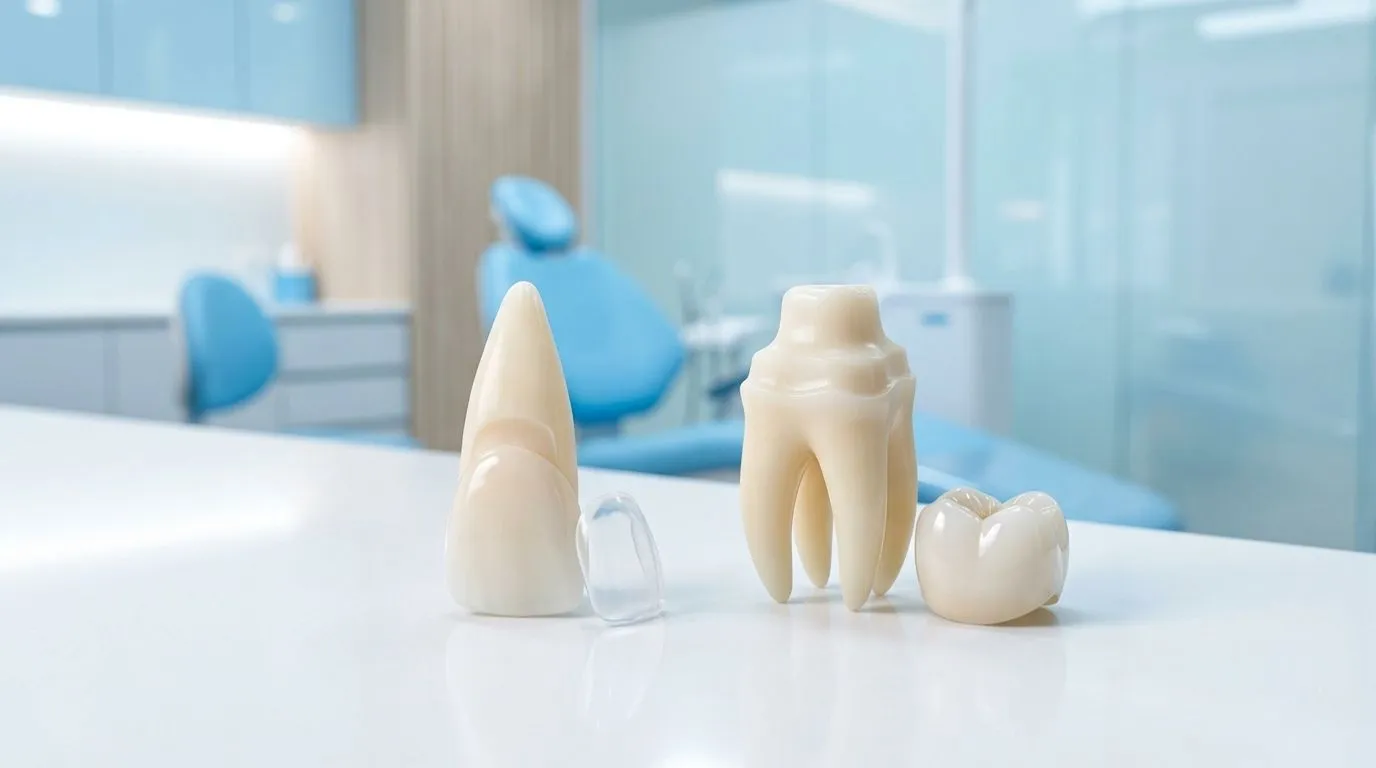
A veneer is only as good as the material it is made from. The horror stories of bulky, opaque, fast-stained veneers almost always come down to low-grade porcelain or a thick layer of cheap composite.
- ✅ Good materials look natural, resist staining, and last for years.
- ❌ Poor materials look fake and fail early.
How a quality clinic removes this risk:
- Named materials, on request. Quality porcelain veneers use recognised ceramic systems, and quality composite uses branded nano-hybrid materials, not generic filler. Insist on a clear answer.
- An on-site lab. At our clinic the porcelain is milled and finished in-house, so the technician and the dentist work together on shade and shape rather than outsourcing your smile to an anonymous factory.
If you want to understand the trade-offs, our breakdown of porcelain veneers in Thailand explains what you are paying for at $355 per tooth versus $120 for composite. The deeper comparison of how each option looks and lasts is in our guide to veneer costs in Thailand.
Risk 3: no warranty and no accountability
This is the fear behind most cautionary articles: you pay, you fly home, and if a veneer chips there is no one to call. It is a fair worry, and it is exactly why a written guarantee matters more than the price.
How a quality clinic removes this risk:
- A written warranty, in English, before you pay. Read what it covers and for how long.
- Clear terms. A real guarantee tells you what happens if a veneer debonds or cracks under normal use.
- Signed, not chatted. A promise in a messaging app is not a warranty.
The clinics that genuinely stand behind their work are happy to put it in writing, because they rarely have to use it. The ones that will not are telling you something. Our explainer on the veneer warranty in Thailand shows what a fair guarantee should spell out.
Risk 4: poor communication before and during treatment
Misunderstandings about shade, shape, or how many teeth are being treated are a common source of disappointment. The cautionary pages are right that language and distance make this harder. The fix is not avoiding Thailand: it is communication that starts long before you board the plane.
How a quality clinic removes this risk:
- You speak to the dentist who will treat you, not only a booking agent, before you commit.
- A free remote consultation where you share photos and discuss your goals. This is now standard at reputable Bangkok clinics, and it is the single best way to judge a clinic before you travel.
- Clarity from day one. If the communication is vague or rushed at this stage, it will not improve once you arrive.
You can book a free consultation and see for yourself how clearly we explain things.
How to choose a safe clinic: what to ask and the red flags
Most of the risk disappears once you know what to look for. Use this as your checklist.
| Ask the clinic | A safe answer sounds like | A red flag sounds like |
|---|---|---|
| How much tooth will be reduced? | A specific, minimal amount, explained in a plan | "We just do a full set, do not worry about it" |
| What materials do you use? | Named ceramic or branded composite systems | No brand given, or "the best ones" |
| Is there a written warranty? | Yes, in English, with clear terms | A verbal promise only, or no warranty |
| Can I speak to the dentist first? | Yes, a free remote consultation | Only an agent will talk to you |
| Who designs the smile? | The dentist and lab work together on shade and shape | No say in shade, no preview |
The clearest red flags:
- ❌ Prices that seem too good to be true
- ❌ A "same day, full set, no examination" pitch
- ❌ No written guarantee
- ❌ A clinic that will not let you talk to the dentist
The clearest green flags:
- ✅ Conservative treatment planning
- ✅ Named materials and an on-site lab
- ✅ A written warranty
- ✅ A dentist who is honest about what veneers can and cannot do for your particular teeth
To see the standard of finish a careful clinic produces, look through our veneer results gallery.
It is also worth choosing your destination with the same care you would choose a clinic. Thailand consistently ranks among the strongest options for cosmetic dentistry, and our comparison of the best countries for dental tourism walks through how Thailand stacks up against Turkey, Mexico, and others.
What if something goes wrong after you fly home?
This is the question the cautionary articles use to close the sale, so it deserves a straight answer. Most problems, when they happen, are minor: a veneer that needs a small adjustment, or rarely a debond. Serious complications are uncommon when the work was done conservatively with good materials.
If something does go wrong, here is what actually protects you:
- Your written warranty. It defines what the clinic will fix and at what cost, which is why getting it in writing matters so much.
- Remote assessment. Many issues can be judged from photos, and a good clinic will tell you honestly whether you need to return or whether a local dentist can handle a quick adjustment.
- Durable work in the first place. Quality porcelain and conservative prep hold up, so the odds of needing anything at all are low.
The patients who get into trouble are almost always the ones who chased the lowest price at a clinic with no warranty and no contact. Plan well, and the worst case is a manageable one. Our wider guide to dental tourism in Thailand covers the practical side of planning a safe trip, from timing to recovery.
One honest note on scope: veneers are for the visible surface of healthy teeth, and our guide to who is a good candidate for veneers goes through the conditions that need treating first.
If a tooth needs root canal treatment, that should be sorted before any veneer work. We do not perform root canal treatment ourselves, so we would refer you for that step first. A clinic that flags this is putting your long-term health ahead of a quick sale.
Conclusion
Veneers in Thailand are safe when you treat the clinic, not the country, as the thing to vet. The four real risks, over-preparation, cheap materials, no warranty, and weak communication, are all avoidable once you know what to ask.
Choose a clinic that prepares teeth conservatively, names its materials, puts its guarantee in writing, and lets you speak to the dentist first, and those risks largely disappear. Thousands of patients do exactly that every year and fly home happy.
If you want to talk it through with the dentist who would treat you, send us a few photos and we will give you an honest assessment of your case, with no pressure to book.
Frequently Asked Questions
Are veneers in Thailand safe?
Yes, when you choose the right clinic. The real risks, over-preparation, cheap materials, no warranty, and weak follow-up, come from individual clinics cutting corners, not from the country. A clinic that works conservatively, names its materials, and gives you a written warranty removes almost all of them.
Are Thai dentists trained to the same standard as dentists at home?
Thailand trains and licenses cosmetic dentists rigorously, and many hold further qualifications from the US, the UK, and Australia. The skill gap is between good and bad clinics, not between countries.
What is the biggest risk with veneers abroad?
Over-preparation, because it is the only mistake you cannot undo. A careful dentist removes a very small amount of enamel, often less than half a millimetre, and sometimes none at all. Ask to see a treatment plan that states how much enamel will be reduced and why, before anything is touched.
What happens if a veneer chips or debonds after I fly home?
Your written warranty defines what the clinic will fix and at what cost. Many issues can be assessed remotely with photos, and a good clinic will tell you honestly whether you need to return or whether a local dentist can handle a quick adjustment.
How much do veneers cost in Thailand?
At our Bangkok clinic, composite veneers start at $120 per tooth and porcelain veneers at $355 per tooth, placed by cosmetic specialists with an on-site lab. See our veneer costs in Thailand guide for the full comparison.
Do I get a warranty on veneers in Thailand?
At a serious cosmetic clinic, yes: a written warranty in English, given before you pay, that spells out what happens if a veneer debonds or cracks under normal use. If a clinic will only promise verbally, treat that as a red flag.
Was this article helpful?