 Written by Dr. Nan
When a front tooth crown is on the table, how it looks matters as much as how it works. A crown that turns grey at the gumline or blocks light will stand out in every photo and every conversation. This guide covers when a front tooth actually needs a crown, which material disappears into your smile, and what it costs.
When a front tooth needs a crown (and when it doesn't)
A crown is the right answer when the tooth itself is compromised. It caps and protects what is left, and it becomes the visible tooth. Typical front-tooth cases we crown:
- ✅ A broken or badly chipped tooth where too much structure is gone for a filling
- ✅ A cracked tooth that hurts on biting or is at risk of splitting
- ✅ A tooth weakened by large, ageing fillings
- ✅ A root-treated tooth that has darkened or turned brittle
Here is the part many clinics skip: a crown is not the only option, and sometimes not the best one. If your front tooth is structurally sound and the problem is purely cosmetic, a small chip, a stain, a slightly odd shape, covering the whole tooth is overtreatment.
For those cases, a composite veneer at ฿4,000 ($120) or a porcelain veneer at ฿12,000 to ฿14,000 ($370 to $430) fixes the look while keeping far more of your natural tooth. Our guide to crown, veneer or filling: which repair your tooth needs walks through that decision honestly.
One more boundary worth stating. If the tooth needs root canal treatment first, that is a separate step, and we refer it out to an endodontic specialist. Once the tooth is sound, we place the crown here.
Why a front tooth crown is different from a back tooth crown
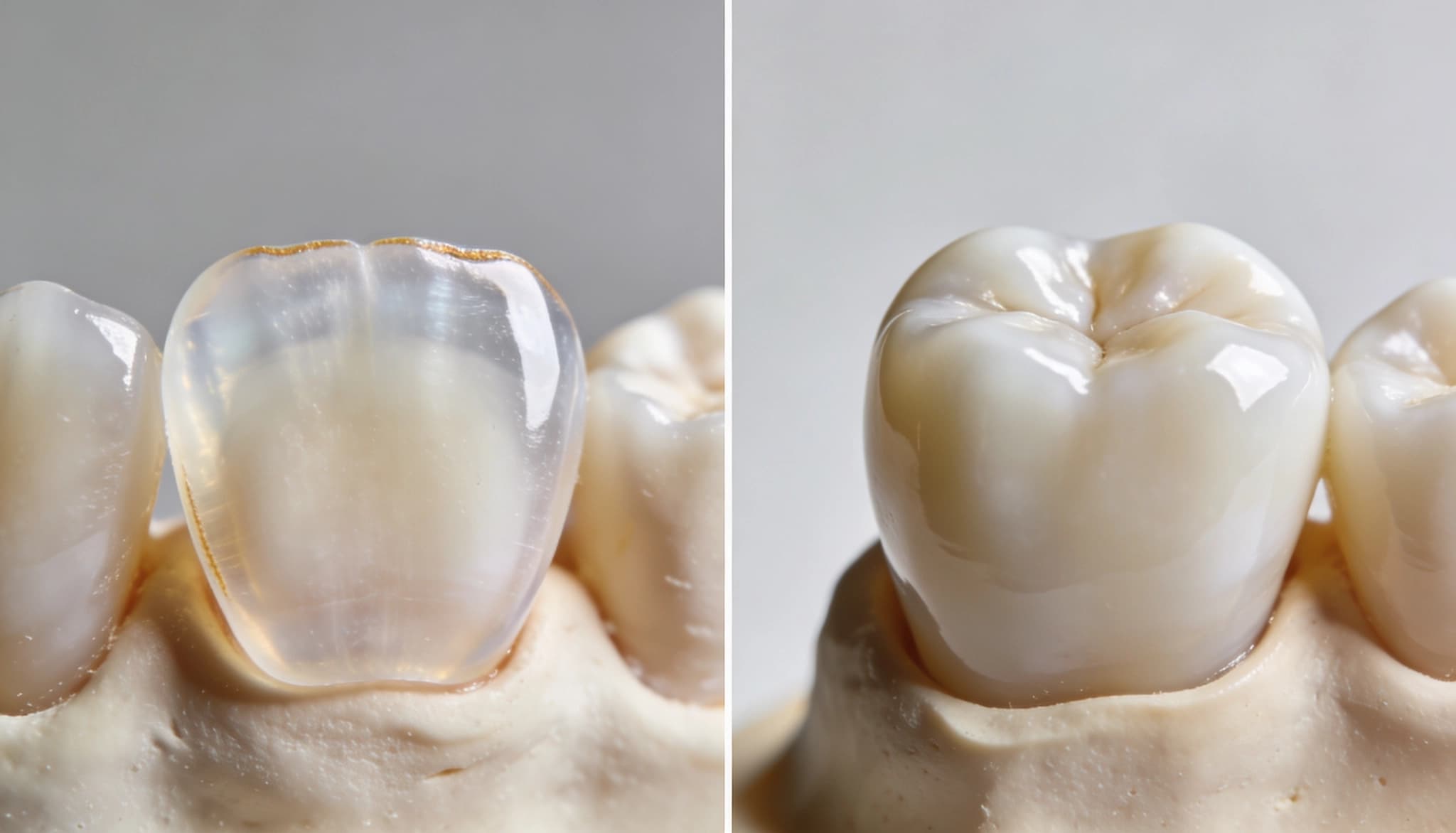
Natural enamel is slightly see-through. Light enters the tooth, scatters inside, and gives it depth. A successful front tooth crown has to copy that behaviour, which is exactly why metal has disappeared from visible teeth.
The old workhorse was porcelain-fused-to-metal, or PFM. It is strong, but it hides a metal substructure under the porcelain, and light hits that metal and stops:
- ❌ PFM: a slightly flat, opaque look, and as gums recede over the years, a thin grey line often appears right at the gumline. On a molar nobody notices. On a front tooth it is the first thing people see.
- ✅ All-ceramic: no metal at all, so there is no grey margin to develop, and the gum stays a healthy pink right up to the edge of the crown.
That grey gumline is the single most common complaint we hear from patients with older front-tooth crowns. It is also why we do not place PFM crowns at all: for a visible tooth, we only work in all-ceramic.
E-max or zirconia: which crown for your front tooth
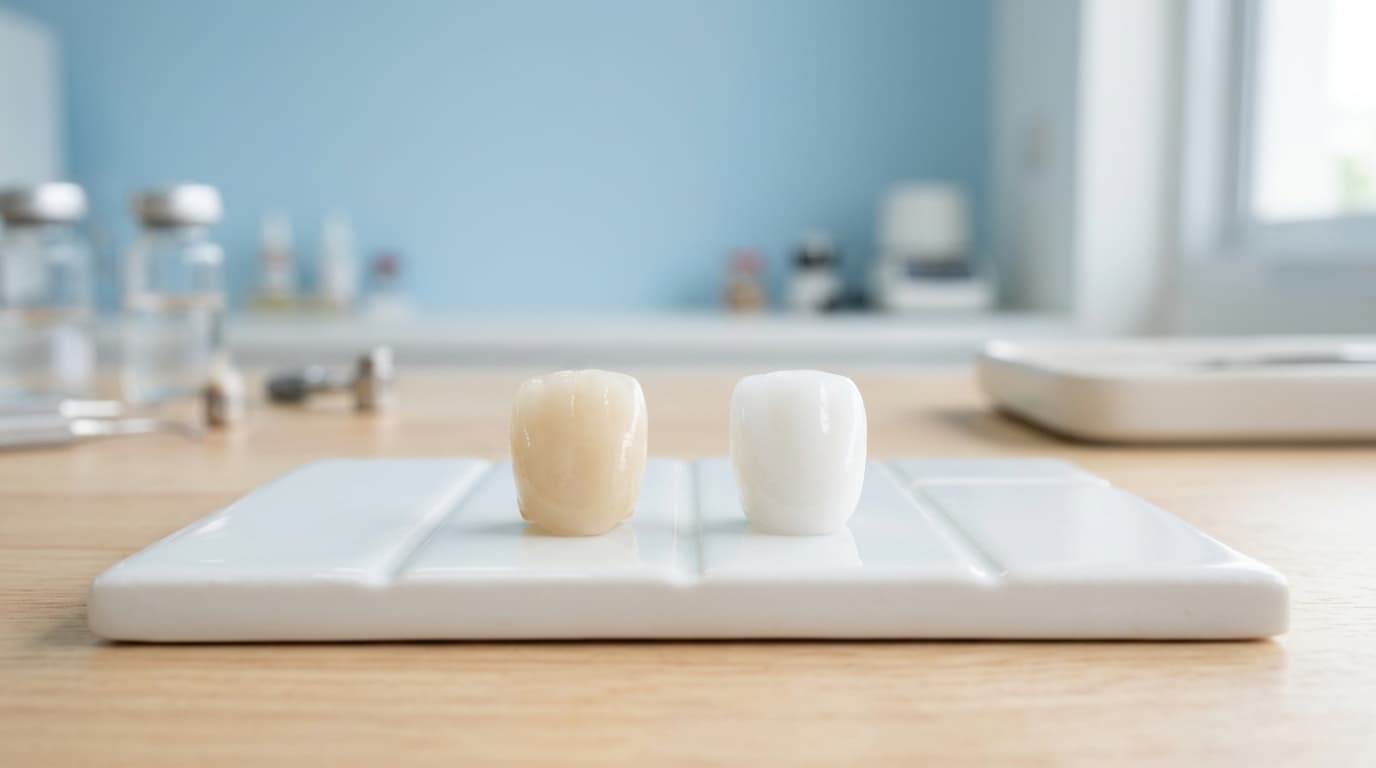
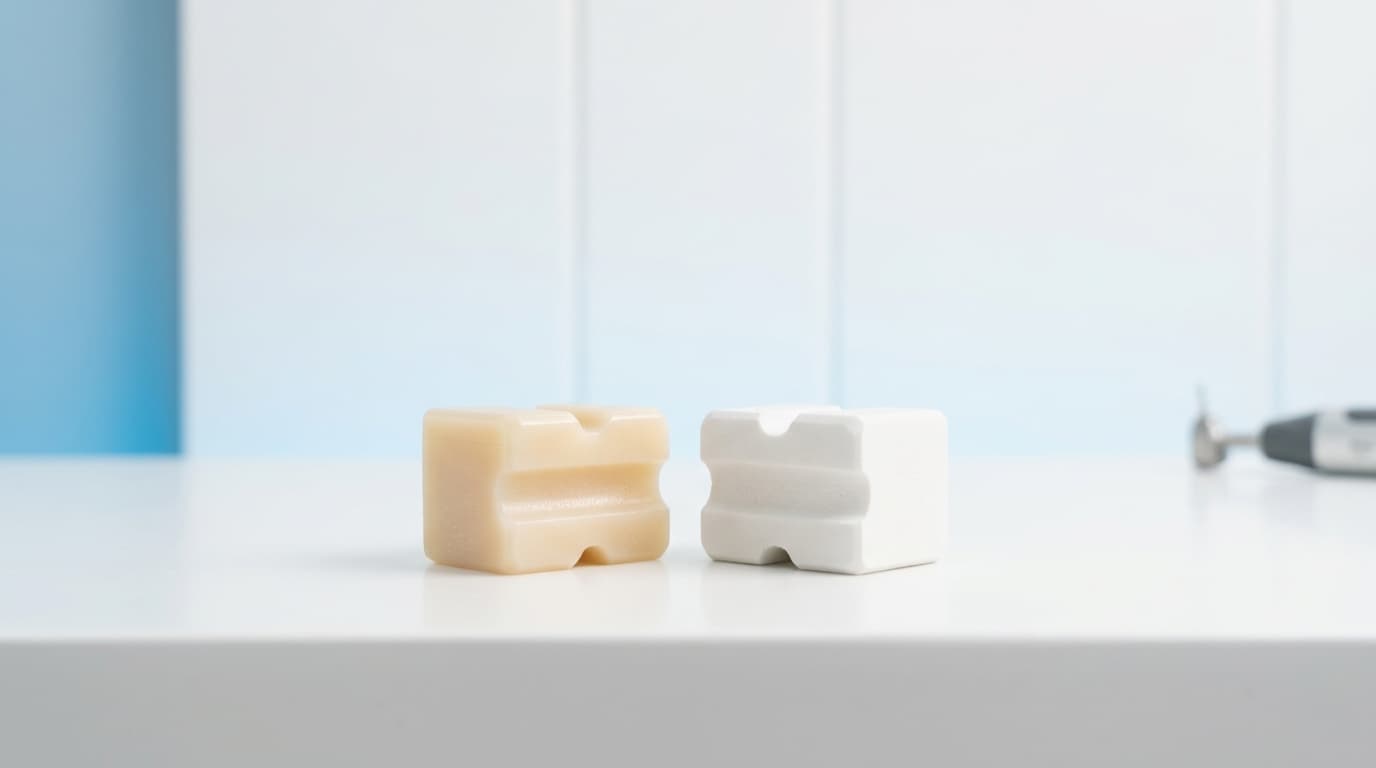
Both materials are all-ceramic and completely metal-free, so neither will ever give you a grey line. The real choice is translucency versus strength and masking power.
| Factor | E-max | Zirconia |
|---|---|---|
| Look on a front tooth | Most lifelike, enamel-like translucency | Very natural, slightly more opaque |
| Strength | High, ideal for single front teeth | Highest, handles heavy bite and grinding |
| Metal core / grey line | None | None |
| Best for | Single visible front teeth, smile makeovers | Dark stumps, heavy biters, bridges |
| Typical lifespan | 10-15 years | 10-15+ years |
| Price per tooth in Bangkok | ฿16,000 (~$470) | ฿18,000 (~$530) |
When E-max is the answer
E-max is the more translucent of the two, and for a front tooth crown that translucency is what sells the illusion. It is the usual pick when:
- The tooth underneath is a normal colour, with nothing dark to hide
- You want the most invisible result possible on a single visible tooth
- The crown will sit right next to natural teeth, where any flatness would show
When zirconia is the smarter pick
Zirconia trades a little translucency for strength and opacity, and there are front-tooth cases where that trade is exactly right:
- A dark tooth or a post underneath. A discoloured stump can shadow through a very translucent crown. Zirconia masks it, so the crown reads as a healthy tooth.
- Heavy bite or grinding. If you clench, grind, or your bite lands hard on the front teeth, zirconia's extra strength lowers the risk of chipping.
- A bridge replacing a missing front tooth. When the restoration spans more than one unit, strength matters more; a zirconia bridge runs ฿17,500 per unit at our clinic.
For a deeper material-by-material breakdown, our full E-max vs zirconia comparison covers both in detail. Either way, the final call is made with our prosthodontist at a free consultation, based on your tooth, not on a price list.
Will it look natural? Shade matching at our on-site lab
This is the question behind every other question, so here is the honest version. Matching a single front tooth is the hardest job in cosmetic dentistry. The new crown sits beside your real teeth, in the middle of your smile, where any mismatch is obvious.

We start with a shade assessment in both natural and clinic light, because teeth read differently under each. A front tooth is never one flat colour:
- Lighter near the biting edge
- Warmer near the gum
- Often faintly translucent right at the tip
Our ceramist layers and characterises the ceramic to copy those gradients, rather than painting on a single tone. That layering is what separates a crown people notice from one they never spot.
The structural advantage here is our on-site laboratory with CAD/CAM. The technician building your crown can actually see you, photograph your neighbouring teeth, and fine-tune the result in person. Nothing is shipped to a distant lab. If a shade needs adjusting, it happens in days, not on a return flight.
One detail worth raising early. If you are restoring one front tooth next to teeth that have darkened over the years, the most natural match is to that existing colour. If you would prefer a lighter smile overall, decide the target shade before the crown is made, so it is built for the smile you want.
What a front tooth crown costs: Bangkok vs at home
Overseas price lists often add a premium for front teeth, citing the extra artistry involved. At our clinic the price is the same for any tooth, and the artistry is included, because the ceramist and the lab are part of the building.
| Crown type | Bangkok (our clinic, per tooth) | Typical UK / AU / US range |
|---|---|---|
| E-max | ฿16,000 (~$470) | $1,000 - $2,800 |
| Zirconia | ฿18,000 (~$530) | $800 - $2,500 |
The consultation and digital imaging are free, so the number you are quoted is the number you pay. Every crown carries a one-year written warranty against fractures, with free replacement except in cases of improper use, and it is made and finished in our own laboratory rather than outsourced.
For the full picture across materials, visits and the lab process, see our dental crown treatment in Bangkok page.
The process: two visits, about seven days
A front tooth crown fits comfortably inside a single trip to Bangkok. Because the lab is on-site, the whole treatment runs on our schedule, not a courier's.
- First visit: examination, photos and shade work, then tooth preparation. You leave with a temporary crown that lets you talk and eat normally, though avoid biting hard or sticky foods directly on it.
- A few days of fabrication: our lab builds and layers your permanent crown while you enjoy the city.
- Second visit: try-in against your natural teeth, bite adjustment, and final bonding.
Start to finish is about seven days, and many cases run shorter. After you fly home, follow-up happens over WhatsApp: send photos, ask questions, and we review how the crown is settling without you needing another appointment.
If your schedule is tighter than a week, there are same-day crown options in Thailand worth reading about, with their own trade-offs for front teeth.
Does it hurt, and how long will it last?
Getting a front tooth crown is more comfortable than most people expect:
- During preparation: the tooth is numbed with local anaesthesia, so you feel light pressure, not pain.
- The days after: some sensitivity to hot and cold while the tooth settles, especially near the gumline. It fades on its own.
- At the fit appointment: minor bite adjustments, no anaesthetic usually needed.
On longevity, a well-made all-ceramic crown lasts 10 to 15 years, and often longer. What ends a crown's life is rarely the ceramic itself. It is gum recession, decay creeping under an under-cleaned edge, or trauma. The material usually outlives its margins.
Care is simple: brush and floss it like a natural tooth, keep up hygiene visits, and wear a night guard if you grind. Modern ceramics resist staining, so the crown holds its colour, which is one more reason the shade has to be right on day one. For what shortens or extends that lifespan, see how long crowns last.
Conclusion
A front tooth crown that disappears into your smile comes down to two things: the material and the shade match. E-max is the usual answer for a single visible tooth, zirconia for dark stumps, heavy biters and bridges, and neither will ever give you a grey gumline. Dr. Nan recommends based on your tooth, never a default.
If you have been told you need a crown on a front tooth, send us a few photos. We will tell you which crown suits your case, and the exact price, before you book anything.
Frequently asked questions
Does a crown on a front tooth look natural?
Yes, when it is metal-free and properly matched. The difference is made in the shade work: our on-site ceramist sees you in person and layers the ceramic to copy your tooth's real gradients, lighter at the edge, warmer at the gum, translucent at the tip.Should I get a crown or a veneer on a front tooth?
A crown if the tooth is broken, cracked, or heavily rebuilt, because it needs full coverage and protection. A veneer, porcelain at ฿12,000 to ฿14,000, if the tooth is structurally sound and the issue is cosmetic. Our crown, veneer or filling guide breaks down the decision.Why do some crowns get a grey line at the gum?
Older PFM crowns hide a metal core under the porcelain. When the gum recedes slightly with age, that metal edge shows as a grey line. E-max and zirconia contain no metal, so there is nothing to show. We do not place PFM crowns on any tooth.Does getting a crown on a front tooth hurt?
Not during treatment: the tooth is numbed with local anaesthetic, so you feel pressure rather than pain. Afterwards, expect some hot and cold sensitivity for a few days while the tooth settles. It fades on its own without painkillers for most patients.How many visits does a front tooth crown take?
Two visits over about seven days, because our on-site lab makes the crown between appointments. That fits inside a single trip to Bangkok, and once you are home we follow up over WhatsApp, so there is no need to fly back for a check.Was this article helpful?