 Written by Dr. Nan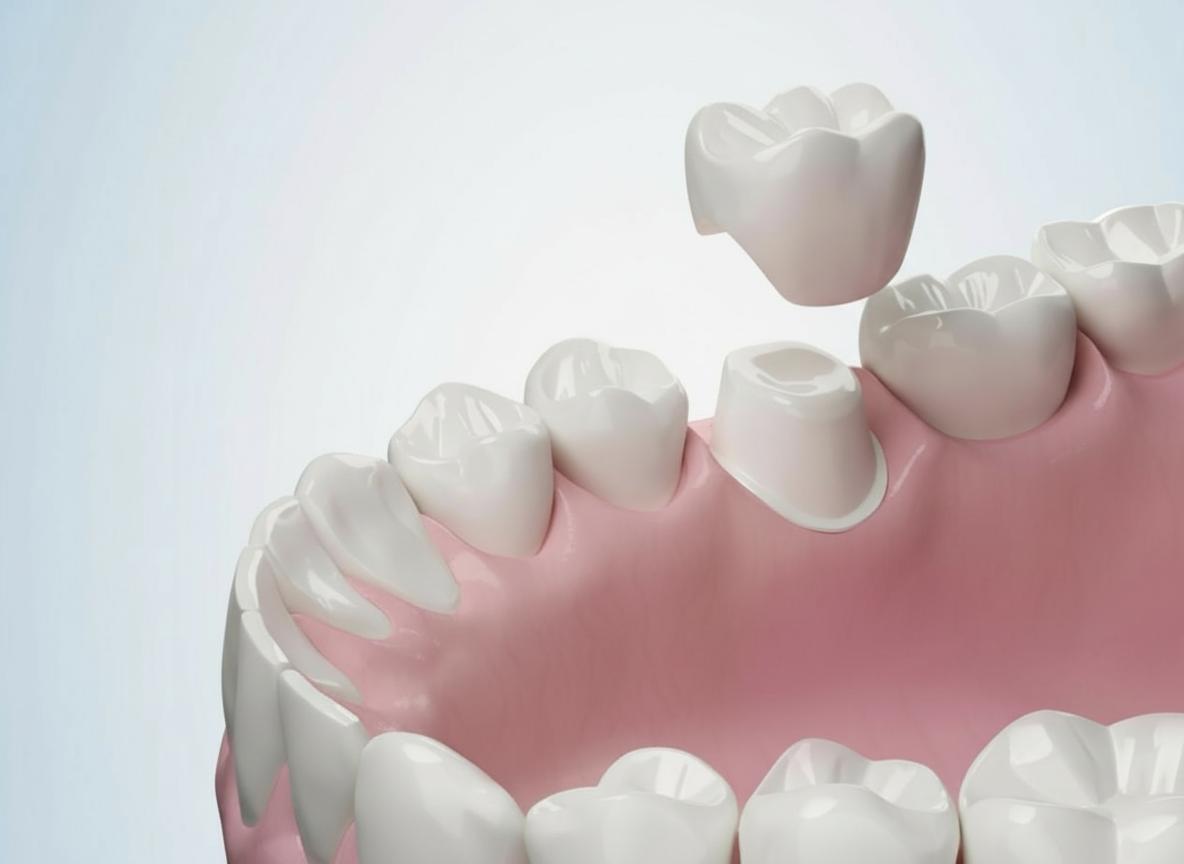
If you are pricing up a crown, you have probably run into two names again and again: zirconia and PFM (porcelain fused to metal). They look similar on a price list, but they are built very differently, and that difference shows up in how natural your tooth looks, how long the crown lasts, and whether you ever see a thin grey line near the gum.
This guide walks through strength, looks, the grey-line issue, longevity, and cost, then explains the few cases where a PFM still makes sense, and what you actually pay in Bangkok.
What a PFM crown is, and why it is being replaced
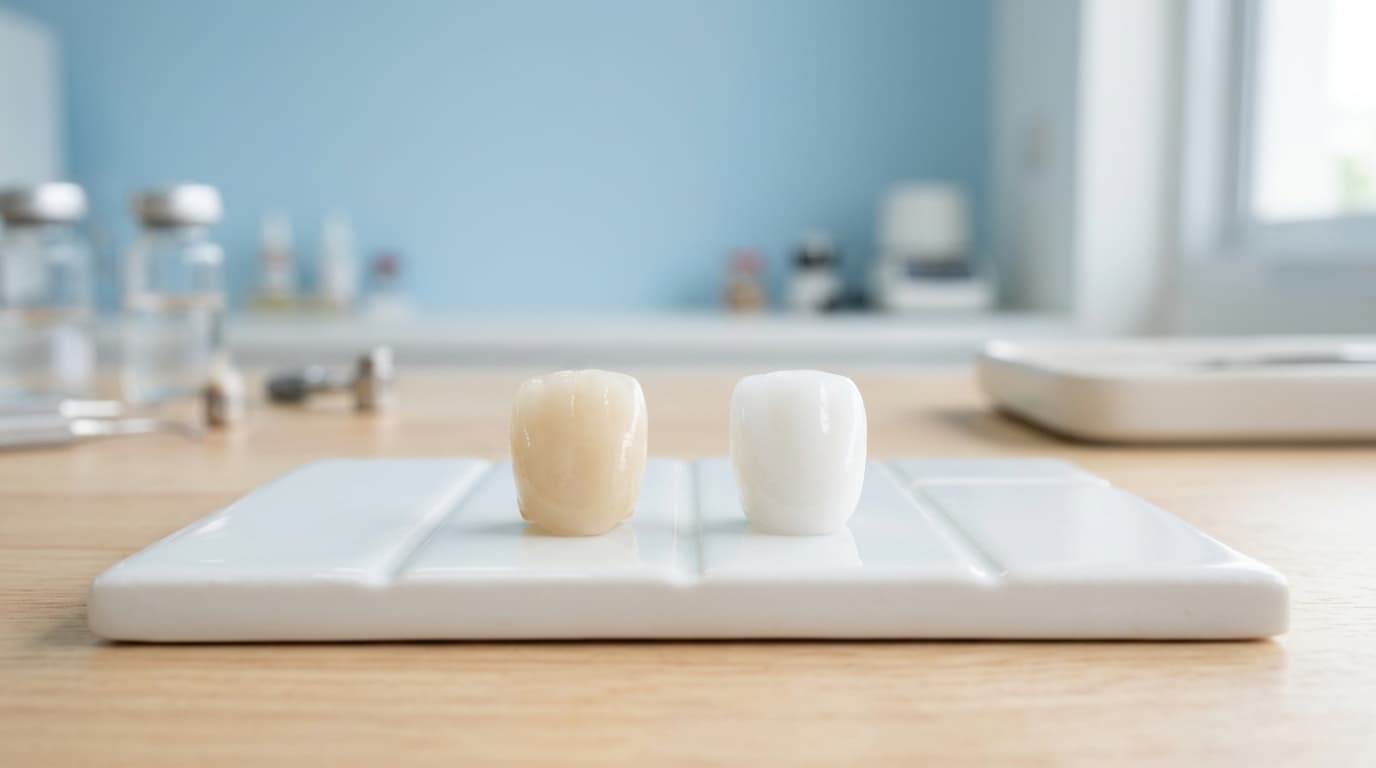
A porcelain fused to metal crown has two parts. Underneath sits a thin shell of metal alloy that gives the crown its strength. Over that, a technician layers tooth-coloured porcelain to make it look like a real tooth.
For decades this was the default crown worldwide, and a well-made PFM placed in the right spot can last a very long time. But the field has moved on:
- ❌ The metal core blocks light, so the porcelain has to be made more opaque to hide it, and the tooth can look slightly flat compared with a natural one.
- ✅ All-ceramic and zirconia crowns now make up the large majority of crowns prescribed, while PFM has shrunk to a small share.
We place modern all-ceramic and zirconia crowns rather than PFM, and the sections below explain why.
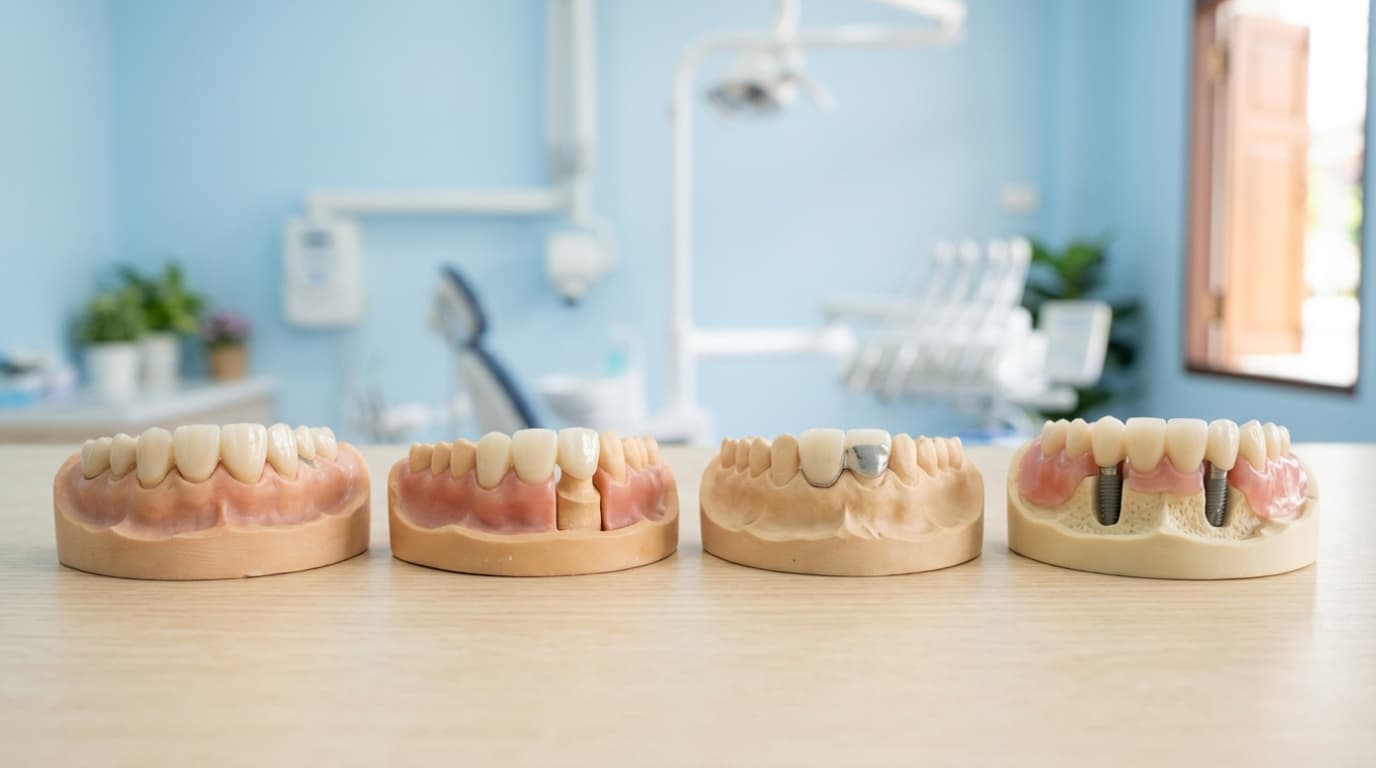
If you want the bigger picture on materials and the full treatment journey, our dental crown treatment page in Bangkok lays out every option and what to expect at each visit.
Strength and durability
- Zirconia (zirconium dioxide) is one of the toughest materials used in dentistry. In its solid monolithic form it is far more resistant to chewing and grinding forces than the porcelain on a PFM, which is why it is the go-to for molars and for anyone who clenches at night.
- E-max (lithium disilicate) sits in between: very strong for a glass-ceramic and more than enough for front teeth and most premolars, though for heavy load-bearing back teeth zirconia is usually the safer pick.
- PFM is strong too, thanks to its metal core, but the weak point is the porcelain layered on top: it can chip or flake off over the years, leaving the metal showing through.
Both modern materials remove that chipping risk, because there is no separate veneer of porcelain over a metal shell to fail.
If you grind your teeth at night, this matters even more. A chipped PFM means the porcelain has to be repaired or the whole crown replaced. A solid zirconia crown shrugs off that kind of load.
The lifespan you actually get from any crown still depends heavily on care: regular cleaning, not using your teeth to open packaging, and a night guard if you grind. Looked after well, a metal-free crown comfortably reaches 10 to 15 years and often longer, and our guide to how long dental crowns last breaks down the survival data by material.
The metal margin: that grey line at the gum
This is the single biggest reason patients move away from PFM:
- ❌ PFM: the metal core sits just under the gum, so a thin dark or grey line can appear at the edge of the crown, especially as gums naturally recede a little with age. On a back tooth nobody notices. On a front tooth it is a giveaway that the tooth is crowned.
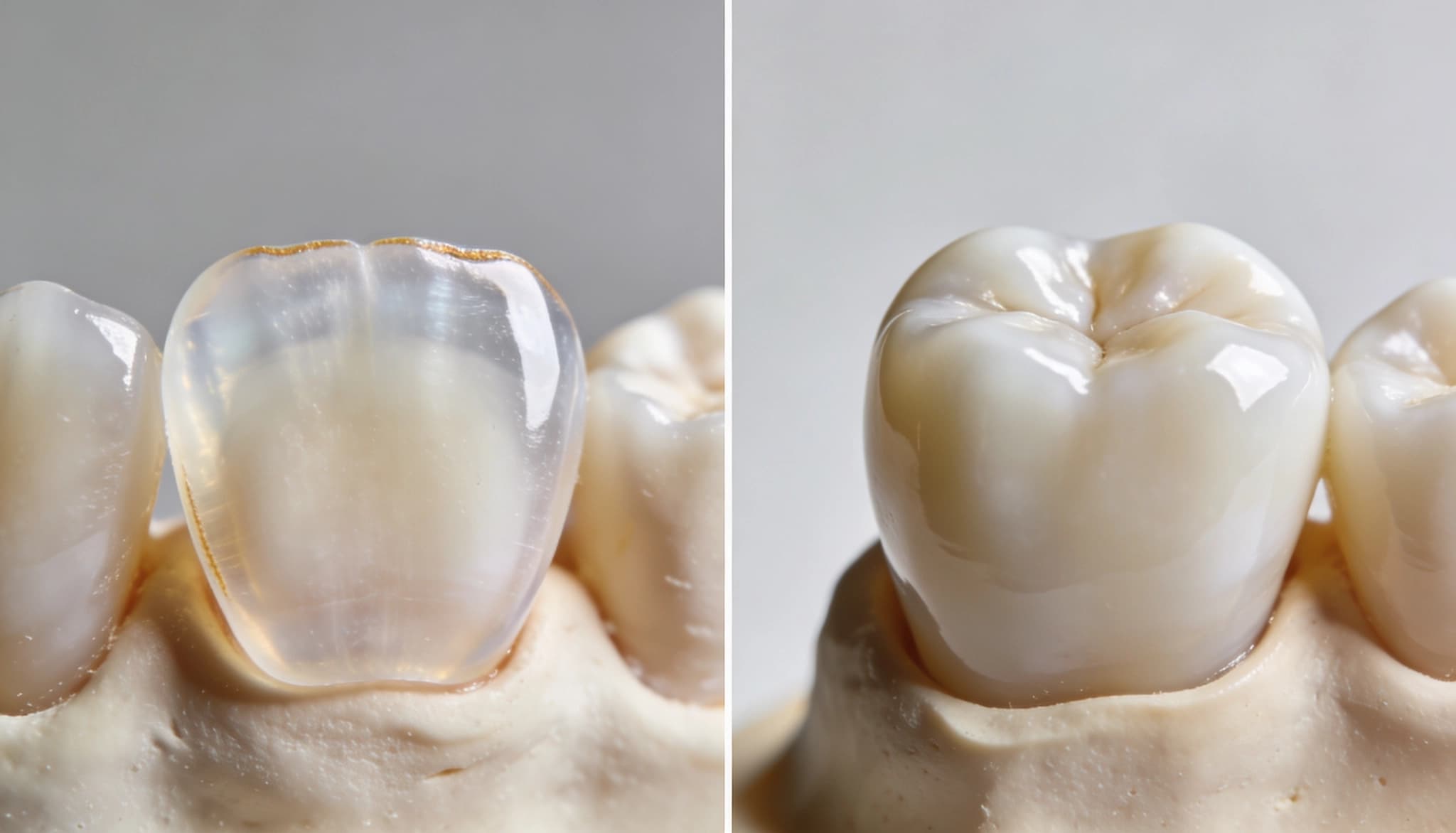
- ✅ Zirconia and E-max: no metal to show, so the margin stays the same colour as the rest of the tooth even if the gum line shifts over time.
Metal-free crowns are also a better fit for anyone with a known metal sensitivity or allergy, and they tend to be kinder to the surrounding gum tissue.
Aesthetics: how natural does it look?
Real enamel is slightly translucent, so it picks up light rather than blocking it. That is exactly what an all-ceramic crown does:
- E-max is the standout, with light transmission and stain resistance that make it the first choice for a single front tooth or a smile makeover where the crown has to disappear next to your natural teeth.
- Modern translucent zirconia has closed much of the gap and looks excellent, while still being strong enough for the back of the mouth.
- PFM can look good when new, but the opaque porcelain over metal never quite matches the depth of a natural tooth, and the risk of a grey margin grows with time.
For a visible tooth this is exactly why an all-ceramic crown for front teeth has become the default. If you are weighing this against a thinner cosmetic option, our guide on crowns versus veneers explains when each one is the right tool.
Zirconia vs E-max vs PFM at a glance
| Feature | Zirconia | All-ceramic E-max | PFM (porcelain fused to metal) |
|---|---|---|---|
| Core material | Solid zirconium dioxide, no metal | Lithium disilicate, no metal | Metal alloy with porcelain layer |
| Strength | Highest, best for molars and grinders | Strong, great for front and premolar teeth | Strong core, but porcelain can chip |
| Looks | Very natural, modern translucent shades | Most natural, best for front teeth | Good when new, can look opaque |
| Grey line at gum | None | None | Possible as gums recede |
| Metal-free | Yes | Yes | No |
| Typical lifespan | 10 to 15+ years | 10 to 15 years | Often 10 to 15 years, can chip earlier |
| Best for | Back teeth, grinders, metal allergy | Front teeth, smile makeovers | Niche cases, older restorations |
| Price in Bangkok (per tooth) | ฿18,000 / $530 | ฿16,000 / $470 | Not offered, replaced by all-ceramic |
When does a PFM still make sense?
PFM is not useless, and being honest about that matters. There are still a handful of situations where a dentist might reach for one:
- matching a row of older PFM crowns already in the mouth
- certain long bridges where there is very little vertical space
- a heavily stained, root-treated tooth, where the opaque core helps hide the discoloured stump underneath
For the vast majority of single crowns and smile work, those edge cases do not apply, and a metal-free crown gives you a better look with no grey-line risk for a similar lifespan. That is why we place modern all-ceramic and zirconia crowns.
One thing to note: we do not perform root canal treatment at the clinic, so if a tooth needs that first, it should be completed by an endodontist before we fit your crown.
Cost, and the Bangkok angle
In Western countries a single crown is typically advertised from $800 to $2,800 depending on the material and where you live. Zirconia and all-ceramic usually sit at the top of that range, which is one reason some patients are pushed toward a cheaper PFM at home.
In Bangkok you do not have to make that compromise:
- Zirconia crown: ฿18,000 ($530) per tooth.
- All-ceramic E-max crown: ฿16,000 ($470) per tooth.
- Every crown includes a consultation, digital imaging, and a written 1-year warranty against fractures with free replacement except in cases of misuse.
So you get a metal-free, modern crown for less than a PFM costs in many countries. For a full breakdown of crown prices in Thailand and how the savings stack up, see our cost guide, and if you are choosing specifically between the two metal-free options, our zirconia versus E-max comparison goes deeper.
First time considering treatment abroad? Our overview of dental tourism in Thailand covers how a trip is planned. Crowns are made in our on-site laboratory and placed by our specialists, so the fit, bite, and shade are checked in person before anything is bonded permanently.
What to expect: visits, comfort, and timing
Whichever material you choose, the process is the same and usually takes two visits over about a week:
- First appointment: we examine the tooth, take digital images, prepare it under local anaesthetic, and fit a temporary crown so you can eat and talk normally.
- Second visit: the permanent crown, crafted in our lab, is bonded in place, with the bite and shade adjusted until it feels and looks right.
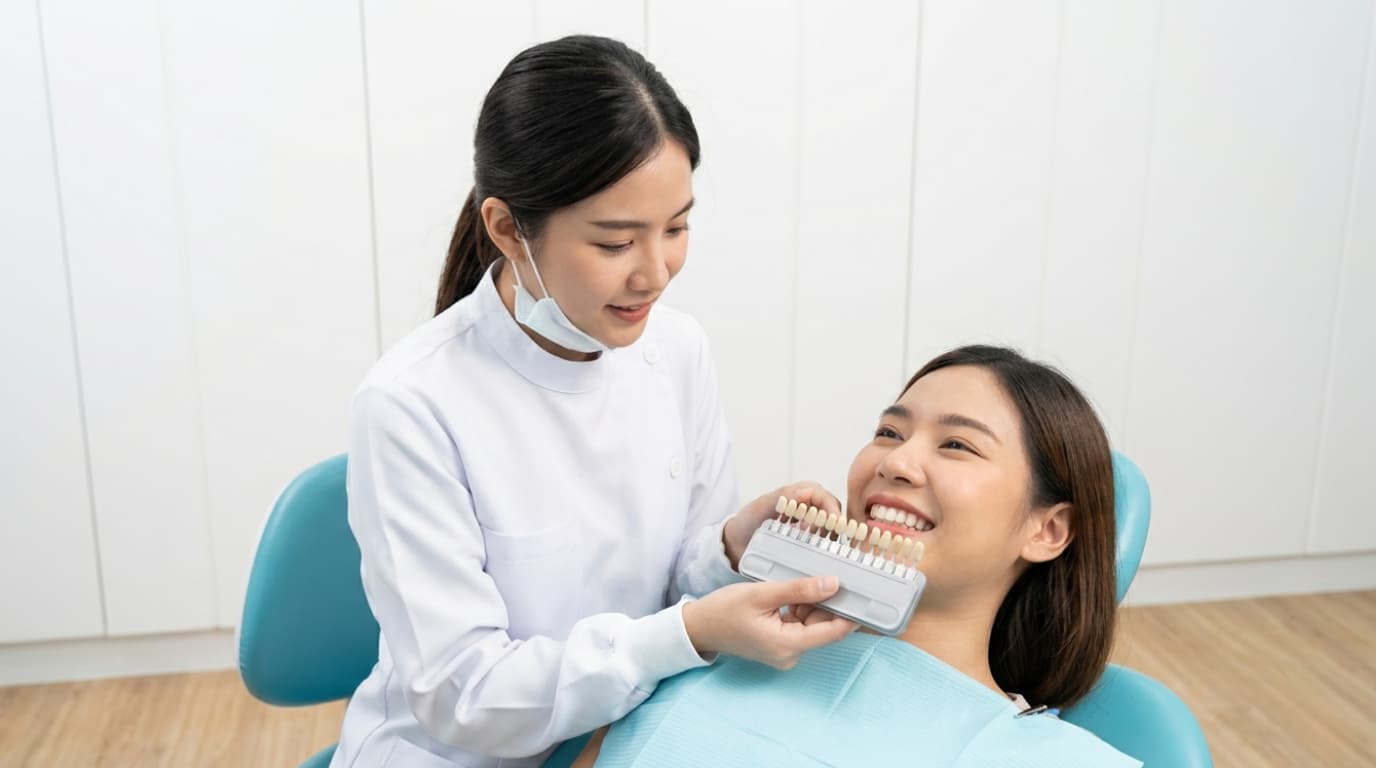
Patients often ask whether it hurts. The preparation is done with local anaesthetic, so the appointment itself is comfortable, and any mild sensitivity afterwards usually settles within a few days.
Because the whole thing fits inside a short trip, many international patients combine it with a few days in Bangkok. If you are travelling for several crowns or a full-mouth restoration, we map out the visit schedule in advance so you know exactly how long to stay.
Conclusion
For almost every crown today, the real choice is between two metal-free materials: zirconia for strength on back teeth and grinders, E-max for the most natural look on front teeth. PFM had a long run, but the grey-line risk and chipping porcelain are exactly the problems modern ceramics were built to solve.
In Bangkok, that modern crown costs less than the older design does in many countries, made in our on-site lab with a written 1-year warranty. Explore the full dental crown options in Bangkok if you want the treatment detail.
Send us a few photos of your tooth and we will recommend the right material for your case, your bite, and your budget. No metal, no guesswork, just a crown that looks like your own tooth.
Was this article helpful?