 Written by Dr. Nan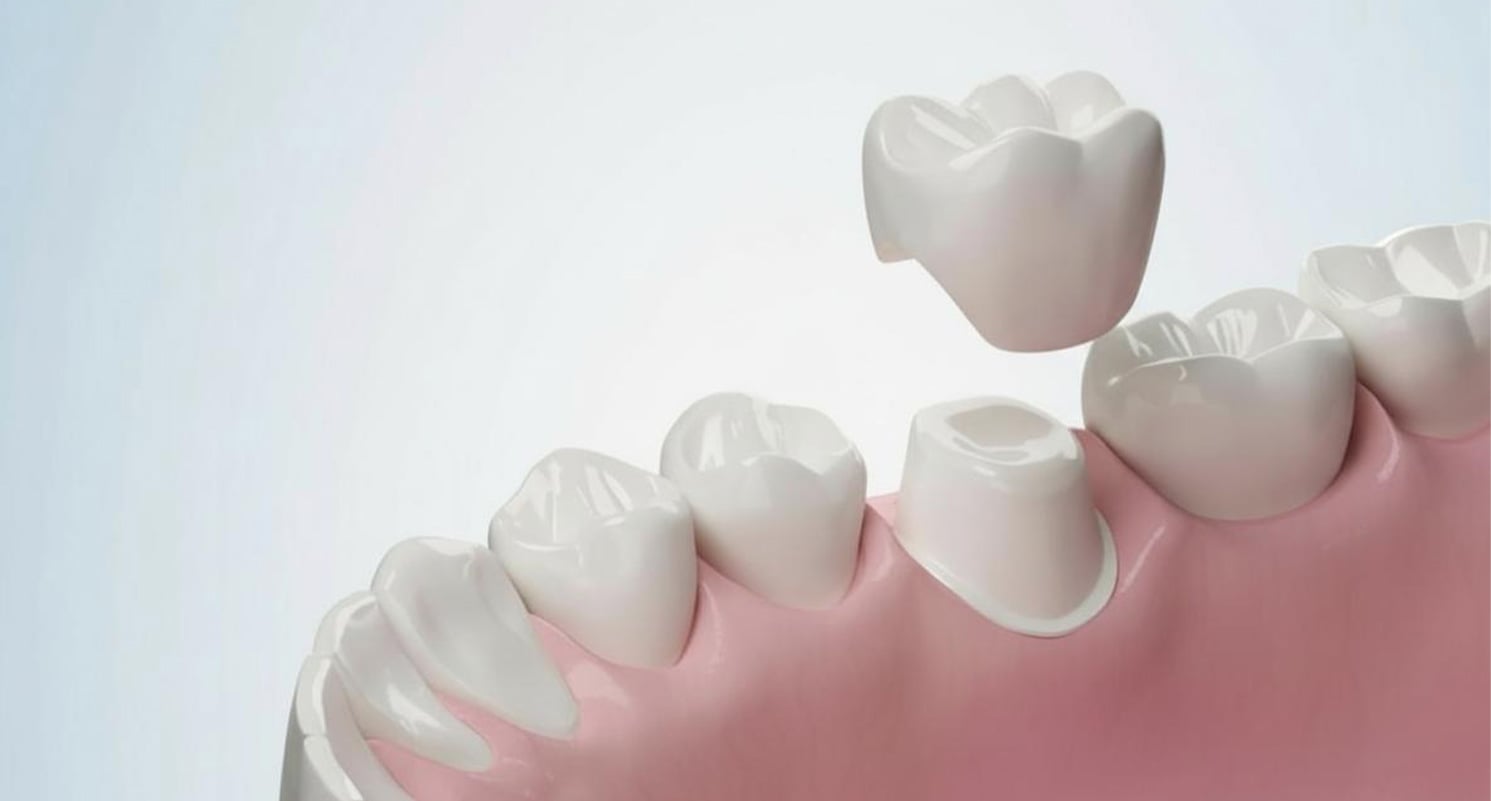
Decay, a chipped tooth or a smile you are not happy with can all be fixed, but the right repair depends on one thing above all: how much of your natural tooth is still healthy.
Patients often ask us whether they need a crown, a veneer or a filling, and the labels can feel interchangeable. They are not. Each one is built for a different amount of tooth loss and a different goal.
The one rule that decides it: how much tooth is left
Dentists do not pick treatments at random. We look at how much sound tooth structure remains and how much chewing force the tooth has to survive:
- A filling rebuilds a small to moderate hole. The decayed part is removed and the gap is packed with tooth-coloured composite. This works beautifully as long as plenty of healthy tooth is still standing around it to hold the filling in place. It is conservative, it keeps your natural tooth, and it is the least expensive route.
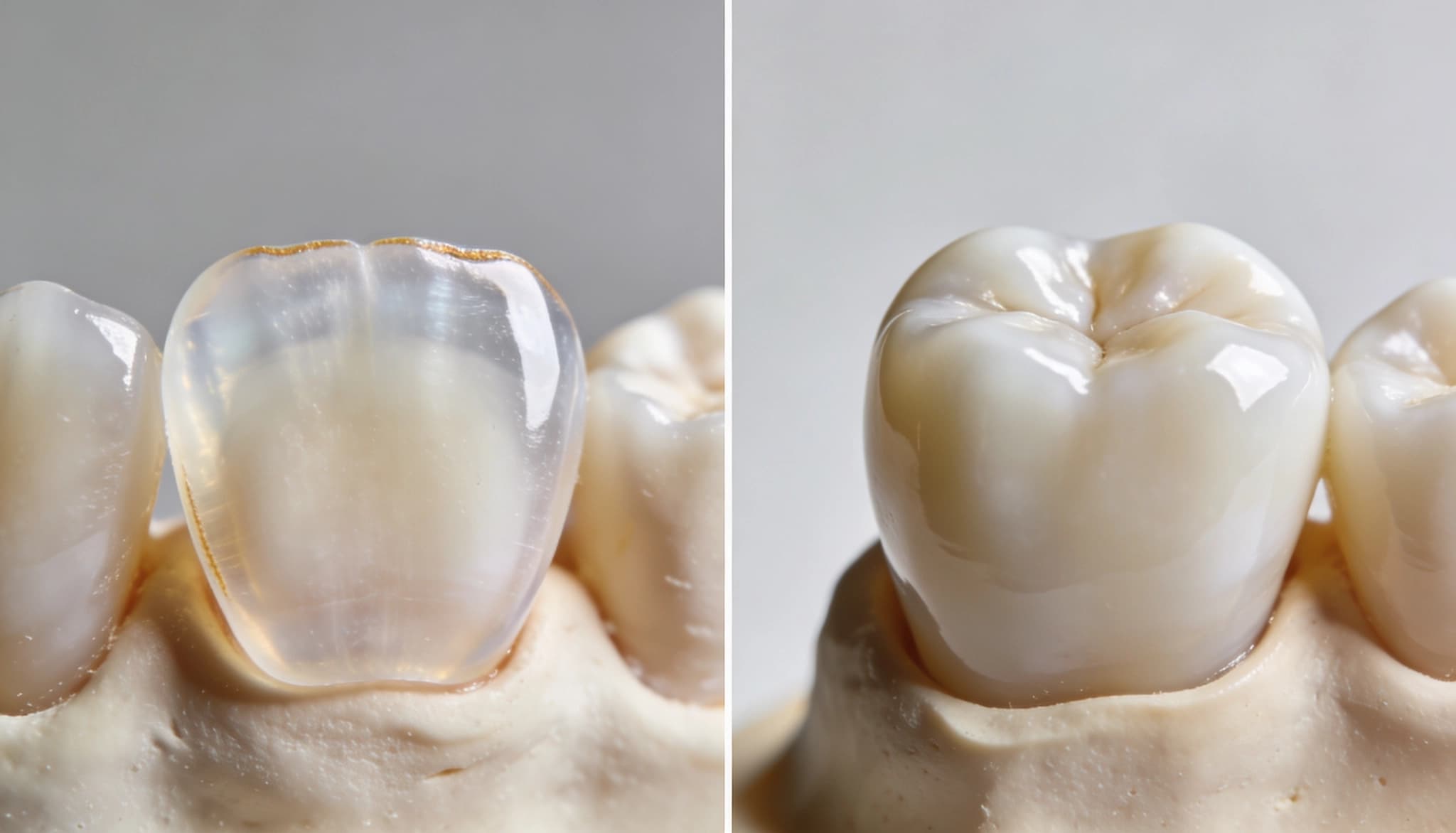
- A crown is needed when too much of the tooth is gone for a filling to hold. The usual tipping point is roughly half or more of the chewing surface lost to decay, a fracture, or a large old filling that keeps failing. A crown covers the whole tooth and absorbs the bite force a weakened tooth can no longer take on its own.
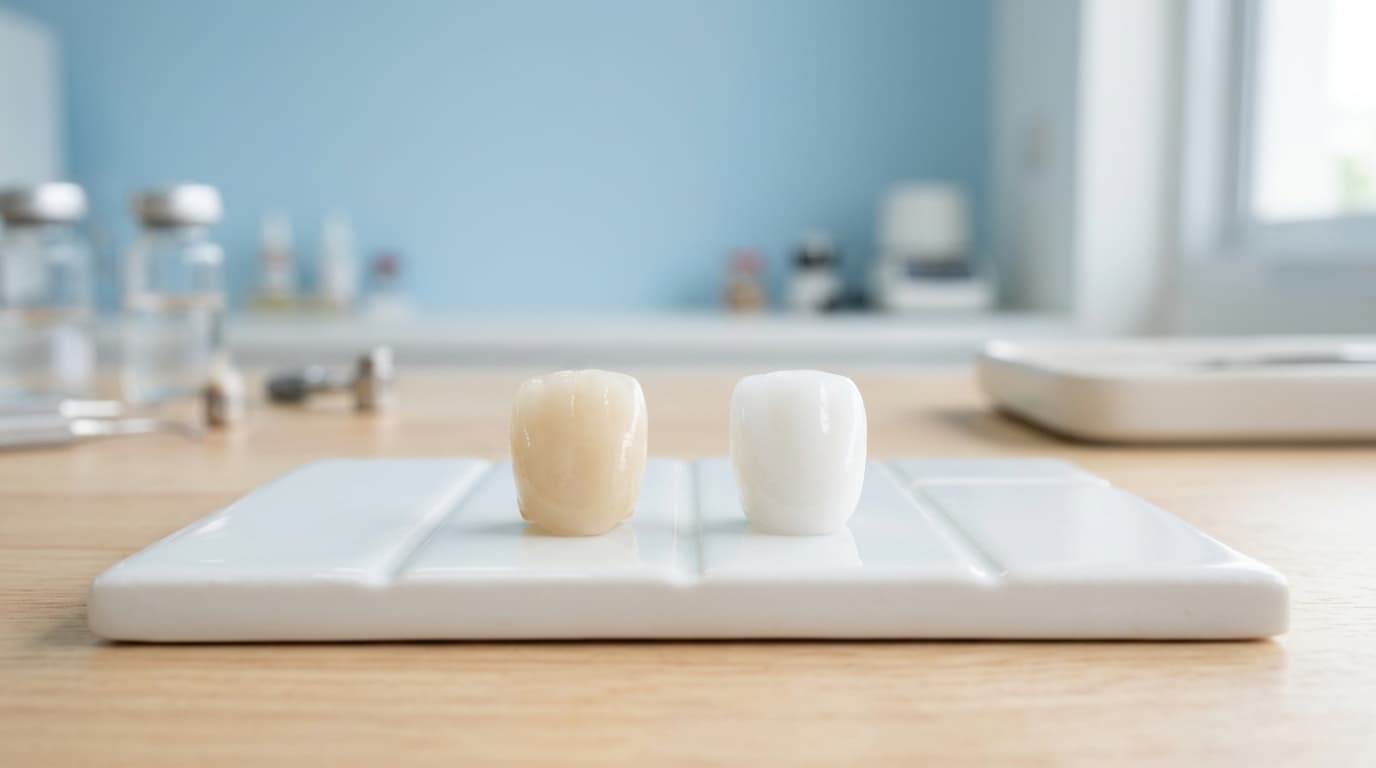
- A veneer is the odd one out. It is not really about damage at all: a thin shell bonded to the front of a healthy tooth to change its colour, shape or alignment. If the tooth is broken down, a veneer cannot save it and a crown is the correct answer.
You can read a deeper comparison of the two restorations in our guide on the difference between a crown and a veneer, and see the full treatment options on our dental crowns in Bangkok page.
Crown, veneer or filling at a glance
Here is the quick decision table most patients want to see first.
| Question | Filling | Crown | Veneer |
|---|---|---|---|
| Best for | Small to moderate decay or a small chip | Large decay, cracked tooth, or a root-treated tooth | Cosmetic change to a healthy front tooth |
| How much tooth is removed | Only the decay | The tooth is reshaped on all sides | A thin layer off the front only |
| How much it covers | Just the cavity | The entire tooth | The front face of the tooth |
| Main purpose | Repair and seal | Protect and rebuild strength | Improve appearance |
| Visits | Usually 1 | Around 2 over about a week | Around 2 over about a week |
| Typical lifespan | 5 to 10 years | 10 to 15+ years | 10 to 15 years |
| Price in Bangkok | From a few thousand THB | $470 (E-max) to $530 (zirconia) | $120 composite, $355 porcelain |
When a filling is the right call
If you caught the cavity early, a filling is almost always the smarter, cheaper and more conservative choice. There is no reason to cap a tooth that does not need capping.
- ✅ A good rule of thumb: if the dentist can remove the decay and still leave strong walls of natural tooth on most sides, a filling will do the job and protect what is yours.
- ✅ Usually a single visit: the decay is cleaned out, composite is layered and shaped to match your bite, then cured and polished. Tooth-coloured composite blends in well, even on visible teeth.
- ❌ Do not wait it out: a filling left to fail, or repeated fillings on the same tooth, gradually undermine it until a crown becomes the only option left.
Treating early is what keeps you in the cheaper, simpler lane.
When you need a crown instead
A crown is the answer when the tooth is too far gone for a filling to be safe. Common triggers:
- a cracked or fractured tooth
- a cavity that has destroyed a large part of the tooth
- a tooth so worn or weakened that it could split under normal chewing
- a root canal treated tooth, which almost always needs a crown afterwards because it becomes brittle
Important note for visiting patients: we do not perform root canal treatment at our clinic. If your tooth needs the nerve treated first, that should be completed by an endodontist before you travel, and then we place the crown that protects the finished tooth. Planning the sequence in advance keeps your trip smooth and avoids a wasted visit.
At our Bangkok clinic, all-ceramic E-max crowns are $470 (16,000 THB) and high-strength zirconia crowns are $530 (18,000 THB) per tooth. E-max gives the most lifelike result for front teeth, while zirconia is the workhorse for back teeth that take heavy bite force. The crown is normally completed in about two visits across roughly a week, with a temporary crown protecting the tooth in between.
For the full breakdown, see how much a dental crown costs in Thailand, how many years you can expect from one in our guide to how long dental crowns last, and if you are weighing up a tooth that has darkened or died, our guide to a dead or discoloured tooth explains your options.

When a veneer makes more sense
Veneers solve a different problem. If your tooth is healthy and strong but the colour, shape, spacing or a small chip bothers you, a veneer reshapes the visible front without the heavy preparation a crown requires. You have two routes:
- Composite veneers, built up directly on the tooth in a single visit, from $120 per tooth. An affordable, reversible entry point.
- Porcelain veneers, crafted in our on-site lab for a more durable, stain-resistant and lifelike finish, from $355 per tooth.
The trade-offs between the two are covered in our guide on composite versus porcelain veneers.
The key thing to remember: a veneer is cosmetic. It will not rescue a broken-down or decayed tooth. If the tooth lacks the structure to support a veneer, a crown is the safe choice, and an all-ceramic crown can be made just as natural-looking on a front tooth.
What this costs you in Bangkok
Cost is usually the next question, especially for patients travelling for treatment. Here is how the three options compare per tooth at our clinic.
| Treatment | Material | Price per tooth (Bangkok) |
|---|---|---|
| Filling | Composite resin | From a few thousand THB |
| Veneer | Composite | $120 |
| Veneer | Porcelain | $355 |
| Crown | All-ceramic E-max | $470 (16,000 THB) |
| Crown | Zirconia | $530 (18,000 THB) |
These crown prices run 65 to 75 percent below typical US, UK and Australian fees, which is why so many patients combine treatment with a trip.
Every crown is placed by our specialist dentists, made in our on-site laboratory, and backed by a one-year written warranty against fractures with free replacement, barring improper use. Your exact filling cost depends on the size and location of the cavity, so it is confirmed at your consultation.
How we decide with you
You do not have to diagnose your own tooth. At your consultation we examine the tooth, take digital images or X-rays, and show you exactly how much healthy structure is left. From there the right answer is usually clear:
- a filling if we can save the tooth simply
- a crown if it needs full protection
- a veneer only when the tooth is sound and the goal is cosmetic
If a tooth needs root canal treatment first, we will tell you so you can have that done before you travel.

Conclusion
The label matters less than the tooth. How much healthy structure is left decides everything: small damage stays in filling territory, a badly broken or root-treated tooth needs the protection of a crown, and a veneer is reserved for a sound front tooth that simply wants a better look.
Want a straight recommendation for your own teeth? Send us a few photos or an X-ray and our team will tell you which option fits, with a personalised plan and quote. Explore the full range on our dental crown treatment in Bangkok page, or browse our porcelain veneer options.
Was this article helpful?