 Written by Dr. Nan
I am Dr. Nan (Busakorn Osartalart), a board-certified prosthodontist in Bangkok. I place the crowns, bridges and implant restorations that this article warns you about, and I inherit the failures of clinics that cut corners. That is exactly why I am the person who should write this. A risk list is only worth reading if the author has something to lose by being wrong.
Why you should trust a risk list written by a treating dentist, not a rival or a middleman
Search "risks of dental tourism" and you will find two kinds of pages:
- Pages by dentists in the US, UK or Australia, who have a direct financial interest in keeping you at home. Their risk list is real in places and wildly inflated in others, because fear is a retention tool.
- Pages by facilitators and aggregators who sell many clinics at once. They cannot name specific failure modes without implicating a clinic on their own roster, so they hedge and stay vague.
Neither has my problem: I have to look a patient in the eye at the two-week review when a restoration does not seat correctly. That accountability is the whole point. When I concede a risk below, it costs me something. When I dismiss one, I am staking my name on it.
What the data actually says: the BDA survey and the fearmongering it gets twisted into
The most-cited number in this whole debate comes from a British Dental Association survey in which a large majority of UK dentists reported treating patients who had returned with complications from treatment abroad. That figure gets weaponized into "dental tourism is dangerous." Read it carefully:
- ✅ What it proves: UK dentists see complications. They are real, and they happen.
- ❌ What it cannot tell you: the denominator. The people who went abroad and had zero problems never show up in a UK dentist's chair, so the survey cannot see them.
- ❌ What it is not: a failure rate. Anyone quoting it as a percentage is misreading it, and often deliberately.
So let me separate the two categories for the rest of this piece: risks that are statistically real and worth planning around, and risks that are mostly viral anecdote.
The real risks, ranked: implant failure and peri-implantitis
This is the one that deserves the top spot, because when it goes wrong it is expensive and slow to fix.
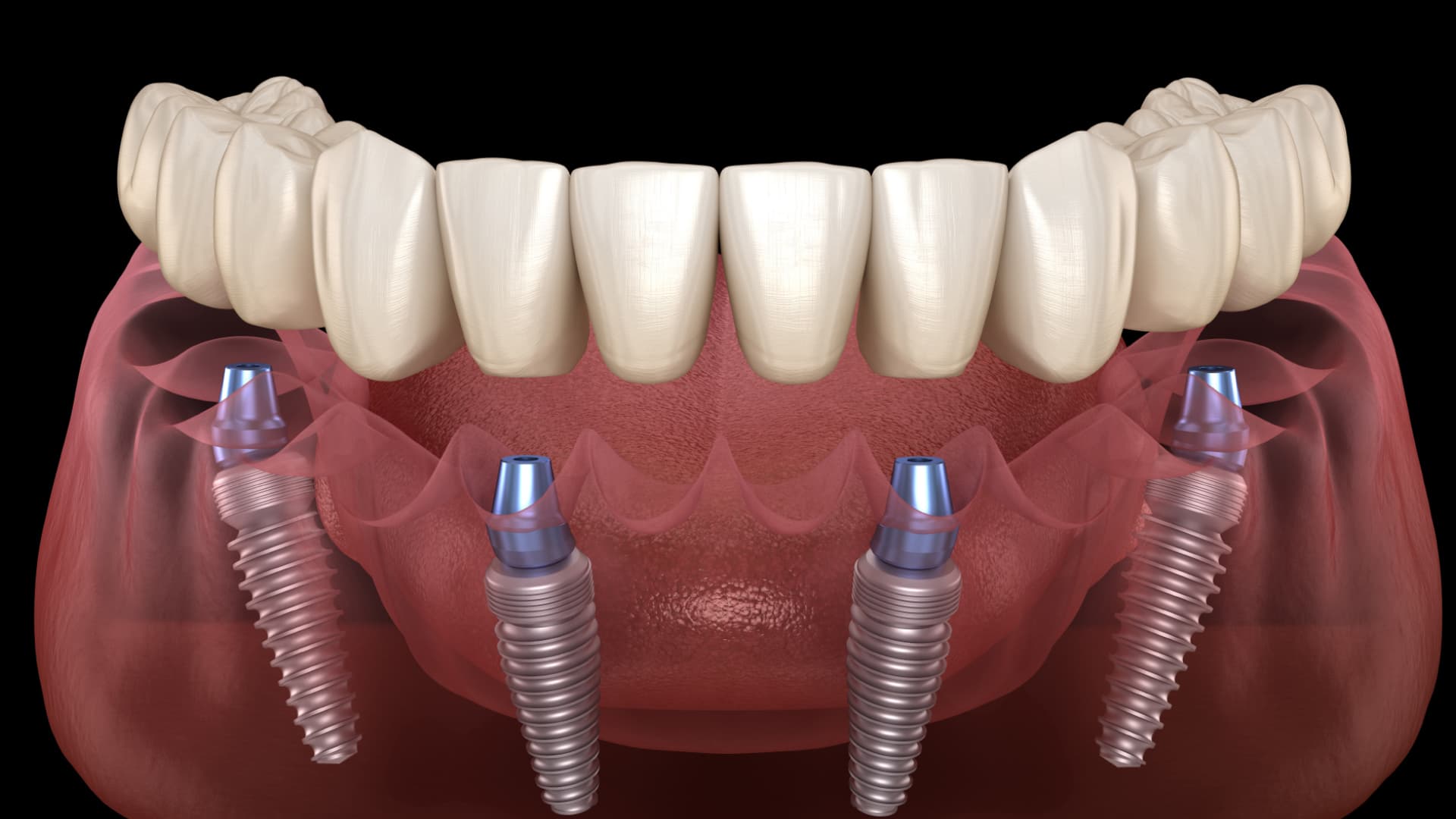
An implant fails when the bone does not fuse to it (osseointegration failure), usually in the first few months, or later through peri-implantitis, an infection of the gum and bone around the implant that behaves like aggressive gum disease.
The risk factors that actually move the needle are well known:
- smoking, which slows healing
- uncontrolled diabetes
- poor bone volume that was never imaged
- rushed same-day loading of an implant that should have been left to heal
A clinic that places an implant without a 3D CT (CBCT) scan is guessing at your bone. Ours plan every case on CBCT before anyone touches you. If you want the honest picture of the biological side, we cover what implant recovery and aftercare involve and whether dental implants in Thailand are safe in more depth.
Poor-fit crowns and bridges (and why the dental lab matters)
A crown or bridge that does not fit precisely leaves a microscopic ledge where bacteria collect. The result months later is decay under the crown or gum inflammation. This is a craftsmanship problem, and craftsmanship depends heavily on the lab:
- ❌ Outsourced lab: the restoration travels, communication is slower, and remakes cost days you do not have on a trip.
- ✅ On-site lab: the technician checks the fit against your actual mouth and can remake same-day if needed.
That is why we run our lab in the building. A 3-unit zirconia bridge with us is roughly 52,500 THB over 7 to 10 days with a 1-year warranty, and the fit is verified before you fly.
Over-prepared healthy teeth: the "Turkey teeth" problem
This one is real, and it makes me angry. To place a crown or an aggressive veneer, a dentist grinds down the natural tooth. Done unnecessarily, healthy teeth get shaved to pegs for a quick cosmetic result, which is where the "Turkey teeth" horror stories come from:
- ❌ That tooth structure never grows back.
- ✅ A conservative dentist will tell you when a thin composite or minimal-prep porcelain veneer is enough, and will refuse to crown teeth that do not need it.
- ✅ Composite veneers with us start at 4,000 THB and remove little to no enamel.
Read over-preparing healthy teeth for veneers and check whether you are a candidate for veneers before you let anyone reach for a drill.
Infection, sterilization and cross-contamination: how real is the risk?
You will read warnings about Hepatitis B, HIV and antibiotic-resistant bacteria, often citing a general CDC medical tourism advisory. Let me be straight:
- ✅ Real, in theory: a filthy clinic exists somewhere, and a localized infection at a surgical site is a normal, manageable risk of surgery anywhere.
- ❌ Viral anecdote, in practice: instrument sterilization to modern autoclave standards makes bloodborne cross-contamination extremely rare in any properly run clinic, and effectively a non-issue in one that follows international infection-control protocol.
The screen is simple: ask about sterilization protocol and single-use items. A clinic that answers confidently and specifically is fine. One that gets vague is telling you something.
The risk nobody sells you on: zero aftercare and no continuity of care
This is the risk I would rank second overall and the one patients underweight the most. When you fly home, your dentist is 9,000 kilometers away. If a crown feels high, if a stitch bothers you, if an implant site aches at week three, who looks at it?
A serious clinic plans for this before you leave:
- a review appointment before your flight
- written records and imaging you can hand to a local dentist
- a remote channel to send photos once you are home
We offer a free remote follow-up for exactly this. Continuity of care is not a marketing extra. It is the difference between a small problem solved by email and a small problem that becomes a big one because nobody was watching.

Branded vs unbranded implants: the failure gap explained
If you remember one thing from this article, remember this. The implant system matters more than almost anything else, and it is the easiest thing for a cheap clinic to hide.
| Implant type | Failure risk | Spare parts | Records |
|---|---|---|---|
| Branded (Straumann, Neodent, Neobiotech) | Low, ~2 to 3% in the literature | Globally available | Implant passport |
| Unbranded / generic | Markedly higher | Often discontinued | Frequently none |
The failure rate is only half of it. When a branded implant needs a new abutment or screw in eight years, any dentist in the world can order the part. When a no-name implant fails, the part may not exist anymore, and the whole thing has to be removed.
We place branded systems, from Neobiotech single implants starting at 45,000 THB up to Straumann, and every case comes with an implant passport documenting exactly what is in your jaw. For the wider comparison, see branded vs generic implant systems.
Does dental tourism still save money after a complication? An honest cost view
Critics love to say that once something fails, the savings evaporate. Let us actually do the math instead of asserting it.
| Scenario | Bangkok | At home (typical) |
|---|---|---|
| Single implant + crown | ~$1,320 and up | $3,000 to $5,000 |
| Add flights + hotel | +$1,000 to $1,800 | n/a |
| If a redo is needed | Warranty covers the redo, you pay travel again | Full price of the redo |
The honest conclusion: on a single implant the margin is real but not enormous once you add travel, so the case is strongest on larger work (multiple units, All-on-4 at 350,000-500,000 THB per arch) where the gap is thousands of dollars.
And yes, a complication that needs a return trip erodes the saving. That is precisely why choosing a clinic that reduces complication risk matters more than choosing the cheapest quote.
What happens if it fails: warranty, implant passport and who fixes it
A warranty is only as good as what it actually covers and where. Ask two questions:
- Does the warranty cover the redo of the restoration, and is it in writing? Ours is a 1-year written warranty.
- What can be handled remotely versus what needs you back in the chair? Be realistic: a warranty cannot cover a physical remake without you physically returning.
Any clinic promising to fix everything by mail is not being straight with you. Our honest position is documented in how the veneer warranty works.
The implant passport is your insurance policy for portability. It names the system, size and batch, so a dentist anywhere can service the implant. No passport, no continuity.
Will your local dentist repair work done abroad, and why some refuse
Some will, some will not, and it is worth understanding why before you assume bad faith:
- Liability. A dentist who did not place your implant cannot fully verify how it was done, and if they touch it and it later fails, the responsibility blurs.
- Unknown hardware. Some genuinely worry about what is in your jaw.
- Lost revenue. Some, frankly, resent it.
- Limited cross-border recourse, which makes cautious dentists more cautious.
The practical defense is documentation. A patient who arrives home with a CBCT, an implant passport and clear records is far easier for a local dentist to help than one who arrives with nothing. Give your home dentist a reason to say yes.
The clinic-agnostic vetting checklist: run it on us
This works on any clinic in any country. Do not take my word that we pass. Ask us, and ask everyone else on your shortlist.
- Is the treating dentist named, and can you verify their board certification and specialty?
- Do they scan with 3D CT before implants, or work from a 2D X-ray?
- Do they use branded implant systems, and will they name the brand in writing?
- Do they issue an implant passport?
- Is there an on-site lab, or is lab work outsourced?
- What is the written warranty, and what exactly does it cover?
- Is there a pre-travel remote assessment before you commit to flights?
- What is the aftercare plan once you are home?
- Will they give an itemized quote including everything, not a headline price?
- Can they show verifiable before-and-after cases, not stock photos?
If a clinic answers all ten clearly, your real risk drops dramatically. If it dodges three, walk.
Red flags that should make you walk away
- A price that is dramatically below everyone else. Cheapest quote is a warning, not a win.
- No named dentist, or "our team of experts" with no verifiable credentials.
- Same-day full-mouth implants sold as a feature with no mention of healing time.
- Pressure to book flights before any assessment of your case.
- No 3D imaging offered for implants.
- Refusal to name the implant brand or put the warranty in writing.
- Reviews that all sound identical and cannot be traced to real people.
Things I will concede: single trips, insurance, cheap quotes and what we don't do
Honesty cuts both ways, so here is what the sales pages will not tell you:
- A single trip is not always possible. Implants usually need two trips over 3 to 6 months because the bone must heal.
- Your dental insurance almost certainly will not cover overseas treatment, so budget as if it will not.
- The cheapest quote you find is a red flag, and if that quote is ours, question it too.
- We do not do everything. We refer out root canals and teeth whitening rather than pretend to be a one-stop shop.
A clinic that claims to do it all, perfectly, cheaply, in one trip is selling a story.
Is it safe to fly after implant surgery?
Generally yes, with sensible timing. The concerns are cabin pressure affecting a fresh surgical site (barotrauma) and the clot risk of long-haul immobility. In practice:
- We schedule so you are not boarding a 12-hour flight hours after surgery.
- We review you before you leave, with clear post-op instructions on movement and hydration.
- Most patients fly home comfortably a few days after the surgical phase.
The key is a schedule built around your flights, not a rushed one that ignores them.
Conclusion
Dental work abroad goes wrong in predictable ways: unbranded hardware, no 3D imaging, over-prepared teeth, and nobody watching once you fly home. Every one of those is screenable before you book, which is why the ten-point checklist above matters more than any country debate.
The honest summary, from someone who inherits other clinics' failures: the treatment is standard dentistry everywhere. The risk lives in the clinic, and you get to choose the clinic.
If it helps to plan first, read how dental tourism in Thailand works and planning a dental trip to Bangkok, and if implants are on the table, our page on dental implants in Bangkok lays out the process.
You do not need to book a flight to find out where you stand. Send us clear photos and any recent X-rays, and within 24 hours you get an honest, free reply covering whether you are a good candidate (or whether your case is better handled at home), a realistic cost range, and the branded implant systems and written warranty that would apply.
Frequently Asked Questions
Is dental tourism safe?
It can be, and it can go badly, depending almost entirely on the clinic. The treatment itself is standard dentistry. The risk lives in credentials, hardware, imaging and aftercare. Screen those and the safety gap between abroad and home narrows sharply.
What are the risks of getting dental work done abroad?
The real ones: implant failure and peri-implantitis, poor-fitting crowns and bridges, over-prepared healthy teeth, and zero aftercare once you fly home. Infection from a credentialed clinic is rare. Most horror stories trace back to unbranded hardware, no imaging, or rushed timelines.
What happens if a dental implant placed abroad fails?
Early failures show in the first months. A branded implant with an implant passport can often be serviced or replaced anywhere. An unbranded one may need full removal because parts no longer exist. A written warranty should cover the redo, though you will pay to travel back.
Will my local dentist repair an implant or crown done abroad?
Some will, some will not. It is far more likely if you bring full records: a CBCT scan, an implant passport and treatment notes. Without documentation, many decline because they cannot verify the work.
Why are local dentists reluctant to fix dental work done overseas?
Liability if they touch unknown work and it later fails, uncertainty about the hardware used, limited cross-border recourse, and sometimes lost revenue. Good documentation removes most of the legitimate objections.
How do I choose a safe dental clinic abroad?
Run the ten-point checklist above. Named board-certified dentist, 3D CT imaging, branded implants, implant passport, on-site lab, written warranty, pre-travel assessment, aftercare plan, itemized quote, verifiable case photos.
What questions should I ask a dentist before going abroad?
Which implant brand, in writing? Do you scan with CBCT? What does the warranty cover? What is the aftercare plan? Can I see real before-and-afters? Who is my treating dentist and what are their credentials?
Are cheap dental implants abroad safe?
The cheapest quotes often signal unbranded hardware and no 3D planning, which is exactly where the higher failure rates live. Price should be reasonable, not rock-bottom. Bargain implants are the classic false economy.
What is an implant passport and why do I need it?
A document recording the implant's brand, size and batch. It lets any dentist worldwide identify and service your implant. Without it, future repairs become guesswork.
Does dental tourism actually save money after complications?
On large cases, yes, the gap is thousands even allowing for a redo. On a single implant the margin is real but modest once travel is added, and a complication needing a return trip can erase it. Reducing complication risk is what protects the saving.
How much does it cost to fix dental tourism gone wrong?
It depends on the failure. A warranty-covered remake costs you travel, not the restoration. Fixing unbranded implant failure at home can cost the full price of removal plus a new implant, which is why hardware choice matters so much upfront.
Can you get an infection from dental work abroad?
Cross-contamination like Hepatitis B or HIV is extremely rare in any clinic following modern sterilization. Localized infection at a surgical site is a normal, manageable risk anywhere, handled with hygiene and aftercare. Ask about sterilization protocol to screen out the rare bad actor.
What warranty do you get on dental work done abroad?
It varies widely. Ours is a 1-year written warranty. Insist on written terms and be realistic that a physical remake requires you to return. Any promise to fix everything remotely is not credible.
Which dental treatments most often go wrong abroad?
Implants (failure, peri-implantitis) and aggressive cosmetic work (over-prepared teeth for crowns and veneers). Simpler restorations go wrong far less often, and usually because of a poor lab.
Is it safe to fly after dental surgery or implants?
Usually yes with proper scheduling. Timing matters more than distance. A clinic should plan your surgery around your flights, review you before departure, and give clear post-op guidance.
How common are complications from dental tourism really?
Honestly, the true rate is unknown, because happy patients never show up in dentist surveys. The BDA figure proves complications happen, not how often. The controllable driver is clinic quality, and unbranded implants are the single biggest lever.
What are the red flags of an unsafe dental clinic abroad?
No named dentist, no 3D imaging, refusal to name the implant brand or put the warranty in writing, prices far below everyone else, pressure to book flights before assessment, and reviews that cannot be verified.
Was this article helpful?