 Written by Dr. Nan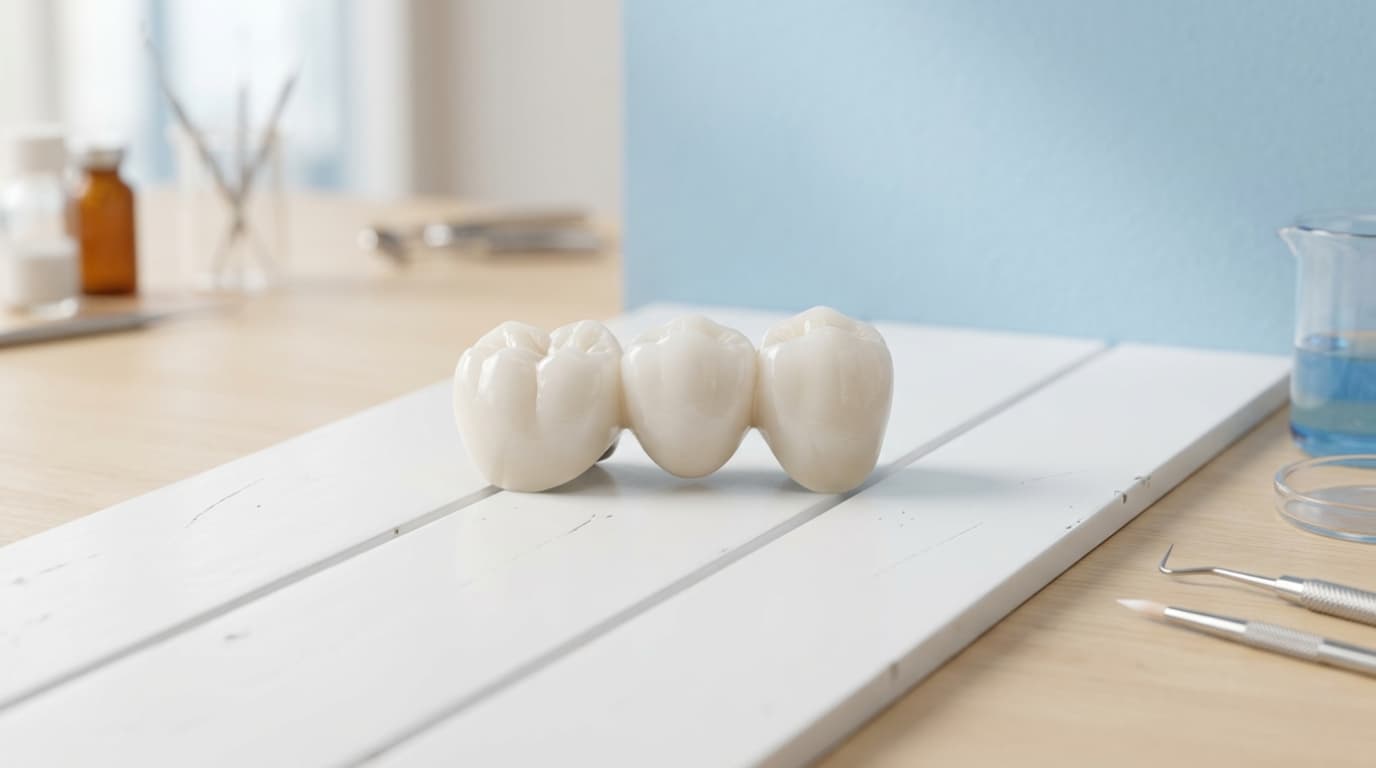
If you’ve lost a tooth, you’ve probably heard “implant” recommended as the gold standard solution. But for many cases, a dental bridge is faster, cheaper, and clinically equivalent, particularly for international patients who can’t manage the 3-6 month implant timeline. A bridge can be completed in 7-10 days during a single trip to Bangkok , at roughly half the cost of an implant.
This guide gives you the complete picture: real bridge prices across Bangkok clinics, the four bridge types and when each wins, materials breakdown, and a clear bridge-vs-implant decision matrix.
Why Patients Choose Thailand for Dental Bridges
Three reasons dental tourism patients increasingly choose Thailand for bridges over Western treatment:
- 65-80% cost savings vs the US, UK, and Australia
- Single-trip feasibility: 7-10 day treatment fits a normal vacation, unlike implants (2 trips, 6+ months)
- Board-certified prosthodontists with Thai Board specialty training, equivalent to US Board specialty certification
Bangkok clinics treat thousands of international patients each year. Bridges are one of the most common single-trip restorative cases.
Dental Bridge Cost in Thailand: 2026 Market Overview
Bangkok market pricing range (per unit)
| Material | Bangkok market range (THB / unit) | USD |
|---|---|---|
| E-max bridge | 14,000–22,000 | $425–$670 |
| Zirconia bridge | 16,000–25,000 | $485–$760 |
A “unit” is a single tooth-shaped element of the bridge. A 3-unit bridge replacing one missing tooth has 3 units total: two crowns on the abutment (anchor) teeth + one pontic (false tooth) in the middle.
Common bridge configurations (Bangkok average)
| Bridge size | Use case | Material | Total cost (THB, average) | USD |
|---|---|---|---|---|
| 3-unit bridge | 1 missing tooth | E-max | 48,000–66,000 | $1,455–$2,000 |
| 3-unit bridge | 1 missing tooth | Zirconia | 52,500–75,000 | $1,590–$2,275 |
| 4-unit bridge | 2 adjacent missing teeth | Zirconia | 70,000–100,000 | $2,120–$3,030 |
| 5-unit bridge | 3 adjacent missing teeth | Zirconia | 87,500–125,000 | $2,650–$3,790 |
| 6-unit bridge | Larger span | Zirconia | 105,000–150,000 | $3,180–$4,545 |
International cost comparison (3-unit zirconia bridge)
| Country | Cost (USD) | Savings vs Thailand |
|---|---|---|
| Thailand (Bangkok average) | $1,590–$2,275 | N/A |
| Turkey | $1,200–$2,000 | Comparable |
| USA | $3,000–$5,000 | $725–$3,400 saved |
| UK | £2,000–£3,500 ($2,500–$4,400) | $225–$2,800 saved |
| Australia | A$3,500–$5,500 ($2,300–$3,600) | $25–$2,000 saved |
Bangkok averages reflect 2026 published rates across major dental clinics. Western prices sourced from ADA Survey of Dental Fees, NHS UK Band 3 reference, ADA Australia surveys.
For specific clinic pricing and what’s included, see our Dental Bridge Bangkok service page, or our detailed guide to dental bridge cost in Thailand for the per-unit maths by material and span.
Compare bridge pricing logic to crown pricing in our Dental Crown Cost Thailand guide. Bridges use the same crown pricing × number of units.
Types of Dental Bridges Explained
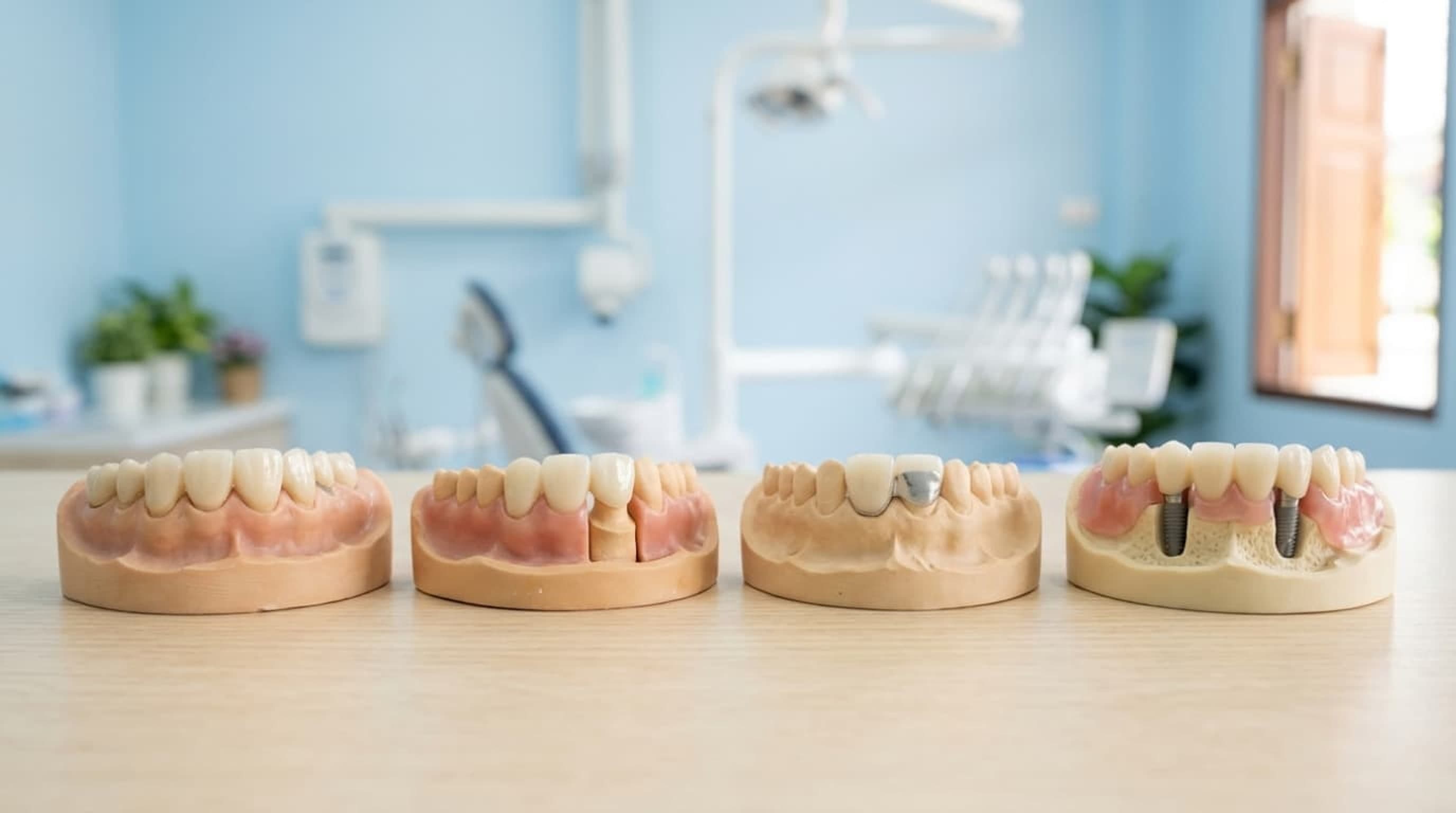
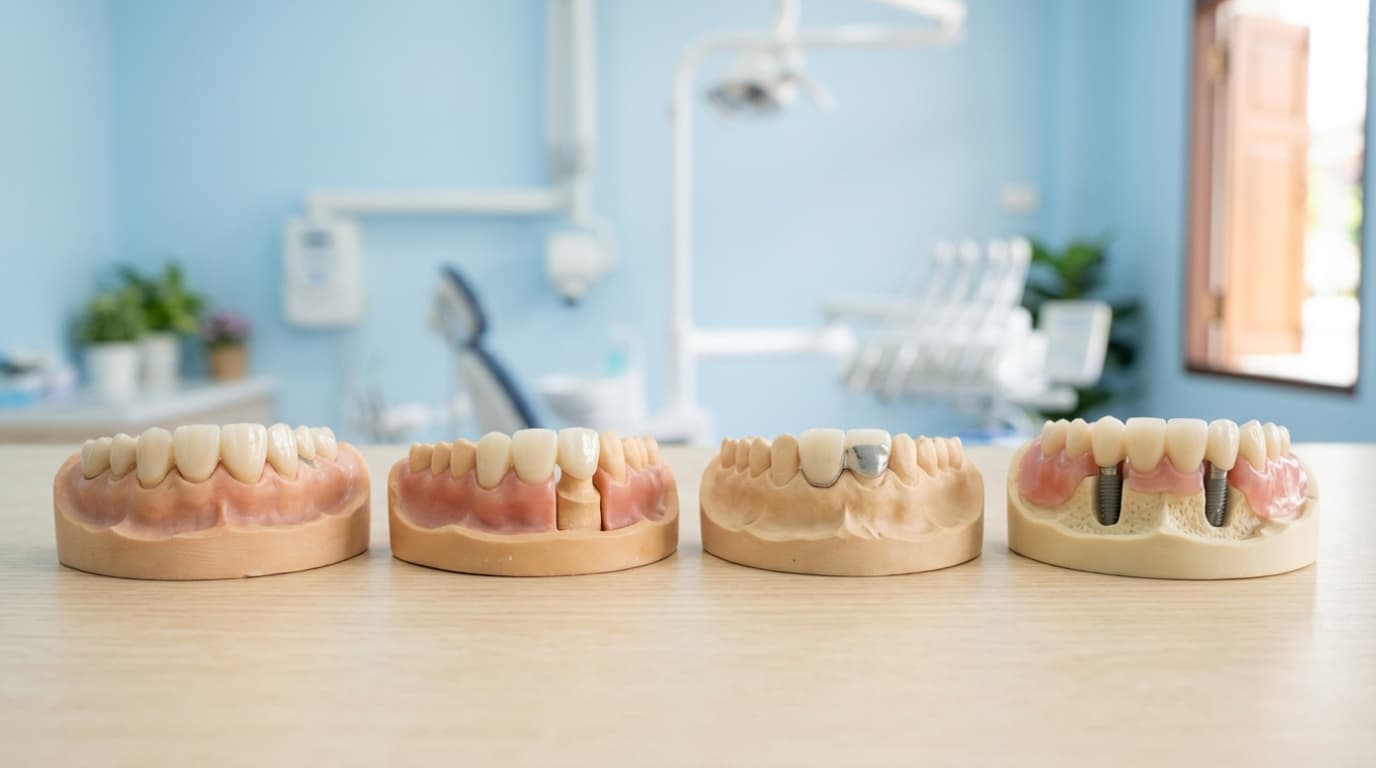
There are four main bridge designs, each with specific clinical applications. Our dedicated guide to the types of dental bridges goes deeper on the pros, cons and tooth preparation for each.

Traditional fixed bridge (most common)
The standard solution. Two abutment crowns on the teeth either side of the gap, supporting a pontic (false tooth) in the middle.
- Pros: Strongest, most predictable, longest track record
- Cons: Requires reducing both adjacent teeth (irreversible)
- Best for: Single missing tooth with healthy teeth on both sides
- Bangkok cost: Starts around 48,000–52,500 THB for a standard 3-unit
Cantilever bridge
Anchored to abutment teeth on one side only. Used when only one neighbouring tooth is suitable for support.
- Pros: Preserves the tooth on the other side
- Cons: Limited to anterior (front) teeth; chewing forces too high for posterior
- Best for: Front tooth replacement when only one side has a suitable abutment
- Bangkok cost: 32,000-40,000 THB for 2-unit cantilever
Maryland (resin-bonded) bridge
A pontic supported by metal or ceramic “wings” bonded to the back of adjacent teeth. Minimal tooth preparation.
- Pros: Most conservative, with almost no tooth reduction required
- Cons: Lower bite force tolerance, can debond over time, not for posterior
- Best for: Front teeth, especially where adjacent teeth are healthy and undamaged
- Bangkok cost: Similar to traditional bridge depending on material
Implant-supported bridge
A bridge supported by dental implants instead of natural teeth. Used when multiple adjacent teeth are missing or when adjacent teeth aren’t suitable abutments.
- Pros: Doesn’t require modifying neighbouring teeth, works for larger spans, preserves bone
- Cons: Surgical procedure, 3-6 month timeline, higher cost
- Best for: Multiple adjacent missing teeth (3+), or single missing tooth where the patient prioritises long-term bone preservation
Bangkok pricing for implant-supported 3-unit bridge (2 implants + 3-unit ceramic bridge):
| Implant brand | Total price (THB) | USD |
|---|---|---|
| DIO (Korea) | 155,000 | ~$4,700 |
| BioHorizons (USA) | 175,000 | ~$5,300 |
| Straumann (Switzerland) | 205,000 | ~$6,210 |
| Zeramex (ceramic, Switzerland) | 235,000 | ~$7,120 |
Source: Thantakit and major Bangkok clinics published implant-supported bridge pricing 2026. Most Thai clinics quote “by consultation only,” pricing varies by implant brand chosen.
Bridge span capacity
| Bridge span | Material | Common indication |
|---|---|---|
| 3-unit (1 missing tooth) | E-max or Zirconia | Most common case |
| 4-5 units (2-3 missing) | Zirconia | Healthy abutments either side |
| 6-9 units | Zirconia (premium grades like Procera) | Larger spans require zirconia strength |
| 10+ units | Implant-supported zirconia | Requires implant support; natural-tooth abutments insufficient |
Bridge Materials: Zirconia vs E-max vs PFM
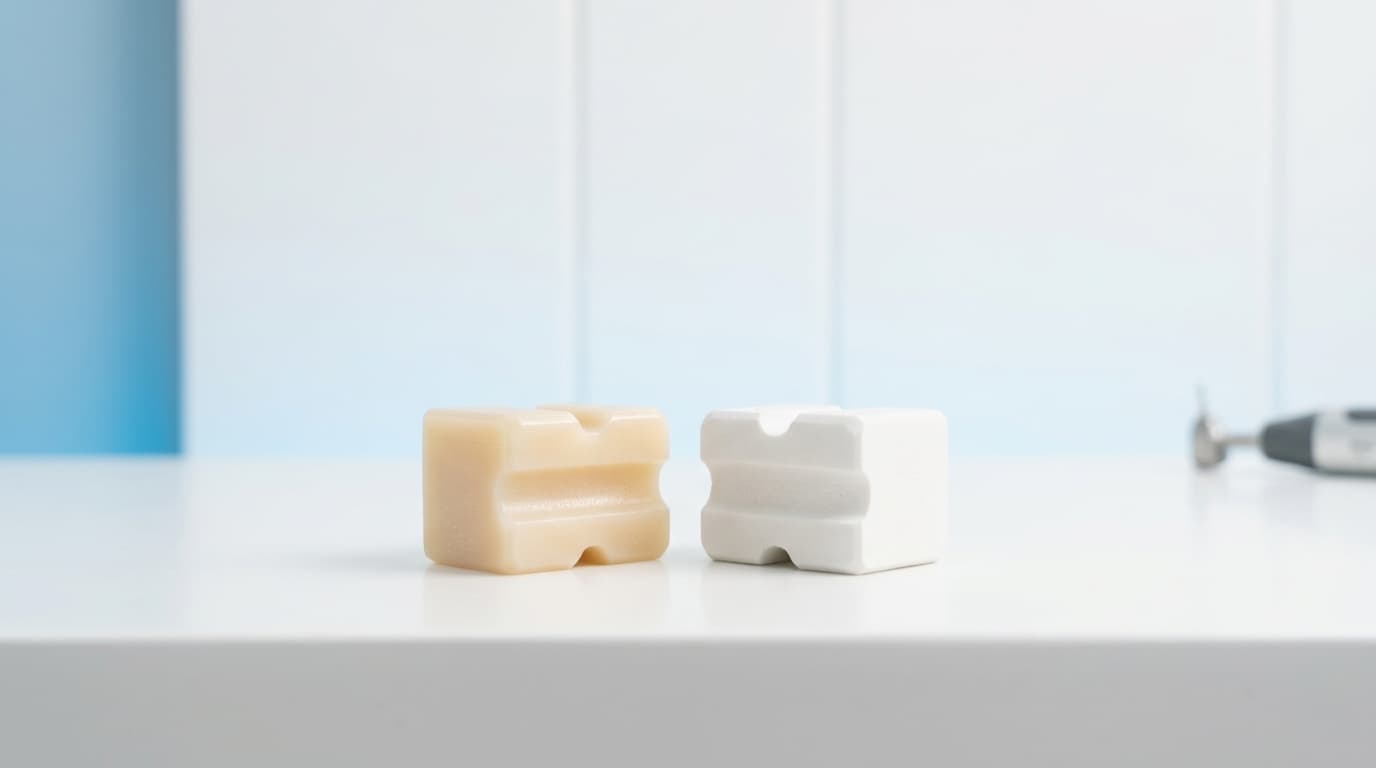
Zirconia bridges
The premium choice for most cases.
- Strength: 900-1,200 MPa, the strongest ceramic option
- Aesthetics: Excellent with modern multilayer zirconia
- Best for: Posterior teeth (chewing forces), bridges over 3 units, bruxers, dark substrate masking
- Lifespan: 15-20+ years with proper care
E-max ceramic bridges
Excellent aesthetics for visible front bridges.
- Strength: 360-400 MPa
- Aesthetics: Highest translucency, most natural appearance
- Best for: Anterior bridges (front teeth), 3-unit anterior bridges where aesthetics are critical
- Limitation: Not approved for bridges longer than 3 units in posterior placement
- Lifespan: 10-15+ years
PFM (porcelain-fused-to-metal)
Most quality Bangkok clinics no longer offer PFM. The metal margin becomes visible at the gum line over time. Modern all-ceramic bridges (zirconia, E-max) outperform PFM on aesthetics with equivalent or better strength.
For more on material selection trade-offs, see our Zirconia vs E-max Crowns guide. Same materials, same trade-offs apply to bridges.
Bridge vs Implant in Thailand: Complete Decision Matrix
This is the central decision for anyone with a missing tooth.
Side-by-side comparison
| Factor | Bridge | Implant |
|---|---|---|
| Cost (1 missing tooth) | 52,500 THB / $1,590 | 45,000-85,000 THB / $1,360-$2,575 |
| Treatment time | 7-10 days | 3-6 months (2 trips required) |
| Trips to Thailand | 1 trip (single visit feasible) | 2 trips minimum |
| Surgery required | No | Yes (implant placement) |
| Affects neighbouring teeth | Yes (must reduce 2 abutment teeth) | No |
| Bone preservation | No (bone resorbs under pontic) | Yes (implant maintains bone) |
| Lifespan | 10-15 years | 25+ years |
| Replacement cycle | Every 10-15 years | Lifetime (with proper care) |
| 20-year cost (with replacements) | ~$3,200 (one replacement) | ~$2,000-2,600 (no replacement needed) |
Choose a bridge if…
- You can only manage one trip to Thailand
- The adjacent teeth are already crowned, filled, or need restoration anyway
- You want a faster solution (7-10 days vs 6 months)
- Your bone density is insufficient for an implant without grafting
- Lower upfront cost is a priority
- You’re older and don’t need a 25-year solution
Choose an implant if…
- You can plan 2 trips spaced 3-6 months apart
- The adjacent teeth are healthy and you want to preserve them
- You prioritise long-term bone preservation
- You want the longest possible lifespan from a single investment
- You’re younger (the bone preservation benefit compounds over decades)
When neither is ideal
- Multiple missing teeth in the same area: implant-supported bridge often the optimal hybrid
- Severe bone loss + can’t graft: denture or removable partial may be more practical
- Very limited budget: partial denture as transitional option
For implant-specific cost and timeline, see our Dental Implants Bangkok page.
Treatment Timeline: Day-by-Day for Your Bangkok Trip
This is the major dental tourism advantage of bridges over implants. Here’s exactly what each day looks like, designed for international patients who need to plan trip logistics precisely.
Day-by-day clinical schedule (3-unit zirconia bridge, typical case)
| Day | In-clinic time | Activity | Free time? |
|---|---|---|---|
| Day 1 (Tue) | 3-4 hours total | Consultation + X-rays + 3D scan + treatment planning + abutment tooth prep + temporary bridge placement | Free from afternoon |
| Day 2 (Wed) | 0 (no visit) | Lab begins CAD design | Full free day |
| Day 3 (Thu) | 0 (no visit) | Lab CAM milling | Full free day |
| Day 4 (Fri) | 0 (no visit) | Sintering + finishing | Full free day |
| Day 5 (Sat) | 0 (no visit) | Quality check + porcelain layering if needed | Weekend in Bangkok |
| Day 6 (Sun) | 0 (no visit) | Final QC | Weekend in Bangkok |
| Day 7 (Mon) | 1.5 hours | Try-in, fit check, bite assessment | Free from afternoon |
| Day 8 (Tue) | 1 hour | Final cementation + polish + bite adjustment | Free from late morning |
| Day 9 (Wed) | 0 (no visit) | Buffer day for any minor adjustment | Full free day |
| Day 10 (Thu) | 30 min (optional) | Quick follow-up + clearance to fly | Fly home anytime |
Total in-clinic visits: 2 mandatory + 1 optional follow-up
Total Bangkok stay: 8-10 days
Recommended trip length: 10-12 days (2 buffer days for tourism + post-treatment relaxation)
What you can do during your free days in Bangkok
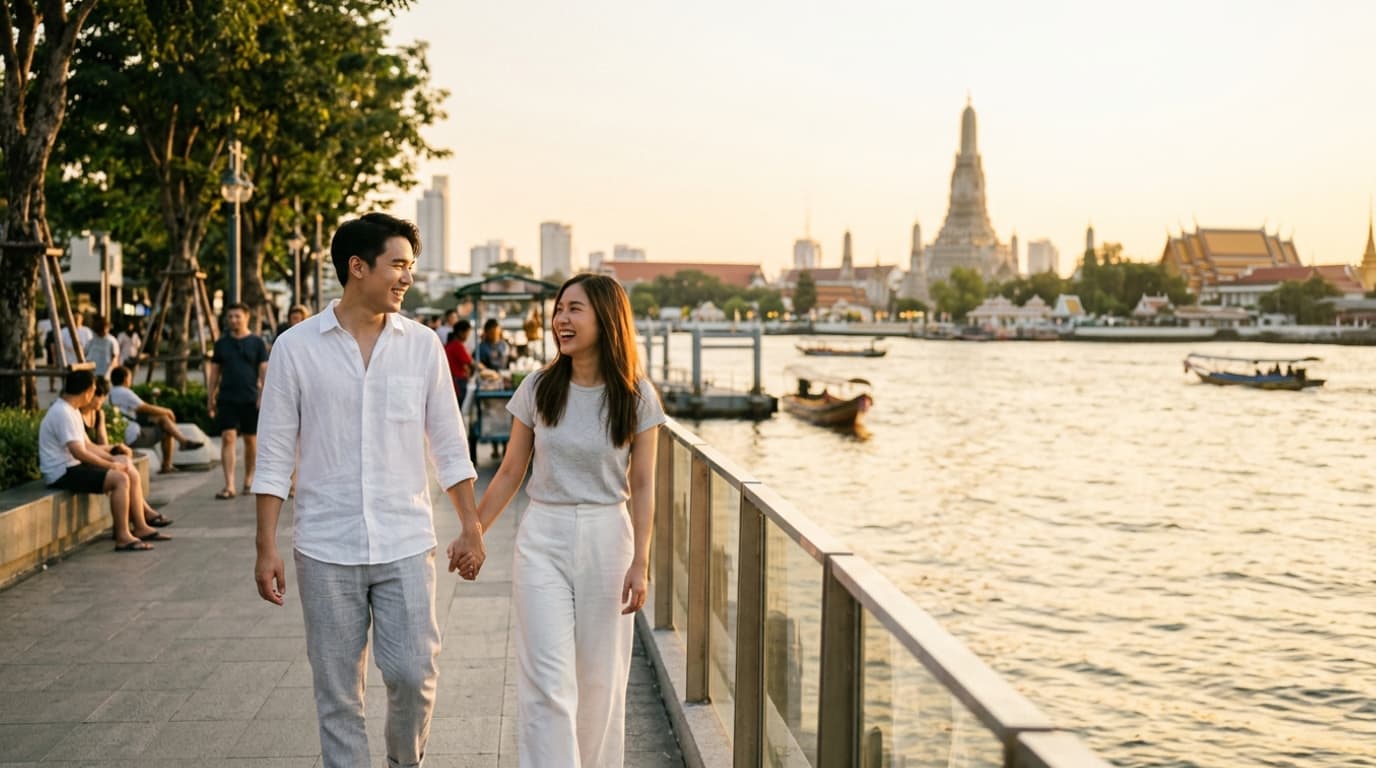
Most patients combine treatment with sightseeing:
- Days 2-6 (lab fabrication period): Wat Pho temple, Wat Arun, Grand Palace, Chatuchak weekend market, Chao Phraya river dinner cruise
- Day trip ideas: Ayutthaya historical park (1 day), Damnoen Saduak floating market (half day), Pattaya beach (overnight option)
- Within Siam neighbourhood: MBK Center shopping, Siam Paragon, Bangkok Art and Culture Centre, all walking distance from many Bangkok dental clinics
Compare to implants: 2 trips minimum, 3-6 months apart , total of 12-15 days in Thailand split across two visits, plus the implant integration period at home.
For international patients with limited vacation time, this single-trip feasibility makes bridges genuinely the more practical choice for many cases.
The Bridge Procedure Step-by-Step
Visit 1 (Day 1): Consultation and preparation
- Comprehensive consultation (free at most Bangkok clinics, in-person or virtual via WhatsApp before flying)
- Periapical and panoramic X-rays
- 3D intraoral scan or impressions
- Treatment planning + material selection (E-max vs Zirconia)
- Abutment tooth preparation: adjacent teeth shaped to receive crowns
- Temporary bridge placed to protect prepared teeth and maintain function
Days 2-7: Lab fabrication
- Quality clinics use in-house CAD/CAM labs to design and fabricate the final bridge
- No outsourcing or shipping delays
- Allows precise quality control and rapid turnaround
- You can travel and explore Bangkok during this period
Visit 2 (Day 8-10): Final fitting
- Try-in of the final bridge: colour, fit, bite assessment
- Minor adjustments if needed
- Permanent bonding with light-cured resin cement
- Final polish and bite check
- Take-home care instructions
Optional Visit 3 (Day 10-11): Follow-up
- Quick check 1-2 days after bonding
- Adjust if anything feels “high” when biting
- Final approval before flying home
How Long Do Dental Bridges Last?
Realistic lifespans based on peer-reviewed clinical research, with the full picture on failure causes in our guide to how long dental bridges last:
Survival data
| Material / Type | 5-year survival | 10-year survival |
|---|---|---|
| Zirconia bridges (Sailer et al. 2018) | 95-98% | 90-94% |
| E-max bridges (Pjetursson et al. 2018) | 95-97% | 89-92% |
| PFM bridges (legacy comparison) | 94% | 87% |
Factors affecting lifespan
- Oral hygiene: particularly under the pontic where food can trap
- Abutment tooth health: if abutment teeth develop decay or gum disease, the bridge fails
- Bite forces: heavy clenching/grinding without a night guard shortens lifespan
- Material choice: zirconia outlasts E-max in posterior placements
- Regular dental check-ups: catching small issues before they become bridge failures
Warranty terms to look for
Most quality Bangkok clinics publish 1-year clinical warranties as standard, with some premium clinics offering extended terms. When comparing clinics, ask for warranty terms in writing covering:
- Bridge debonding within the warranty period (re-cementation)
- Material fractures or chips not caused by trauma
- Manufacturing defects
- Exclusions (typically: damage from grinding without night guard, dental trauma, decay from inadequate hygiene)
For comparison: BIDC, BIDH, and Thantakit publish 1-2 year standard warranties. BFC Implant Center publishes lifetime warranty on certain zirconia premium bridges. Always get warranty terms in writing from any clinic before booking.
Aftercare & Maintenance for International Patients
Immediate post-treatment (24-48 hours)
- Avoid hard or sticky foods for the first day
- Mild sensitivity to hot/cold is normal and resolves within 1 week
- Take ibuprofen if needed (not aspirin, which increases bleeding risk)
- Resume normal eating once bonding has fully cured (24 hours)
How to clean under your dental bridge (the #1 lifespan factor)
This is the single most important habit for keeping your bridge for 15+ years. Food and bacteria trap under the pontic (false tooth), and standard flossing can’t reach there.
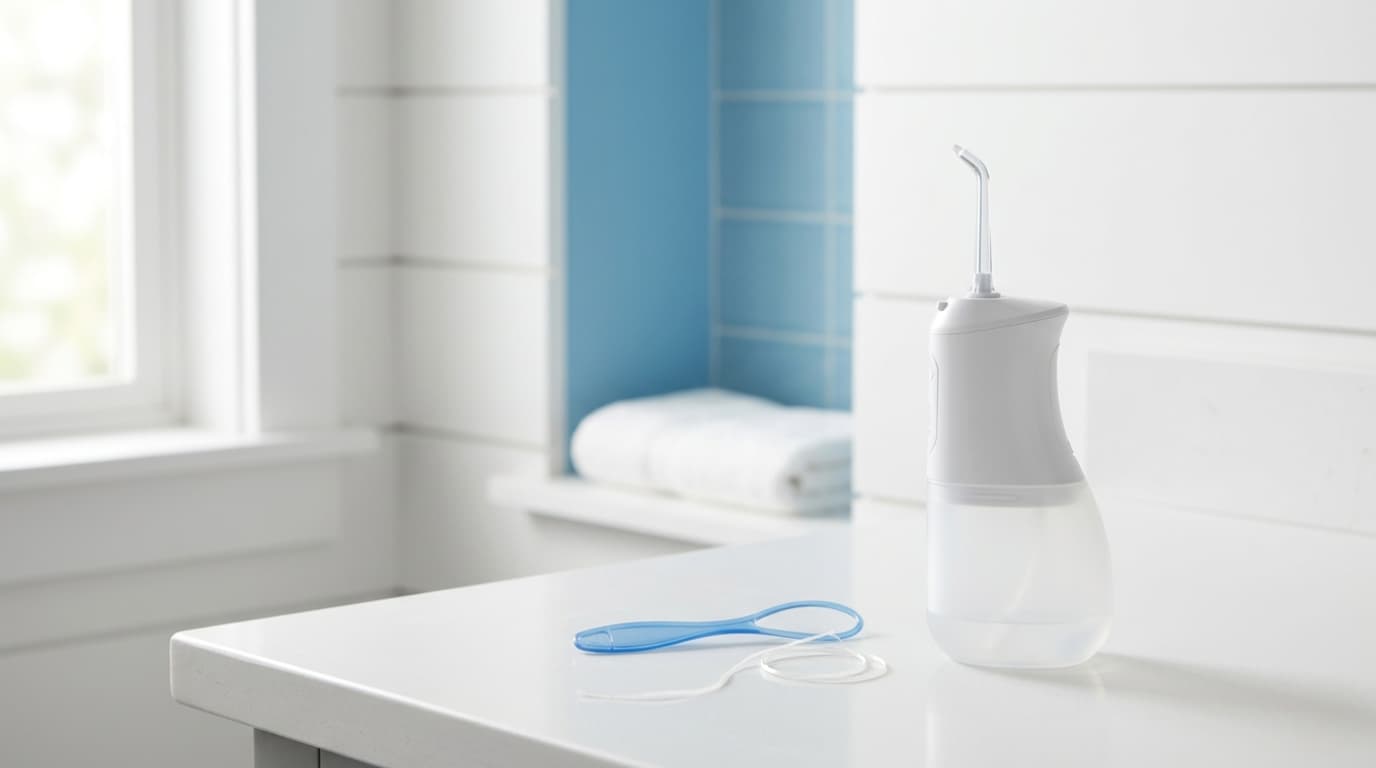
Daily protocol:
- Floss threader (small plastic loop): pulls dental floss under the pontic for traditional flossing on both abutment teeth
- Water flosser (Waterpik): pulses water under the pontic to flush food debris. Use after meals
- Interdental brushes (TePe): brush-tip designed to clean tight spaces, including under bridges
- Anti-bacterial mouthwash at night: controls plaque buildup in hard-to-reach areas
What happens if you skip this: Decay develops on the abutment teeth (where you can’t see it under the crown), eventually causing bridge failure. This is the #1 cause of bridge replacement at 5-10 years instead of 15-20.
Long-term care basics
- Brush twice daily with non-abrasive toothpaste
- Avoid biting hard objects (ice, pen caps, fingernails)
- Wear a night guard if you grind your teeth
- 6-monthly check-ups with your local dentist
When can I fly home after my bridge is fitted?
Safe to fly within 2 days of final cementation. No surgery, no swelling, no contraindication to air pressure changes. Most patients fly home the next day after the final bonding visit. We recommend 1 buffer day post-cementation in case of bite adjustment needs.
Will my insurance cover bridge work in Thailand?
Most international dental insurance plans don’t fully cover overseas treatment, but partial reimbursement is common:
- UK private dental plans (BUPA, AXA, Denplan): Often reimburse 50-70% of “out-of-network” charges up to plan annual maximum. Check your specific terms for international coverage
- Australian private health (Bupa, Medibank, HCF): Most “Comprehensive Extras” cover dental work performed overseas, typically 60-80% of UK/AU equivalent rates
- US dental insurance (Delta Dental, Cigna, Aetna): International coverage varies widely. PPO plans more likely to reimburse than HMOs. Submit “out-of-network” claim with itemized invoice
- HSA/FSA accounts (US): Bridge restoration after tooth loss is typically eligible (medically necessary)
Quality Bangkok clinics provide detailed itemized invoices in English with treatment codes that align with international dental claim formats.
Warranty claims from abroad
If a bridge issue arises within the warranty year:
- Contact your Bangkok clinic via WhatsApp with photos
- Free virtual consultation to diagnose
- Two paths: return to Bangkok for free re-cementation, or coordinate repair with your local dentist using clinic records
For broader trip planning, see our Dental Tourism in Thailand guide.
Choosing a Bangkok Clinic for Bridges: 5 Criteria
Whether you’re shortlisting clinics:
- Board-certified prosthodontist: Thai Board of Prosthodontics requires 3+ year specialty residency
- In-house dental lab: outsourced labs add 7-14 days and remove dentist quality control
- Material brand transparency: real clinics tell you the brand (Ivoclar E-max, KATANA zirconia, etc.)
- Written warranty terms: 1 year minimum, what it covers, what voids it
- Direct dentist-level communication for international patients (WhatsApp / Line, not generic info@ email)
For our specific clinic information, prosthodontist credentials, and warranty terms, see our Dental Bridge Bangkok service page.
When a Bridge Isn’t the Right Choice
Honest disclosure of cases where bridges aren’t optimal:
Multiple adjacent missing teeth in posterior
Long-span posterior bridges (5+ units across the back of the mouth) carry higher failure risk due to chewing forces. Implant-supported solutions are typically more predictable.
Healthy adjacent teeth you don’t want to prep
If both teeth on either side of the gap are perfectly healthy and untouched, a traditional bridge requires irreversibly reducing them to fit crowns. In these cases, implants preserve the natural teeth.
Heavy bruxism without a splint
Untreated bruxism (teeth grinding) shortens bridge lifespan dramatically. If you grind your teeth, address it with a night guard before or alongside bridge placement.
Active periodontal disease
Bridges fail if the abutment teeth lose bone support. Treat gum disease first , then assess bridge candidacy.
Edentulous arches (full mouth)
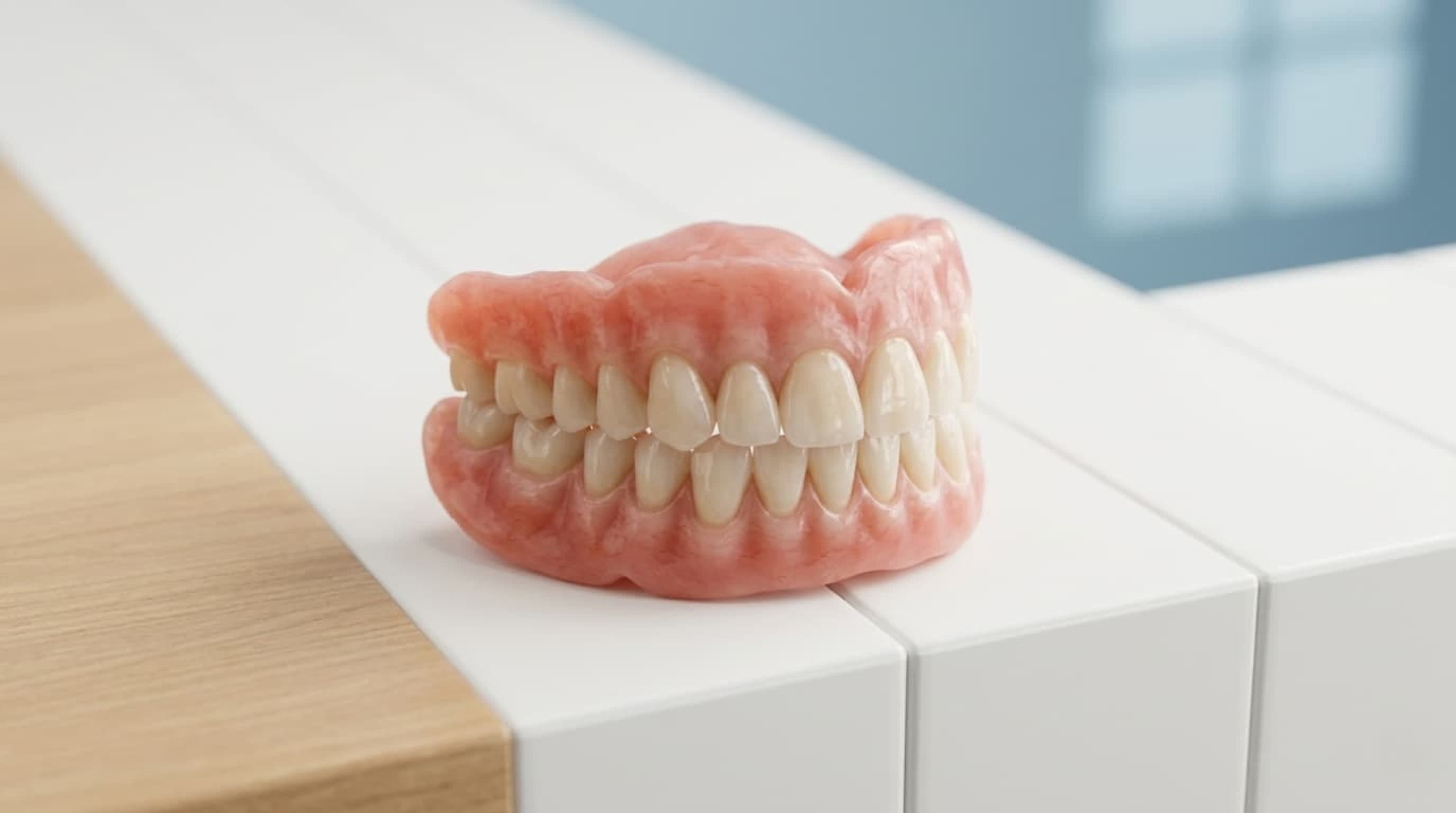
Patients missing most or all teeth in an arch are better served by dentures (cheapest), implant-supported overdentures (mid-cost), or All-on-4 implant-supported full arches (highest cost, highest function).
For these cases, see our Dentures in Thailand guide.
Conclusion: Bridges Are the Practical Choice for Many Cases
Dental bridges in Thailand offer a 65-80% cost saving vs Western treatment, completable in a single 10-12 day trip. That is a meaningful advantage over implants for international patients with limited vacation time. The trade-off is a shorter lifespan (10-15 years vs 25+) and the need to reduce adjacent teeth.
For one missing tooth with healthy adjacent teeth and a lifetime ahead of you, an implant may be the better long-term investment. For a missing tooth where adjacent teeth need work anyway, or where time/cost is the priority, a bridge is often the smarter choice.
The decision is best made after a free consultation with a board-certified prosthodontist who can assess your specific case (bone health, abutment tooth condition, bite, budget, travel constraints).
If you’re considering bridge treatment in Bangkok, our clinic offers all four bridge types (traditional, cantilever, Maryland, implant-supported) with full international patient support. See our Dental Bridge Bangkok service page for our specific pricing, prosthodontist credentials, and warranty terms.
Send us photos of the area plus any recent X-rays via WhatsApp. We’ll recommend bridge vs implant honestly based on your case, and quote exact pricing within 24 hours. Free consultation, no commitment.
Frequently Asked Questions
How much does a dental bridge cost in Thailand?
A 3-unit dental bridge replacing one missing tooth costs 48,000–66,000 THB ($1,455–$2,000 USD) in E-max ceramic, or 52,500–75,000 THB ($1,590–$2,275) in zirconia at most Bangkok clinics. Compared to $3,000-$5,000 in the US, UK, or Australia, that is savings of 65-80%.
How much is a 3-unit bridge in Bangkok?
3-unit zirconia bridge: 52,500–75,000 THB ($1,590–$2,275) at typical Bangkok clinics. 3-unit E-max bridge: 48,000–66,000 THB ($1,455–$2,000). Pricing usually includes consultation, X-rays, scans, prep, temporary bridge, lab fabrication, final bonding, and 1-year warranty at most quality clinics.
Is it cheaper to get a dental bridge in Thailand?
Yes, typically 65-80% cheaper than US/UK/Australia. A 3-unit bridge in Bangkok is $1,590-$2,275; same treatment in the US averages $3,000-$5,000. Even with flights and a 10-day Bangkok stay (~$2,000-$3,500 trip cost), total is roughly equivalent to US treatment alone, with a Thailand holiday included.
What is the difference between a Maryland and traditional bridge?
A traditional bridge requires reducing the adjacent teeth and placing crowns on them. A Maryland bridge bonds metal or ceramic “wings” to the back of adjacent teeth, with minimal tooth reduction. Maryland bridges are best for front teeth where chewing forces are lower.
Is a bridge or implant better?
Neither is universally better. Bridges win on speed (7-10 days vs 6 months), single-trip feasibility, lower upfront cost, and don’t require surgery. Implants win on long-term bone preservation, lifespan (25+ vs 15 years), and don’t affect neighbouring teeth.
Why would you choose a bridge over an implant?
Common reasons: only 1 trip to Thailand possible, adjacent teeth already need crowns anyway, bone density insufficient for implants, faster timeline needed, lower upfront cost.
Can you replace a bridge with an implant later?
Yes. When the bridge eventually needs replacement (after 10-15 years), you can choose to switch to implant + crown at that point. Bone resorption under the pontic during the bridge period may complicate this, often requiring bone grafting first.
Which lasts longer: bridge or implant?
Implants last 25+ years; bridges 10-15 years. Over 30 years, you’d need to replace a bridge once, while an implant typically continues serving without replacement.
How long do dental bridges last?
10-15 years for E-max bridges; 15-20+ years for zirconia bridges (peer-reviewed studies). Lifespan depends on oral hygiene (especially flossing under the pontic), bite forces, and 6-monthly check-ups.
Can you eat normally with a dental bridge?
Yes, a properly placed bridge functions like natural teeth. Avoid biting very hard objects (ice, pen caps), and use a floss threader or water flosser to clean under the pontic daily.
How do you clean under a dental bridge?
Use a floss threader (small plastic loop) or water flosser to pass dental floss under the pontic and clean both sides daily. This is the single most important factor in long-term bridge success.
How many days does a dental bridge take in Thailand?
7-10 days, 2-3 in-person visits. Day 1: consultation, prep, temporary bridge. Days 2-7: lab fabrication. Day 8-10: final fitting and bonding. Suitable for a single 10-12 day trip.
Can a dental bridge be done in one trip?
Yes, this is the key advantage of bridges over implants. A complete bridge treatment fits within a 10-12 day Bangkok trip. Implants require 2 separate trips (3-6 months apart) because of the bone integration period.
Is dental work in Bangkok safe?
Yes, when treated by board-certified specialists. Look for: Thai Board of Prosthodontics credential, in-house lab, written warranty, transparent material brands. Bangkok has 50+ JCI-accredited hospitals as a safety infrastructure backstop.
How many teeth can a single bridge replace?
Standard practice: 1-3 missing teeth in a single bridge. Premium zirconia (Procera, KATANA) systems can span up to 9 units when supported by healthy abutment teeth. For larger spans (10+ units, or full arch), implant-supported solutions (implant bridges or All-on-4) are clinically superior.
Will my insurance cover a dental bridge in Thailand?
It depends on your country and plan. UK private dental (BUPA, AXA, Denplan) often reimburse 50-70% of “out-of-network” charges. Australian private health (Bupa, Medibank, HCF) “Comprehensive Extras” typically cover overseas dental at 60-80% of equivalent local rates. US PPO plans more likely to reimburse than HMOs. HSA/FSA accounts (US) usually eligible for medically necessary bridge restoration. Quality Bangkok clinics provide itemized invoices in English with treatment codes for international claim formats.
Was this article helpful?