 Written by Dr. Nan
If you are missing one or more teeth, a dental bridge is one of the most reliable ways to close the gap with a fixed, natural-looking restoration. But there is not just one kind of bridge. The right choice depends on where the gap is, how many teeth are missing, and how much of your healthy tooth structure you want to preserve.
This guide walks through each of the four types, when a dentist recommends it, the pros and cons, and what the material and price picture looks like if you are planning treatment in Thailand.
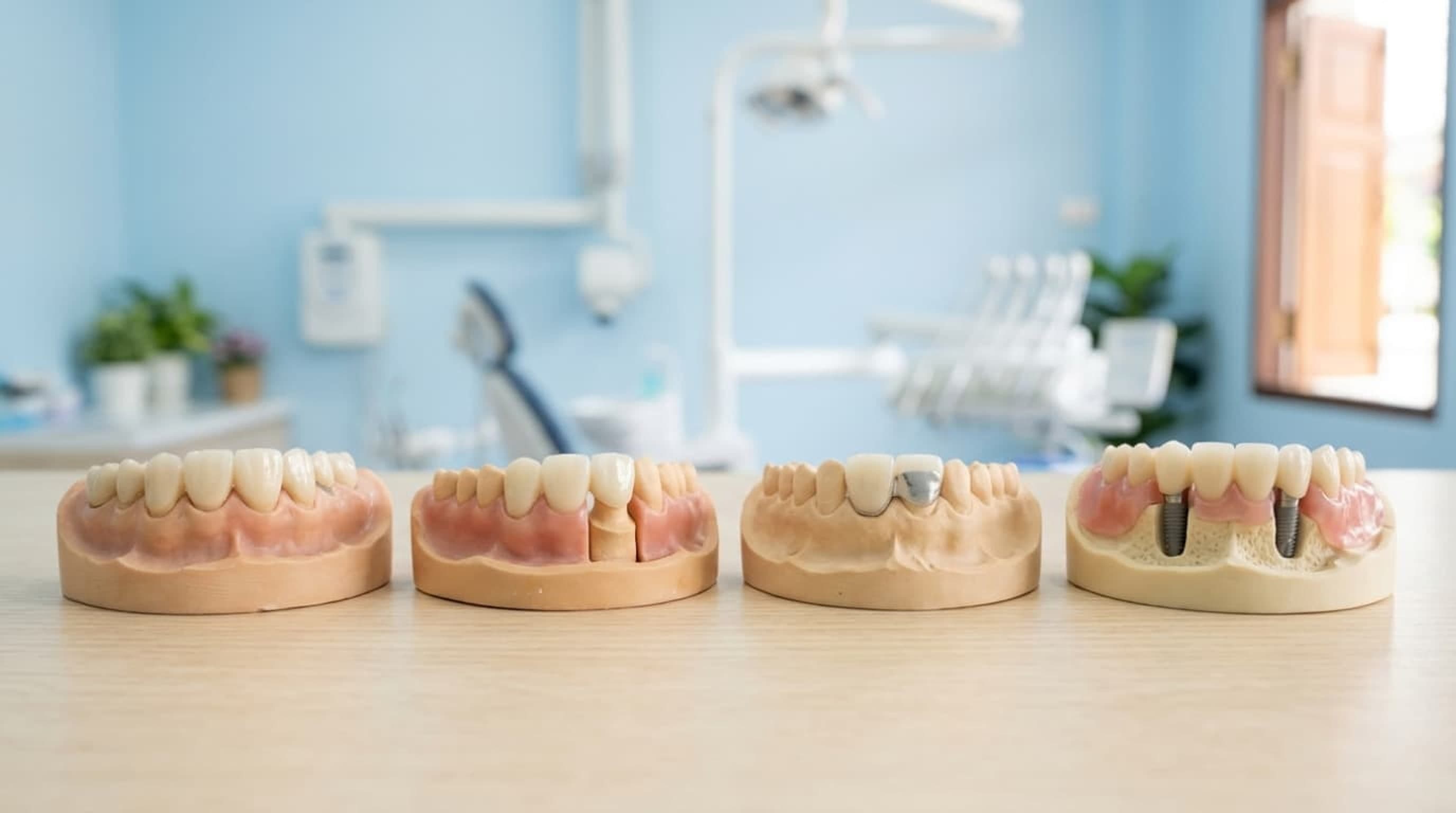
The four types of dental bridges at a glance
Every bridge does the same basic job: it fills the space left by a missing tooth with an artificial tooth, called a pontic, that is held firmly in place. What changes between the four types is how that pontic is anchored.
Here is a side-by-side comparison so you can see the differences quickly.
| Bridge type | How it is anchored | Best for | Tooth preparation | Typical lifespan |
|---|---|---|---|---|
| Traditional | Crowns on the healthy teeth on both sides of the gap | Back teeth, gaps with strong teeth on each side | Moderate (both anchor teeth reshaped) | 10 to 15 years |
| Cantilever | A crown on one tooth on a single side only | Front teeth where only one neighbour is available | Moderate (one anchor tooth reshaped) | 10 to 15 years |
| Maryland | Thin metal or porcelain wings bonded behind nearby teeth | Front teeth, preserving healthy enamel | Minimal (light etching only) | 5 to 10 years |
| Implant-supported | Dental implants placed in the jawbone | Three or more missing teeth in a row | None to the natural teeth | 15 years and beyond |
Traditional bridges
The traditional bridge is by far the most common type, and for most patients with a single missing tooth it is the first option a dentist considers. A pontic sits in the gap and is held in place by dental crowns that are cemented onto the natural teeth on each side.
To fit one, the dentist gently reshapes the two anchor teeth so the crowns slide over them, takes impressions, and places a temporary bridge while the permanent one is made in the lab. Once it is ready, the bridge is checked for fit and bite, then cemented permanently.
- When it is used: one or more missing teeth with healthy, strong teeth on both sides of the gap. It handles the heavier chewing forces of molars and premolars well, which is why it is the standard choice for back teeth.
- ✅ Pros: durable, long-lasting, well-suited to high-pressure chewing areas, and faster than implants.
- ❌ Cons: the two anchor teeth have to be reshaped, which removes some healthy enamel permanently. It also does not preserve the jawbone underneath the missing tooth the way an implant does.
Cantilever bridges
A cantilever bridge is a close cousin of the traditional bridge, with one key difference: the pontic is supported on one side only. Instead of crowns on both sides of the gap, the false tooth is anchored to one or more teeth on a single side.
Because all the chewing force lands on that one anchor, a cantilever bridge puts more stress on a single tooth. For that reason dentists usually reserve it for areas where bite forces are lighter, such as the front of the mouth, rather than the molars.
- When it is used: when there is a healthy tooth on only one side of the gap, or when a traditional bridge is not possible because of where the missing tooth sits.
- ✅ Pros: a workable fixed solution when you do not have teeth on both sides, and it only involves preparing one anchor tooth.
- ❌ Cons: the extra load on a single tooth can cause loosening or bite problems over time, so it is not recommended for back teeth.
Maryland bridges
A Maryland bridge, also called a resin-bonded bridge, takes the most conservative approach. Instead of crowns, the pontic has thin wings of metal or porcelain on each side. These wings are bonded to the back surfaces of the neighbouring teeth, so the dentist only needs to lightly etch the enamel rather than reshape the teeth.
That makes it the gentlest option for preserving your natural tooth structure. The trade-off is strength: a Maryland bridge is not as robust as a traditional one and can come unbonded if it is placed where the bite hits hard. It is not suitable for molars or multiple-tooth gaps.
- When it is used: to replace a single front tooth, for patients who want to keep as much natural enamel as possible, and sometimes for younger patients whose teeth are still developing.
- ✅ Pros: minimal preparation, no healthy enamel removed, and reversible in a way the others are not.
- ❌ Cons: the wings can debond over time, and it cannot withstand heavy chewing pressure, so it is limited to low-force front areas.
Implant-supported bridges
When several teeth are missing in a row, an implant-supported bridge is often the strongest long-term answer. Instead of leaning on your natural teeth, the bridge is anchored to dental implants placed in the jawbone. The implants act as artificial tooth roots and carry the whole bridge.
One advantage that surprises many patients: you do not need one implant per missing tooth. To replace several teeth in a row, two implants can act as strong end pillars while the bridge spans the gap between them. This makes it more efficient and more affordable than separate implants for every tooth.
The process takes longer because the implants need three to six months to fuse with the bone before the bridge is attached, and it requires enough bone density to begin with.
- When it is used: three or more missing teeth in a row, patients who want to avoid touching their remaining natural teeth, and those seeking the most stable, longest-lasting result.
- ✅ Pros: preserves the neighbouring teeth, stimulates the jawbone so it does not shrink, and lasts the longest of all four types.
- ❌ Cons: requires minor surgery, a longer overall timeline, and adequate bone.
If you are weighing this against a simpler bridge, our guide on a dental bridge versus an implant breaks down the decision in detail.
Which type of bridge is right for you?
The honest answer is that it depends on your specific gap, and a short examination settles most of it. As a rough guide:
- One missing back tooth, healthy teeth on both sides: a traditional bridge.
- One missing front tooth, healthy teeth on both sides, enamel you want to keep: a Maryland bridge.
- A gap with a healthy tooth on one side only: a cantilever bridge, usually at the front.
- Several teeth missing in a row, or you want to avoid reshaping healthy teeth: an implant-supported bridge.
Lifespan also varies by design, and our guide to how long dental bridges last compares the four types and explains what makes one fail before its time.
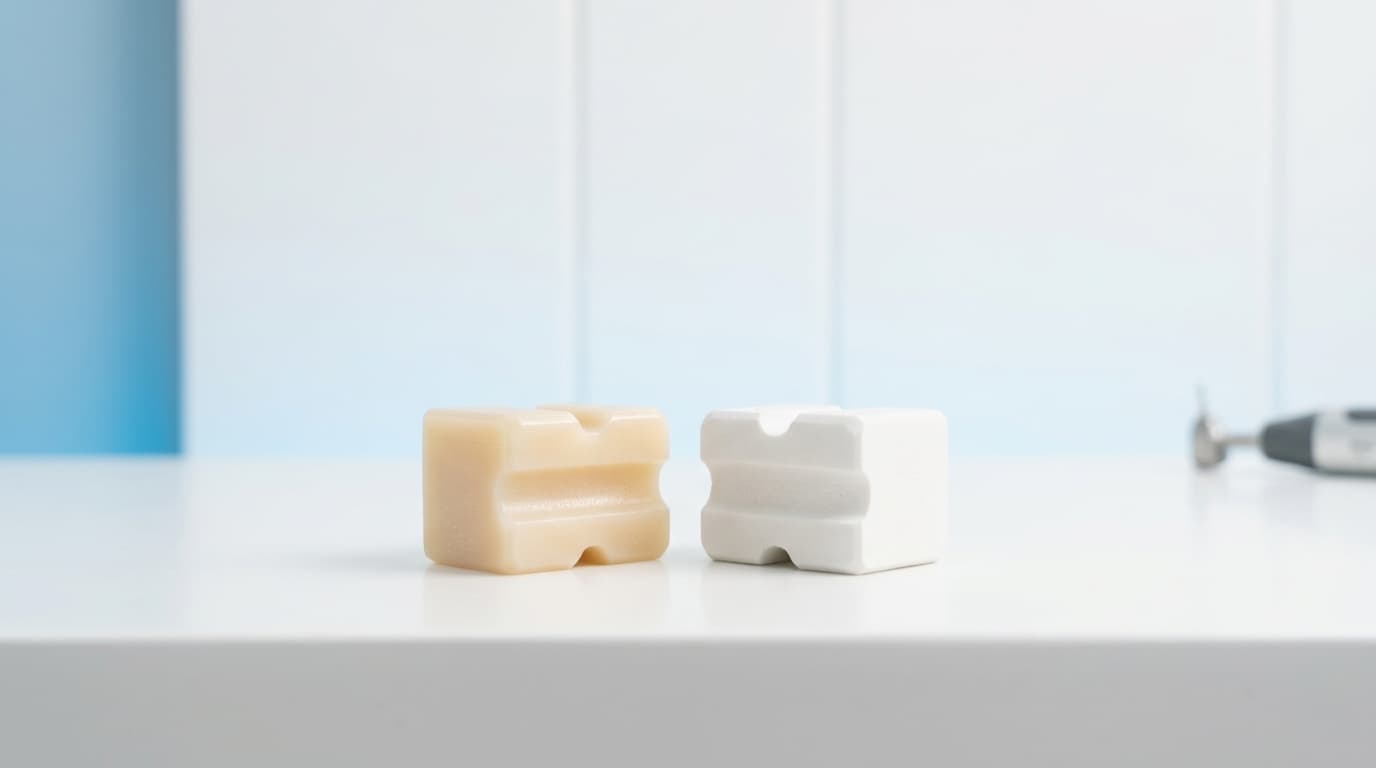
Material matters too. Most of our bridges are made in two ceramics:
- E-max (lithium disilicate) gives excellent translucency for front teeth.
- Zirconia is prized for its strength on back teeth and longer spans.
If you want to understand the difference between the two materials before your consultation, our comparison of zirconia and E-max crowns applies directly to bridges, since the same materials are used.

Bridge materials and prices in Bangkok
Bridge pricing is straightforward once you know it is charged per unit. A single missing tooth uses three units: two crowns on the anchor teeth plus the pontic in between. Your quote is simply the price per unit times the number of units.
| Bridge type | Price per unit | Standard 3-unit bridge |
|---|---|---|
| E-max bridge | ฿16,000 | ฿48,000 |
| Zirconia bridge | ฿17,500 | ฿52,500 |
These prices are all-inclusive, covering the consultation, tooth preparation, impressions, and final cementation. For a fuller breakdown by material and number of units, including why one missing tooth needs three units, see our guide to dental bridge cost in Thailand.
A standard tooth-supported bridge usually takes 2 visits over about 7 to 10 days, since the restoration is made in our on-site lab. We also provide a 1-year written warranty against fractures, with free replacement except in cases of improper use.
If you want the full breakdown of the journey and what to expect as an international patient, read our guide to getting dental bridges in Thailand.
Conclusion
Four bridge designs, one decision rule: match the anchor to your gap. Strong neighbours on both sides point to a traditional bridge, a single front gap with pristine neighbours suits a Maryland, one-sided support means a cantilever at the front only, and several missing teeth in a row are usually best carried on implants.
The best way to know which fits your case is a proper assessment, including X-rays to check the supporting teeth and bone. Explore the full details on our dental bridge treatment page, then send us a few photos and we will give you a personalised recommendation and a fixed written quote with no surprises.
Was this article helpful?